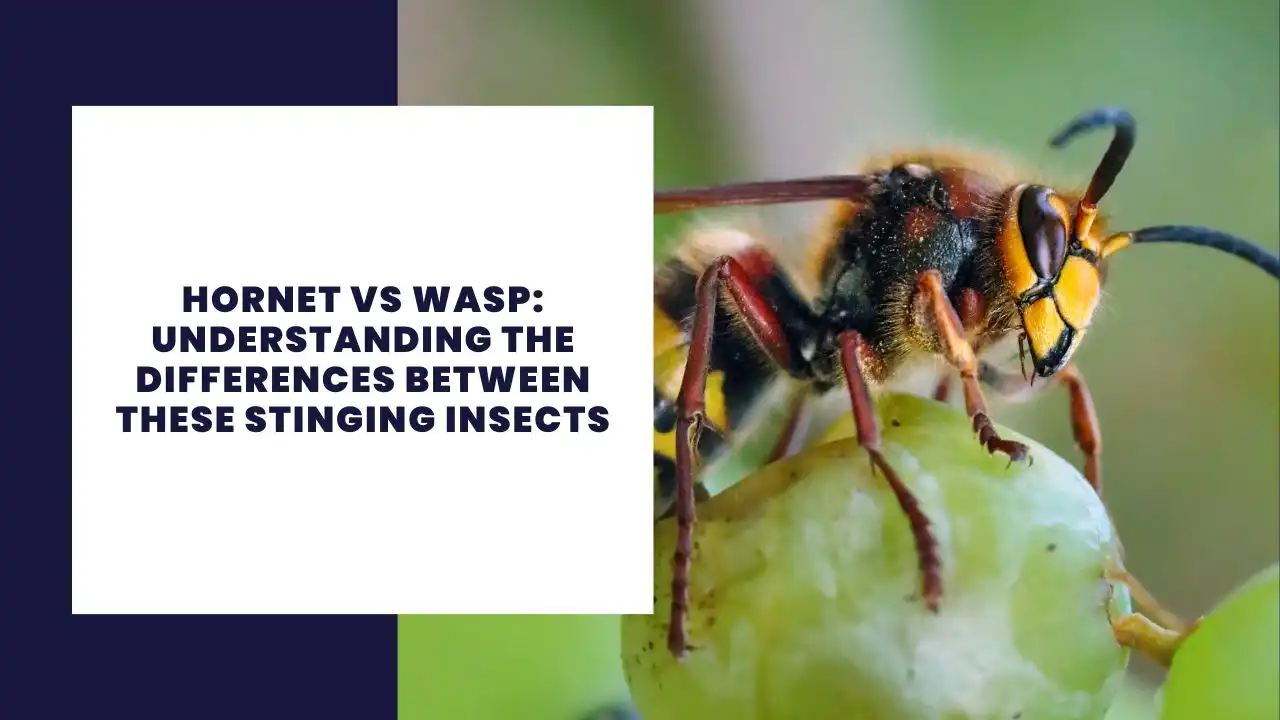
Hornet vs Wasp: Understanding the Differences Between These Stinging Insects
When it comes to stinging insects, hornets and wasps are often confused due to their similar black and yellow markings and shared ability to sting repeatedly. However, these two creatures, both part of the Hymenoptera order, have distinct behaviors, appearances, and nesting habits. This article will delve into the differences between hornets and wasps, including their characteristics, habitats, and the role they play in ecosystems.
Hornets and wasps share many similarities, but they have key distinctions that set them apart.
Physical Differences
Wasps:
Generally smaller than hornets.
Slimmer bodies with black and yellow stripes.
Long legs that dangle while flying.
Hornets:
Larger and more robust.
Some, like the European hornet and northern giant hornet, feature reddish-brown or dark markings in addition to black and yellow.
The giant hornet, also known as the Asian giant hornet, is the largest hornet in the world.
Behavioral Differences
Wasps may be solitary or social:
Solitary wasps, such as digger wasps, burrow in the ground and live alone.
Social wasps, including paper wasps and yellowjackets, live in large colonies.
Hornets are typically social:
They live in organized colonies led by a wasp queen and primarily build nests hanging from tree branches or in wall voids.
Hornets are a subset of wasps, distinguished by their size and colony structures.
Nesting Habits
Wasp Nests
Wasps build intricate nests using wood fibers mixed with their saliva, forming a papery structure.
Paper wasp nests are often found hanging from eaves, tree branches, or inside wall voids.
Yellowjackets often nest in the ground or hidden crevices, while social wasps may construct nests in tree branches or wall voids.
Hornet Nests
Hornets make larger, spherical nests.
A hornet nest is often located in tree branches, but some species, like the bald-faced hornet, prefer wall voids or protected spaces.
Stings and Venom
Pain and Frequency of Stings
Both wasps and hornets can sting multiple times due to their smooth stingers, which do not detach after a sting.
A hornet sting is often more painful than a wasp sting, as it delivers a higher dose of venom.
When They Sting
Hornets and wasps might sting if they feel threatened or their nests are disturbed.
Unlike honey bees, they can sting without dying, making them capable of stinging repeatedly.
Diet and Ecological Role
Wasps play an important role as predators:
They hunt pests like spiders, grasshoppers, and even caterpillars, contributing to pest control.
Hornets are predators as well but are also attracted to sugary foods and drinks, such as fallen fruit.
Food Source for Larvae
Both hornets and wasps provide captured prey to their larvae as a food source, ensuring the colony’s survival.
Species and Subsets
Common Wasp Species
Common wasp
Paper wasp
Yellowjackets
Hornet Species
True hornet, such as the European hornet and northern giant hornet (formerly known as the murder hornet).
Bald-faced hornet, which is technically a type of social wasp.
Eusocial vs. Solitary Wasps
Eusocial wasps, such as yellowjackets, live in structured colonies.
Solitary wasps are independent and nest in the ground or other secluded areas.
How to Identify Hornets and Wasps
Key Markings
Wasps: Distinct yellow stripes and a slim profile.
Hornets: Broader bodies with darker tones and occasional reddish accents.
Nest Construction
Look for paper nests: Wasps make smaller nests, while hornet nests are larger and often spherical.
Pest Control and Safety
Preventing Infestations
Regularly check for nests under eaves, in wall voids, and tree branches.
Eliminate food sources like sugary foods and drinks that attract wasps and hornets.
Handling Stings
If stung, clean the wound with soap and water to prevent infection.
Apply ice to reduce swelling and pain.
Seek medical attention for severe allergic reactions.
Conclusion
Understanding the differences between hornets and wasps can help you better appreciate their roles in the ecosystem while ensuring your safety. While these stinging insects can be intimidating, their importance in controlling pests and pollination cannot be overstated. Observing their black and yellow markings, nest structures, and behaviors can help you tell hornets and wasps apart and take the appropriate steps to manage their presence.
We use cookies on our website to give you the most relevant experience by remembering your preferences and repeat visits. By clicking “Accept”, you consent to the use of ALL the cookies.
This website uses cookies to improve your experience while you navigate through the website. Out of these, the cookies that are categorized as necessary are stored on your browser as they are essential for the working of basic functionalities of the website. We also use third-party cookies that help us analyze and understand how you use this website. These cookies will be stored in your browser only with your consent. You also have the option to opt-out of these cookies. But opting out of some of these cookies may affect your browsing experience.
Necessary cookies are absolutely essential for the website to function properly. This category only includes cookies that ensures basic functionalities and security features of the website. These cookies do not store any personal information.
Any cookies that may not be particularly necessary for the website to function and is used specifically to collect user personal data via analytics, ads, other embedded contents are termed as non-necessary cookies. It is mandatory to procure user consent prior to running these cookies on your website.