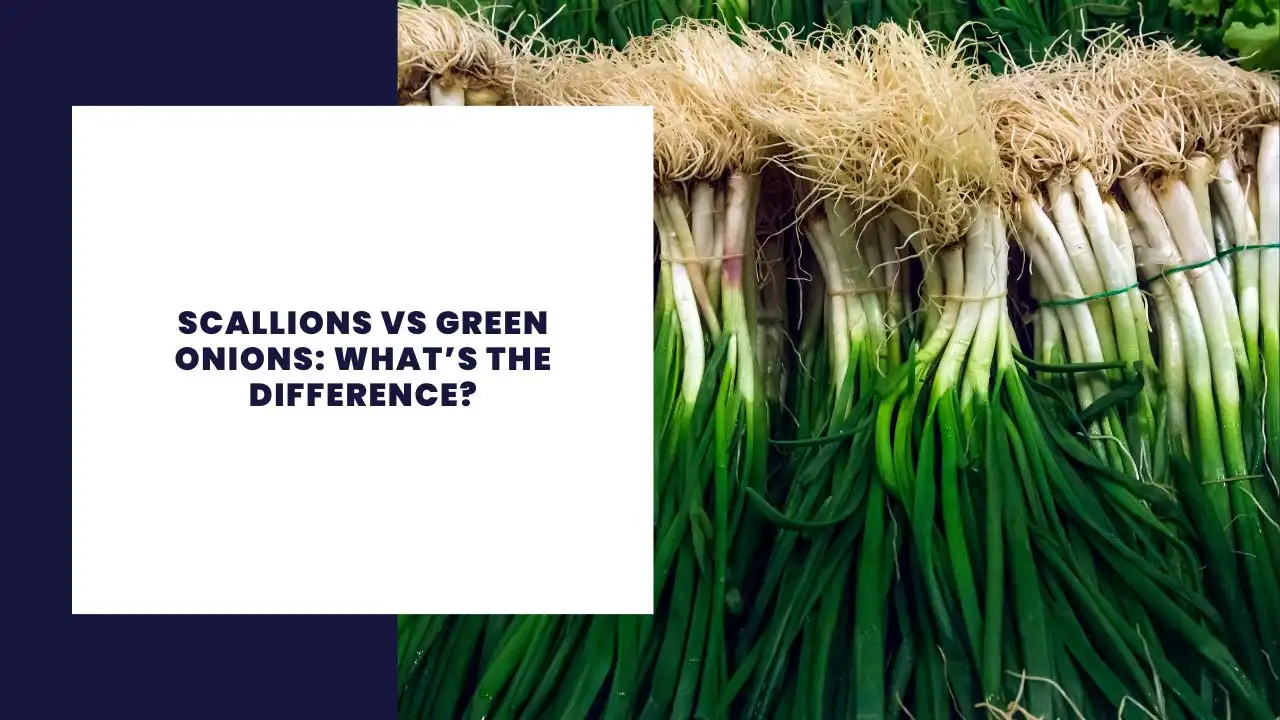
The terms scallions and green onions often cause confusion in the culinary world. Many people wonder if they are different names for the same thing or if they are entirely different vegetables. While the two look similar and are frequently used interchangeably, there are subtle distinctions that every home cook or chef should understand. This guide explores the differences, similarities, and how both are used in the kitchen.
Both scallions and green onions belong to the allium family, which includes garlic, leeks, shallots, and regular bulb onions. They’re harvested very young, before forming a large bulb, making their stalks long and slender with white parts at the base and tender green tops.
Scallion: Often refers to a specific type of onion that does not form a bulb.
Green onion: A general term used for young onions that haven’t matured into full bulbs.
While they are often labeled the same in grocery stores, there are differences in how they’re grown, harvested, and labeled in various regions.
Key Differences Between Scallions and Green Onions
1. Botanical Differences
Scallions:
A specific type of onion from the allium species.
Does not develop a regular bulb onion.
Stalks remain long and uniform.
Green onions:
Typically young regular bulb onions harvested early.
May begin to show a small bulb at the base.
2. Appearance
Scallions: Have a straight, cylindrical shape with no noticeable bulb at the base.
Green onions: Often have a slightly rounded bulb, especially when left to grow longer.
3. Flavor Profile
Scallions:
Offer a milder onion flavor, perfect for raw dishes like salads or as a garnish.
The green parts have a slightly grassy taste.
Green onions:
Tend to have a stronger flavor, particularly in the white portion.
Ideal for cooking in stir-fries, soups, and stews.
4. Culinary Uses
Both scallions and green onions are highly versatile and are used raw, cooked, or as a garnish in countless recipes.
Scallions:
Garnish for salads, soups, or fried rice.
Perfect in raw dishes where a mild onion flavor is preferred.
Common in Asian cuisines for its delicate taste.
Green Onions:
Excellent for grilling, roasting, or stir-frying.
Adds a stronger flavor to soups and stews.
Often used in recipes requiring more robust onion-y notes.
Similarities Between Scallions and Green Onions
Despite their subtle differences, scallions and green onions share several similarities:
Look similar: Both have long, slender green stalks and white bases.
Types of alliums: They belong to the same allium family.
Used interchangeably: In most recipes, you can substitute one for the other.
Culinary versatility: Both are used in various dishes, from soups to salads to fried rice.
How to Use Scallions and Green Onions
Cooking Techniques
Raw: Add to salads, sandwiches, or as a garnish.
Grilled and roasted: Brush with olive oil, sprinkle with salt, and grill until charred for a delicious side dish.
Fried rice or stir-fries: Add chopped scallions or green onions for an aromatic touch.
Soups and stews: Use the white parts for a more pronounced onion flavor.
Pairing with Other Ingredients
Herbs: Combine with chives, parsley, or cilantro for fresh flavor.
Proteins: Add to grilled chicken, fish, or tofu for a flavorful punch.
Garlic and shallots: Use alongside these other alliums to enhance the depth of flavor.
Growing Scallions and Green Onions
Planting Tips
Choose a sunny spot for planting.
Use soil that is well-draining and rich in nutrients.
Start from seeds or replant scraps from store-bought scallions or green onions.
Harvesting
Harvest when the stalks reach about 6–12 inches in height.
For scallions, ensure they don’t develop a bulb.
Green onions can be harvested as they begin to form a small bulb.
Scallions, Green Onions, and Spring Onions
The term spring onion often adds to the confusion. So, what’s the difference?
Scallions and green onions: Both are young onions harvested before they mature.
Spring onions: These are onions harvested slightly later, with a much larger bulb. They have a stronger flavor and are often used roasted or grilled.
Substituting Scallions and Green Onions
When a recipe calls for scallions or green onions, they can often be used interchangeably. However, you might also consider:
Shallots: For a sweeter, more delicate flavor.
Leeks: For a milder, sweeter onion flavor.
Chives: Perfect for a subtle, grassy taste.
Recipes Featuring Scallions and Green Onions
Scallion Pancakes
Mix flour, water, and chopped scallions into a dough.
Pan-fry until golden brown for a crispy treat.
Green Onion and Garlic Soup
Sauté garlic and chopped green onions in olive oil.
Add vegetable broth, simmer, and garnish with green tops.
Grilled Green Onions
Brush whole green onions with olive oil, sprinkle with salt, and grill until tender.
Conclusion: Scallions vs Green Onions
Understanding the difference between scallions and green onions can elevate your culinary skills and add depth to your recipes. Both bring unique flavors and versatility to the kitchen, whether used raw in a salad, as a garnish for soups, or grilled alongside your favorite vegetables. While they may have different species and subtle distinctions, they’re perfect additions to any dish.
We use cookies on our website to give you the most relevant experience by remembering your preferences and repeat visits. By clicking “Accept”, you consent to the use of ALL the cookies.
This website uses cookies to improve your experience while you navigate through the website. Out of these, the cookies that are categorized as necessary are stored on your browser as they are essential for the working of basic functionalities of the website. We also use third-party cookies that help us analyze and understand how you use this website. These cookies will be stored in your browser only with your consent. You also have the option to opt-out of these cookies. But opting out of some of these cookies may affect your browsing experience.
Necessary cookies are absolutely essential for the website to function properly. This category only includes cookies that ensures basic functionalities and security features of the website. These cookies do not store any personal information.
Any cookies that may not be particularly necessary for the website to function and is used specifically to collect user personal data via analytics, ads, other embedded contents are termed as non-necessary cookies. It is mandatory to procure user consent prior to running these cookies on your website.