Interaction with a brand has evolved. How a customer feels about a brand is no longer determined solely by a talk with a salesperson, a trip to a shop or the presence of a certain ad. Now, a website, a mobile application, a virtual reality environment, social media, online customer support or a recommendation on a site can all have an impact.
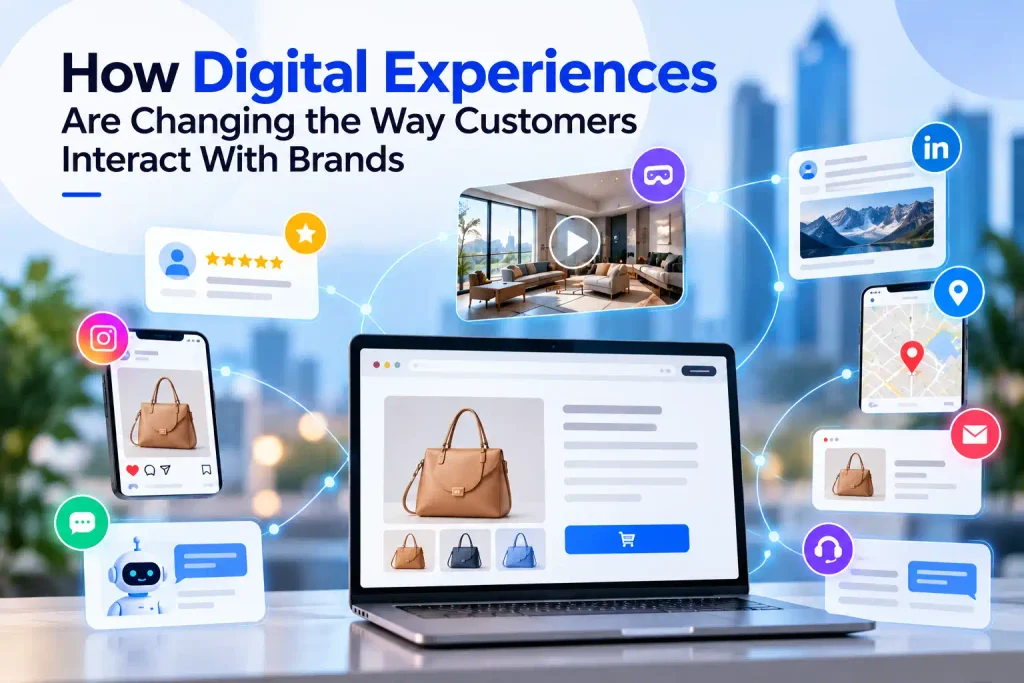
As these touchpoints grow more connected, customers are more discerning. They want interactions to be fast, relevant, convenient, and consistent regardless of where they are engaging with a company.
What Is a Digital Customer Experience?
Digital customer experience is the sum of the impressions a customer has of an interaction with a brand through digital channels. They occur through websites, mobile apps, email, social media, online stores, customer portals, chat systems, and other digital channels.
A strong digital experience is more than simply having more technology. It’s about simplifying the process for people to find information, understand products, communicate with a company, and get done what they came to do.
Some of the best experiences appear simple to the customer, even when sophisticated technology is driving the backend.
Why Have Customer Expectations Changed?
Customers have become used to getting information almost instantly. They can spend minutes looking at products, read reviews before they decide, contact companies through multiple channels and buy without talking to anyone. To stay competitive and monitor these shifts in consumer behavior across the web, brands increasingly rely on automated tools to scrape dynamic websites for real-time market data.
And so the convenience has become a big part of the customer experience. CRM software helps businesses keep up with these expectations by organizing customer information, tracking interactions across channels, and making it easier to provide timely, personalized support.
People expect websites to load fast, navigation to be intuitive, the information to be easy to understand and support to be available when needed. Brands also need to accept that an interaction started on one channel can continue on another.
If businesses can cut out unnecessary steps in this journey, they can create a much better experience.
5 Ways Digital Experiences Are Transforming Brand Interactions
1. Personalization Makes Interactions More Relevant
It enables brands to provide more relevant information based on previous interactions, preferences, interests, or buying cycle stage. Using buyer intent data can further help brands understand what potential customers are researching and tailor digital experiences around those interests.
Businesses can also use professional lead generation services to identify relevant prospects, understand their needs, and create more targeted interactions throughout the buyer journey.
It can range from displaying contextual product recommendations in a location-sensitive way to dynamically personalising an experience in flight.
It’s a road to nowhere. It should in principle, make the experience useful by making relevant information more available to consumers.
2. Customers Expect Connected Experiences Across Channels
The customer might look up your company on social media, search the company using Google, navigate to your website, read an email and finally get in touch with support.
Even though these interactions happen across different channels, customers perceive them as interactions with the same brand. For businesses managing conversations and content across several social networks, a social media API can help connect these platforms and make cross-channel interactions easier to manage.
This makes consistency more important. Your messaging, visuals, product content, and customer experience need to work together and seem to be a cohesive experience, rather than individual journeys.
3. AI Is Making Digital Interactions Faster
You might also like: Customer interactions with AI.
Search using artificial intelligence, recommendation engines that sort possibilities, and conversational agents that resolve common queries allow you to serve your customers faster.
The most useful applications are typically the ones that users almost don’t notice. The goal is not for AI to make things more complicated; it’s for it to make things easier and get users to an answer faster.
4. Interactive Experiences Are Changing How Customers Evaluate Brands
A standard piece of digital content is usually quite passive: customers might scan an article, view an image or watch a video. Interactive experiences enable them to engage with products and services in a more hands-on way.
For instance, people could use virtual environments and digital twins to visit physical spaces before actually going there. Interactive demos could also be used to explain software or complicated products to potential customers in advance.
They may narrow the divide between researching an item online and actually being able to experience it in your life.
In addition, these interactions are supported by businesses leveraging digital transformation services to turn new technologies and ideas into practical, customer-facing experiences.
5. Self-Service Gives Customers More Control
Not everyone wants to call a company every time they encounter a small problem.
Help centers, customer portals, onboarding documents, searchable FAQs, dashboards, and tools such as Microsoft 365 helpdesk software make it easier for people to find information, submit requests, and get support without relying on manual assistance for every interaction.Because these user-facing portals handle sensitive customer data, performing regular web application penetration testing is essential to keep the self-service environment secure and reliable.
Effective self-service doesn’t just reduce support requests. It also gives customers more control over how and when they interact with a brand.
At the same time, businesses should make it easy for customers to reach a real person when they need additional help.
What Makes a Strong Digital Brand Experience?
A very good digital experience is helpful, fast, consistent, tailored when fitting and reliable.
One may ask, what are the ideas every business should focus on in 2026? And the answer could be as below.
A fancy, beautifully designed app that is hard to get around will still end up with a poor experience. And yet, serious AI is of no real use if it makes it more difficult for your customers to get a simple answer.
Anything that adds extra steps or frustrations to the customer journey makes technology less useful.
The Future of Customer–Brand Interaction
Digital will get more connected and contextual. Through AI, interactive channels, improved self-service capabilities and advanced personalization, brands will be able to meet consumers closer to what they need when they need it.
But this fundamental principle is not going to alter, though: customers just want more convenient interactions.
Using technology to offer effortless, useful, and reliable experiences will allow brands to form authentic connections with customers on digital platforms.