Google Ads, AI-Driven Search & SEO: Blurring the Lines Between Paid & Organic
Written by
- Redaction Team
- Digital Marketing, SEO
Ever feel like Google keeps moving the goalposts just when you’ve figured out the game? Yeah, this year in 2025 so far, where AI-driven search is rewriting the rules, and Google Ads isn’t just fighting for clicks anymore; it’s learning how to think.
The line between paid and organic has never been thinner. Ads now pop up inside AI Overviews, answer engines are stealing clicks from blue links, and backlinks aren’t just ranking factors; they’re credibility tokens that even AI reads. So, what does this mean for you, your campaigns, and your carefully crafted SEO strategy? Let’s unpack it, without the jargon.
The New Search Reality: From Blue Links to Smart Answers
Remember when we all used to say, “Just get on page one”? Cute, right? These days, page one doesn’t even look like page one.
Search results have turned into AI-generated summaries, sprinkled with sponsored answers, product cards, and “helpful sources” (aka the sites lucky enough to get cited). Google’s AI Overviews are expanding, and yep — ads are now living inside those summaries.
That means the average user often doesn’t even click anything. According to recent SEO studies, nearly 60% of searches end without a click because AI just gives the answer upfront. It’s fast, it’s neat… and slightly terrifying if your business relies on traffic.
But here’s the plot twist: if you’re smart about how your content, ads, and links align, you can win visibility inside this new landscape instead of outside it.
Organic SEO’s Identity Crisis
SEO used to be all about position – “rank #1 or die trying.” Not anymore.
Now, it’s about being cited or referenced in AI answers. Answer Engine Optimization (AEO) and Generative Engine Optimization (GEO) are buzzwords for a reason. They focus on making sure AI models reference your site when compiling answers.
So instead of obsessing over “ranking,” you’re now chasing inclusion, being the credible source that AI trusts. And guess what helps with that?
- High-authority backlinks from relevant sites
- Brand mentions (even unlinked)
- Structured, factual content that AI can easily digest
For SaaS teams adapting to this shift, a more deliberate approach to Generative Engine Optimisation can help address how a brand’s content, authority and wider online presence are understood and surfaced by AI systems.
Google Ads’ Big Makeover
Let’s be honest, Google Ads used to feel like a vending machine: insert budget, pick a keyword, and hope something delicious falls out. Not anymore.
With AI integrated into ad delivery, bidding and targeting have become more intent-driven than keyword-driven. Ads now follow user behavior, voice searches, and even contextual queries inside AI summaries.
And just when you think that’s wild, Google quietly began testing ads inside AI Overviews. Imagine asking, “What’s the best laptop for content creators?” and seeing both the AI answer and a relevant sponsored suggestion right in the same paragraph. Subtle? Sure. Effective? You bet.
Ad operations now require creativity, analytics, and, let’s be real education. Many marketers are brushing up through programs like ONLC’s Advanced Google Ads training course, which teaches how to navigate this new terrain of geo-targeting, analytics integration, and display strategy. Keeping your skills fresh is no longer optional, it’s survival.
When Paid and Organic Start to Flirt
Here’s the secret sauce: your paid and organic strategies are now dating. Whether they’re getting along or not depends on how you manage them.
Think of it like this:
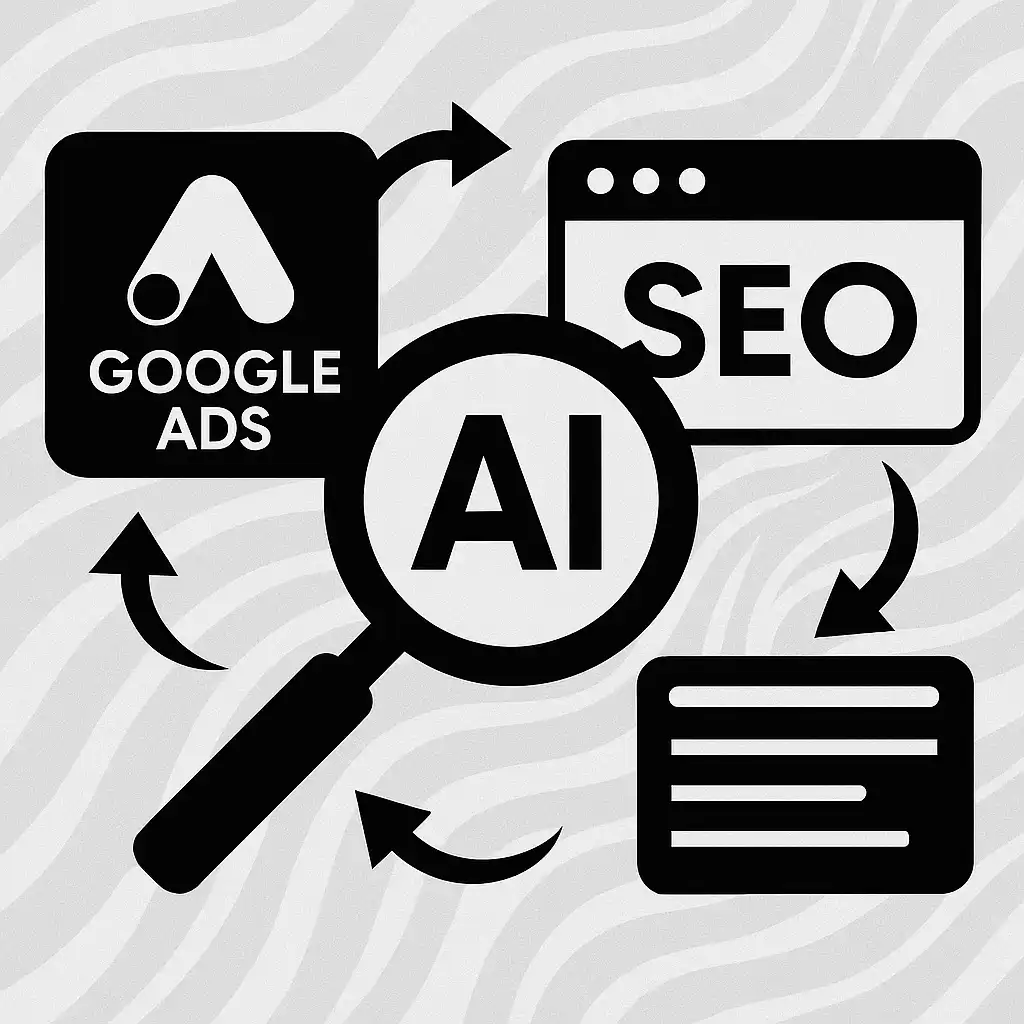
- Your backlinks and mentions feed credibility into Google’s algorithm.
- That credibility boosts ad quality scores (meaning cheaper clicks and better placement).
- Your ads, in turn, amplify brand searches, improving organic visibility.
See the loop? Paid and organic now share DNA.
If your brand shows up in both an AI summary and an AI-placed ad, you dominate the real estate. You’re not just visible, you’re validated.
So next time someone tells you “SEO and PPC are separate teams,” smile politely… and then ignore them.
Local & Geo Signals: The Secret Weapon
Let’s not forget local. As AI and ads go global, geo relevance is the one thing keeping smaller businesses competitive.
If you’re running ads for a local service (say, a plumbing company in Oshawa or a real-estate firm in Kelowna), your geo-optimized content and backlinks can supercharge your Google Ads results. Why? Because Google’s new AI search leans heavily on local context.
That means:
- Local backlinks = higher trust for nearby audiences
- Local ads = better ad relevance scores
- Combined strategy = lower CPC and higher CTR
In short, local outreach and link building don’t just help SEO, they reduce ad costs. Wild, huh?
Why Backlinks and Brand Mentions Still Rule
Some people keep saying backlinks don’t matter anymore. (They also said vinyl was dead, and look how that turned out.)
Backlinks and mentions remain the bedrock of online authority, especially in an AI-driven world where machines decide what “trusted” means. When AI summarises search results, it often cites the same authoritative domains it’s been trained on; the ones that earned strong backlinks.
Building that kind of visibility increasingly requires looking beyond conventional rankings to how search and AI systems understand, retrieve and cite a brand. Businesses developing this broader approach can work with AI SEO Consultant Tharindu Gunawardana on AI search visibility, entity signals, citations and the SEO foundations that support discovery across both traditional and generative search.
So, your outreach strategy matters more than ever. Here’s what works right now:
- Guest posting on reputable, topic-relevant sites
- Brand mentions across trusted publications (linked or not)
- Contextual link insertions that add real value to the reader
- Local citations for businesses targeting geographic areas
- Content swaps or mutual collaborations with non-competing brands
In other words, every mention counts, even if it’s not blue and underlined.
The AI-Driven Ad Shift
Here’s the kicker: ads themselves are starting to act like mini search engines.
With AI in play, ad systems now interpret intent instead of just keywords. They can predict what a user really wants and serve the right message at the right time. That’s great news, unless your content and ad strategy are still stuck in 2018.
Ad placements are showing up inside AI answers, within product recommendations, and even between snippets. That means measuring performance is trickier than ever. Impressions are up, clicks are down, and conversions often come from “soft” interactions like voice queries or embedded calls-to-action.
So, how do you measure success?
By watching for blended metrics like:
- Brand visibility in AI Overviews
- Mentions or citations in generative answers
- Ad engagement correlated with organic impressions
Basically, it’s not about who got the click anymore, it’s about who got the mindshare.
Bringing It All Together: The Hybrid Strategy
If you’re running an agency or an in-house marketing team, here’s how to stay sane:
Step 1: Marry your SEO and Ads data
Stop treating them like divorced parents. Analyse them together.
- Which landing pages perform best for both ads and organic?
- Do your top backlink sources overlap with your best-performing keywords?
When you align them, your cost per conversion usually drops.
Step 2: Build outreach that supports both funnels
When you guest post or earn a link, point it to a page that supports your ad funnel too. If a user discovers your brand organically and later clicks an ad, that’s not a coincidence, it’s synergy.
Step 3: Prioritize high-authority content
Write content that’s good enough to be referenced by AI engines and also converts well in ad landing pages. Use clear, factual structures, and make your pages look trustworthy.
Step 4: Train your team (and keep them sharp)
Even if you’re a pro, platforms change faster than caffeine kicks in. Periodic refreshers, like the a Google Ads course, keep you updated on the latest formats, analytics, and integrations. Think of it as a gym membership for your marketing brain.
A Quick Real-World Example
Let’s say you’re a google ads agency running a campaign for a local moving company in Ottawa.
Here’s how a blended strategy plays out:
- You write a guest article on a local lifestyle blog about “The Hidden Costs of Moving Across Ottawa” – link included.
- That backlink boosts your client’s organic trust and local authority.
- Then, you run geo-targeted Google Ads promoting “affordable movers in Ottawa.”
- Google sees the landing page has strong backlinks, relevant content, and high dwell time – meaning your ad’s quality score goes up, and your cost per click goes down.
- When AI generates a search summary about “moving companies near me,” your client appears organically and as a paid ad inside the same overview.
That’s a full-circle win – cheaper ads, stronger SEO, and unbeatable visibility.
Challenges Nobody Talks About
Now, before you rush off and high-five your SEO team, let’s get real. This hybrid approach isn’t magic dust. It comes with hurdles:
- Zero-click searches: Even if you’re cited, users might never visit your site.
- Attribution headaches: Who gets the credit – the ad, the link, or the AI summary?
- Data overload: Tracking brand mentions, citations, and cross-channel ROI isn’t for the faint-hearted.
- Quality policing: With AI reading everything, one low-quality link or thin article can make you look sketchy.
Still, these are good problems to have, they mean the system’s evolving, not collapsing.
What to Do Next (No, Seriously)
If you’re wondering where to start, here’s a simple roadmap:
- Audit your content and ad alignment. Are your ad landing pages backed by organic authority?
- Create an outreach plan. Target publications that both rank and influence, not just any site that takes a guest post.
- Track mentions, not just backlinks. Tools like Ahrefs and Brand24 can now monitor co-citations and unlinked mentions.
- Experiment with AI search visibility. Run queries related to your niche and see which brands AI is citing. Then plan how to get yourself on that list.
Keep learning. New ad formats, evolving AI interfaces, privacy updates, staying trained is the best edge.
The Bottom Line
The SEO vs PPC debate is officially outdated. In 2025, it’s all one game: visibility marketing.
Paid search and organic SEO now feed each other, and the smartest marketers use backlinks, brand mentions, and smart ad operations to stay visible no matter how users search.
Google’s AI might change how we click, but it doesn’t change what matters: credibility, relevance, and connection.
So, the next time someone says, “Organic and paid are different worlds,” just grin and say, “Sure, and the Earth is flat, too.” 🙂
Finally
The fusion of Google Ads, AI search, and SEO isn’t the end of digital marketing, it’s the upgrade we didn’t know we needed. Stay adaptable, keep your links clean, your ads smart, and your wit sharper than Google’s algorithm.
Because let’s face it, if you’re not blending paid and organic in 2025, you’re probably blending your coffee wrong.
More about SEO