
7 Differences Between Karate and Taekwondo
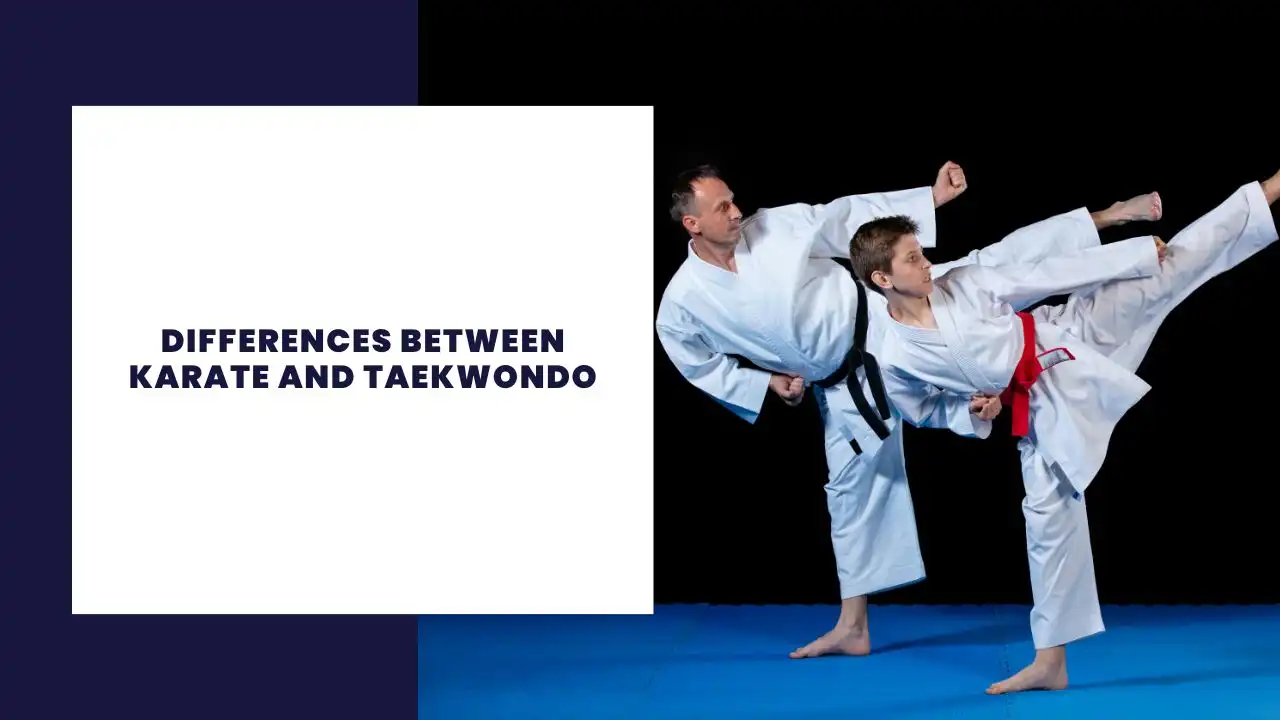
Karate and Taekwondo are two of the most recognized martial arts in the world. Both focus on discipline, self-defense, and physical conditioning, yet they differ significantly in their origins, techniques, and philosophies. Understanding the difference between karate and taekwondo helps students and parents decide which martial art form best suits their interests and goals.
While karate originated in Okinawa, Japan, taekwondo has its roots in Korea. Both martial arts share ancient influences from Chinese martial arts, but each evolved with a unique emphasis—karate focuses on hand techniques, while taekwondo emphasizes powerful kicks. Let’s go over the 7 key differences between karate and taekwondo to help you determine which one aligns with your training objectives.
Written by
- Redaction Team
- Body, Personal Development
Table of Contents
1. Origins and History of Karate and Taekwondo
The difference between karate and taekwondo begins with their origins.
Karate was developed in Okinawa, Japan, during the early 20th century. It was influenced by Chinese martial arts and adapted into its own distinct style called Shotokan karate, founded by Gichin Funakoshi, who also established the Japan Karate Association. Karate eventually spread worldwide, giving rise to other styles such as Goju-Ryu, Shito-Ryu, and Wado-Ryu.
Taekwondo, on the other hand, originated in Korea after World War II. It was developed by unifying several Korean martial arts with elements of karate and kung fu. The term “Tae Kwon Do” literally translates to “the way of the foot and the fist.” It became a global phenomenon after the formation of the World Taekwondo Federation (WTF), now simply called World Taekwondo.
While karate started earlier, taekwondo goes back quite far in Korean history, with ancient roots tracing back to taekkyeon, an old Korean martial art form kept alive in secret during occupation periods.
2. Techniques and Focus: Hand vs. Foot
A major difference between karate and taekwondo lies in the techniques and emphasis.
Karate focuses on hand techniques and combinations. Karate practitioners are trained to strike using punches, knife-hand strikes, and blocks. Kicks are part of karate but are used more conservatively, often to complement hand attacks.
Taekwondo, by contrast, emphasizes kicking techniques. Taekwondo practitioners spend significant time developing jumping kicks, spinning kicks, and high roundhouse kicks. The spinning kick is one of the signature moves that demonstrate agility, precision, and power.
In simple terms, karate uses hand combos primarily, while taekwondo relies heavily on leg techniques to gain reach and speed advantages.
3. Forms and Training Style
Both karate and taekwondo include forms, or pre-arranged patterns of movement designed to perfect technique and rhythm.
In karate, these patterns are called “kata.” Each kata consists of specific hand techniques, stances, and blocks that teach precision and power.
In taekwondo, the equivalent is called “poomsae.” These are more dynamic, with greater use of kicks and spinning movements, reflecting the martial art’s Korean roots.
Students in taekwondo classes learn spin kicks and advanced techniques at an earlier stage compared to karate training, which focuses on mastering fundamentals through repetition and discipline.
4. Competition Rules and Scoring
The competition rules are among the most distinct differences between karate and taekwondo.
In karate competition, points are awarded for clean strikes using both hands and feet to specific target areas. The karate competition system values precision, control, and accuracy. Matches typically emphasize quick, controlled punches rather than excessive force.
In taekwondo competition, the World Taekwondo Federation has established a scoring system that heavily rewards kicks to the head and body. Punches are scored lower, and the sport often uses electronic scoring systems integrated into vests and helmets.
Essentially, karate values balanced technique and hand precision, while taekwondo prioritizes high-impact kicks and speed.
5. Belt Ranking System and Black Belt Progression
Both martial arts use a colored belt system to signify rank and skill, progressing toward the black belt, which represents mastery.
In karate, the belt ranking system is structured around the student’s understanding of kata, self-defense, and discipline. Achieving a black belt in karate usually requires years of consistent training under a certified karate master.
In taekwondo, the belt ranking and in competition standards are slightly different. The World Taekwondo Federation and International Taekwondo Federation (ITF) follow distinct grading systems, but both require mastery of forms (poomsae), sparring, and breaking techniques to reach black belt status.
Both martial arts reward dedication and perseverance, but taekwondo training may place greater emphasis on athletic performance due to its Olympic presence.
6. Philosophy and Discipline in Each Martial Art
Both karate and taekwondo go beyond physical combat—they teach respect, self-discipline, and inner strength.
Karate follows a Japanese martial arts philosophy that focuses on self-control, humility, and personal growth. It encourages students to master themselves before mastering their opponent.
Taekwondo, deeply rooted in Korean martial arts, emphasizes courtesy, integrity, perseverance, self-control, and indomitable spirit. It was developed as a martial art for self-defense, not aggression, promoting balance between body and mind.
While both share similar moral values, taekwondo’s philosophy leans more toward spiritual and ethical discipline, while karate highlights precision and respect through repetition and mastery.
7. Suitability for Children and Adults
When comparing karate vs taekwondo as martial arts for children, both offer excellent benefits—but with different focuses.
Karate helps children develop focus, coordination, and confidence through hand techniques and structured training. It’s ideal for those who prefer learning precision movements and traditional discipline.
Taekwondo, however, is often more energetic and dynamic, making it appealing for arts for children and adults who enjoy movement and flexibility. The constant practice of high kicks and spinning motions keeps students active and engaged.
Both martial arts forms are excellent for fitness and self-defense. The choice depends on whether you or your child prefer hand-based techniques or kick-focused action.
FAQs About Karate and Taekwondo
Both are suitable for beginners. Karate is great for those who want to master hand techniques, while taekwondo is ideal for those who enjoy kicks and dynamic movements.
Taekwondo schools may offer faster advancement due to structured grading systems, but achieving a black belt in either requires dedication and years of consistent practice.
The basic difference is that karate uses hand combos primarily, while taekwondo emphasizes kicking techniques.
Both are effective martial arts for self-defense, but karate may be more practical at close range due to its focus on hand strikes and blocks.
Taekwondo is an official Olympic sport, while karate was included in the Tokyo 2020 Olympics but is not a permanent Olympic event.
Conclusion
Both karate and taekwondo offer rich traditions, deep philosophies, and incredible physical benefits. The difference between karate and taekwondo lies mainly in their techniques—karate focuses on hand strikes, while taekwondo emphasizes high and spinning kicks.
For students deciding between karate or taekwondo, the best choice depends on personal goals. If you seek precision, traditional discipline, and Japanese martial art techniques, karate may be the right fit. If you prefer dynamic movements, athletic training, and Korean martial arts flair, taekwondo will suit you perfectly.
Both styles remain among the most respected martial arts forms in the world, teaching confidence, self-defense, and inner strength to children and adults alike.
More about Body