14 Key Advantages and Disadvantages of AI Assistants
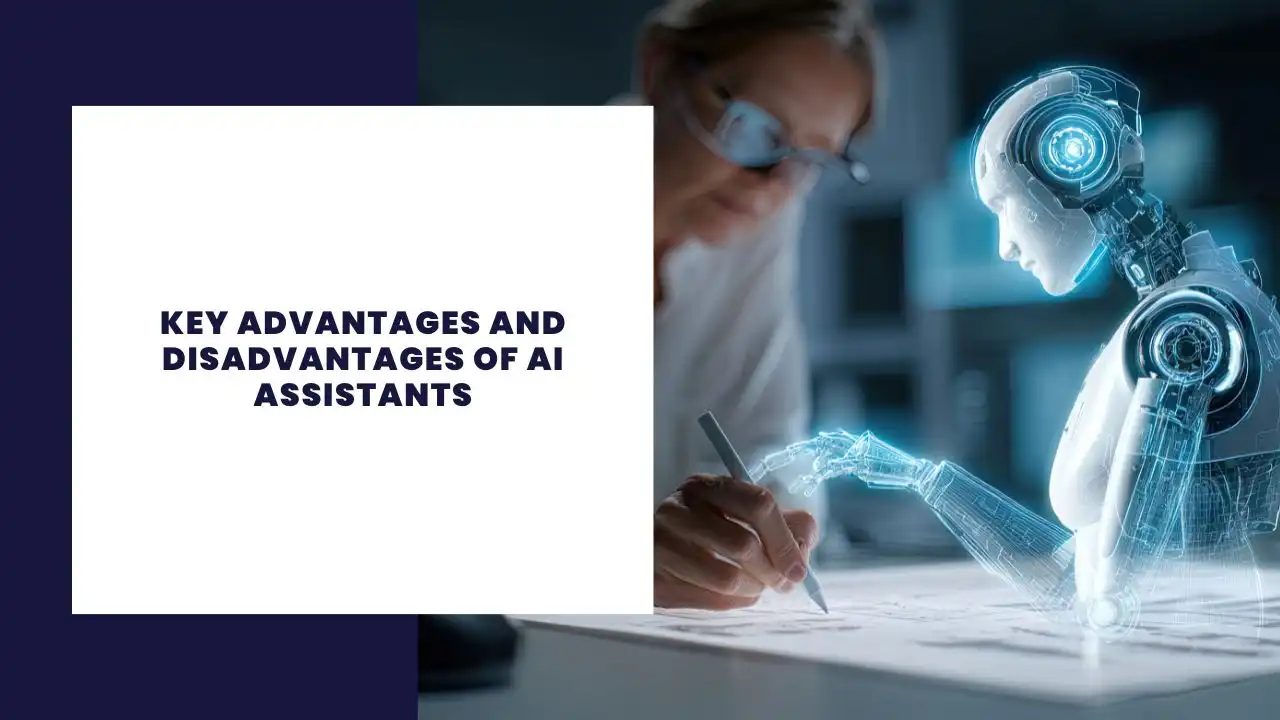
AI assistants have become an essential part of modern digital life, supporting individuals and businesses in ways that were once impossible without human intervention. From improving workflow efficiency to managing customer inquiries, artificial intelligence continues to transform how people work, communicate, and access information. With the rise of AI-powered systems, including generative AI, machine learning models, and digital assistants, more people are using an AI assistant daily to complete tasks, streamline operations, and automate repetitive responsibilities.
Despite these advancements, AI assistants also bring challenges and risks. Issues such as data privacy, the security of AI, job displacement, and reliance on training data contribute to ongoing debates about the benefits and drawbacks of AI technology. Understanding the pros and cons of AI assistants helps users make informed decisions about adopting AI tools in their personal or professional environments.
Written by
- Redaction Team
- Business Technology, Entrepreneurship
Table of Contents
What is AI Assistants
AI assistants, also known as virtual assistants or AI agents, are software applications powered by artificial intelligence and natural language processing that perform tasks, provide information, and automate workflows. These assistants can interpret queries, analyze data, automate repetitive tasks, and deliver personalized recommendations. Common examples include ChatGPT, Google Assistant, Amazon’s Alexa and Apple’s Siri, all of which rely on large language models and AI algorithms to understand user interactions.
AI assistants appear in multiple forms, from voice-activated devices to chat-based systems embedded in websites and enterprise platforms. They support data analysis, administrative tasks, and customer service functions, enhancing overall efficiency for both individuals and organizations.
Advantages of AI Assistants
1. Increased Productivity
One of the primary advantages of AI assistants is their ability to increase productivity. By automating tasks such as scheduling, data entry, and document drafting, AI-driven tools reduce time spent on manual work. This allows individuals and businesses to focus on more complex tasks that require creativity or strategic thinking.
2. Automation of Repetitive Tasks
AI assistants excel at handling repetitive tasks that would otherwise consume hours of human labor. The ability to automate repetitive tasks leads to cost savings and improved workflow, especially within industries that rely heavily on administrative tasks.
3. Enhanced Decision-Making
AI systems analyze large volumes of information quickly, allowing users to make decisions based on real-time insights. Through machine learning, AI agents analyze data patterns and deliver recommendations that aid in decision-making processes across fields such as finance, healthcare, and logistics.
4. Improved Customer Experience
Businesses benefit from AI-powered customer service tools capable of responding to queries, managing customer inquiries, and offering quick solutions. Assistants like chatbots help maintain customer satisfaction by providing immediate responses and reducing wait times.
5. Cost Savings
Automating tasks reduces the need for extensive staffing resources, leading to significant cost savings. Companies can allocate budgets more effectively by utilizing AI tools that perform tasks traditionally handled by multiple employees.
6. Accessibility and Convenience
Virtual assistants provide instant access to information and support. With the ability to use natural language processing, users can interact with AI through everyday conversation, making AI technology accessible to a wide audience.
7. Streamlined Workflows
Using an AI assistant helps streamline workflows by integrating seamlessly with digital systems, calendars, email platforms, and project management tools. This improves overall efficiency and supports better time management.
Disadvantages of AI Assistants
8. Data Privacy Concerns
A major drawback of AI assistants involves data privacy. Because AI agents analyze user information and interactions, sensitive data may be at risk if security measures fail. Ensuring the security of AI systems is essential to avoid unauthorized access.
9. Job Displacement
As automation increases, concerns arise about AI replacing certain job roles. Automating administrative tasks or customer service responsibilities has the potential to reduce the need for human labor, leading to job displacement in various industries.
10. Dependence on Training Data
AI models rely heavily on training data to perform tasks accurately. Inaccurate, outdated, or biased training materials can reduce effectiveness or lead to incorrect decision-making. AI can’t always recognize context the way humans do, which influences its reliability.
11. Limited Understanding of Complex Tasks
Although AI has advanced significantly, AI agents still struggle with certain complex tasks that require emotional intelligence, deep reasoning, or nuanced interpretation. This limitation demonstrates the need for human intervention in many areas.
12. Risks of Misuse
Like any technology, AI tools carry risks of misuse. If used improperly, AI technology can spread misinformation, make flawed decisions, or automate harmful processes. Adopting AI responsibly is essential to mitigate these risks.
13. Lack of Personal Connection
Digital assistants cannot replicate human empathy or emotional understanding. While they can mimic natural language, they lack genuine emotional intelligence, which can be a disadvantage in fields that require human warmth and connection.
14. High Implementation Costs
Advanced AI systems may require significant investment in infrastructure, training, and maintenance. Smaller businesses may struggle with the cost of deploying AI solutions effectively, despite the long-term benefits.
Comparison Table of the Pros and Cons of AI Assistants
| Pros of AI Assistants | Cons of AI Assistants |
|---|---|
| Increased productivity | Data privacy concerns |
| Automate repetitive tasks | Job displacement |
| Better decision-making | Dependence on training data |
| Improved customer experience | Limited understanding of complex tasks |
| Cost savings | Risks of misuse |
| Accessible and convenient | Lack of personal connection |
| Streamline workflows | High implementation costs |
The Future of AI Assistants
The future of AI assistants is expected to accelerate dramatically as advancements in artificial intelligence, machine learning, and natural language processing continue to evolve. Generative AI and large language models will play a major role in improving the performance of digital assistants, enabling them to learn from interactions, perform tasks autonomously, and adapt to user needs more effectively.
Applications of AI will expand across industries such as healthcare, logistics, finance, and education, revolutionizing operations through automation and intelligent decision-making. AI-driven assistants will help improve supply chain efficiency, enhance fraud detection, and manage customer interactions with greater accuracy.
At the same time, ensuring that AI agents operate safely, ethically, and responsibly will be a major priority. Companies must mitigate the risks of AI by implementing strong security measures, transparent policies, and regular updates to maintain trustworthy AI systems.
FAQs About AI Assistants
An AI assistant can perform tasks such as answering queries, automating workflows, managing schedules, analyzing data, and assisting with customer inquiries based on artificial intelligence and natural language understanding.
AI assistants can be safe when developers ensure proper security measures, data protection, and ethical AI practices. Users should also be cautious about sharing sensitive personal information.
AI may automate certain roles, particularly repetitive tasks, but human involvement will remain essential for complex tasks requiring critical thinking, creativity, and emotional intelligence.
They automate repetitive tasks, streamline workflows, and deliver quick insights, helping individuals and organizations focus on more strategic or creative work.
Examples include ChatGPT, Google Assistant, Amazon’s Alexa, Apple’s Siri, and various AI-driven virtual assistants built into business platforms and customer service tools.
Conclusion of Advantages and Disadvantages of AI Assistants
AI assistants offer powerful benefits, from automating tasks to improving decision-making and enhancing customer experience. The ability to leverage AI tools brings increased efficiency, cost savings, and convenience to everyday life. However, the disadvantages highlight important concerns related to data privacy, reliance on training data, and potential job displacement.
Understanding the advantages and disadvantages of AI assistants allows individuals and organizations to adopt the technology responsibly. As AI continues to advance, ensuring that AI agents operate safely, ethically, and effectively will be essential to maximizing benefits while minimizing risks.
More about Business Technology