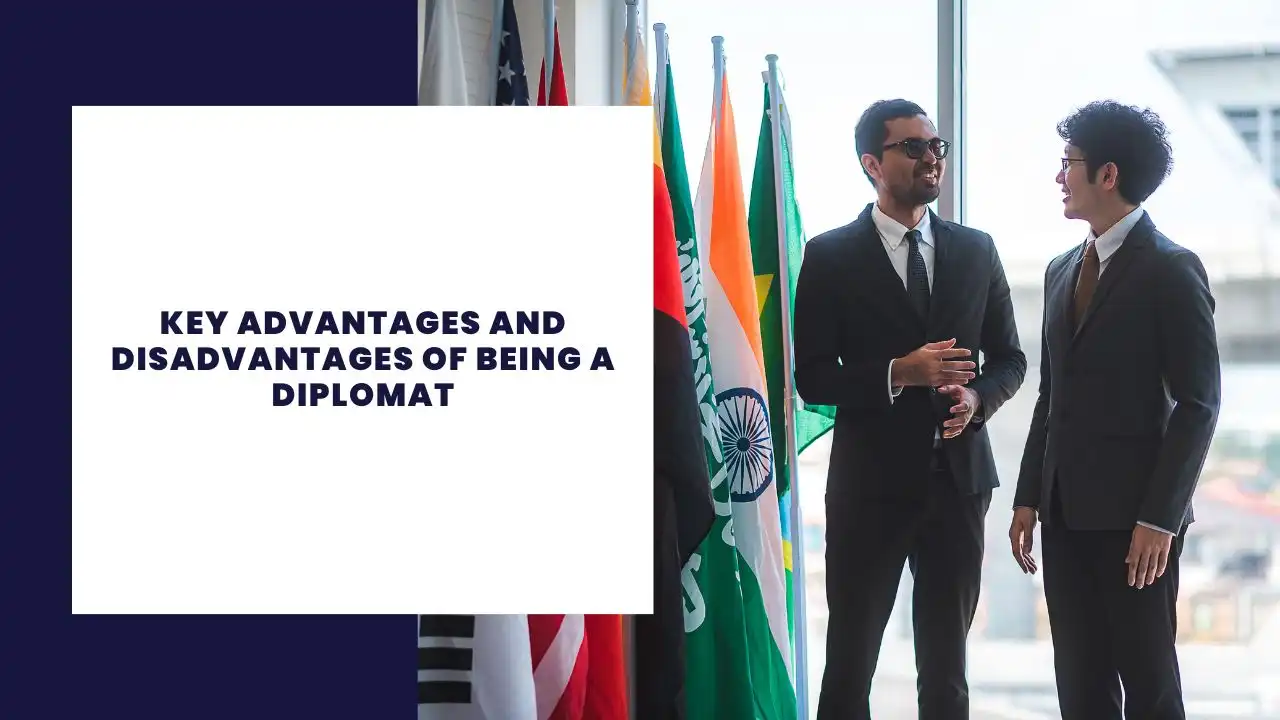
14 Key Advantages and Disadvantages of Being a Diplomat
A career in the foreign service is often viewed as prestigious and exciting. Diplomats dedicate their lives to representing one’s country abroad, engaging in international relations, and addressing global issues such as trade, security, and human rights abuses. The life of a diplomat is filled with travel, exposure to different cultures, and opportunities to influence public policy on an international scale.
Yet, despite the perks and rewarding aspects, this path also comes with significant challenges. From long hours and frequent relocations to security risks in foreign countries, it is important to weigh the pros and cons of becoming a diplomat before deciding if this career suits your goals and lifestyle.
Written by
- Redaction Team
- Professional Career, Professional Development
Table of Contents
What is a Diplomat?
A diplomat is a professional who represents their home country in foreign countries through embassies and consulates. They work within the diplomatic corps and foreign service to negotiate treaties, support citizens abroad, and foster peaceful international relations.
The diplomat’s role extends beyond formal diplomacy. They provide consular services such as issuing visas, monitoring living conditions for citizens abroad, and addressing crises like unrest, terrorism, or natural disasters. Foreign service officers (FSOs) often work under the department of state or equivalent institutions, and their diplomatic work requires strong communication skills, foreign language expertise, and an ability to adapt to new cultures.
The life of a diplomat involves postings every few years, living overseas, and working in major cities or even unstable regions. While free housing and allowances may be provided, the lifestyle also includes long hours, bureaucratic challenges, and exposure to security risks.
Advantages of Being a Diplomat
1. Representing One’s Country on a Global Stage
One of the main pros of being a diplomat is the honor of representing one’s country in international negotiations, embassies, and global forums. This role provides purpose and pride, making it a unique form of public service.
2. Experience Different Cultures
Diplomats experience different cultures firsthand. Posting in foreign countries allows FSOs to immerse themselves in new languages, traditions, and customs, fostering personal growth and cultural understanding.
3. Career Advancement Opportunities
A career in the foreign service offers clear career advancement, from junior FSO positions to the rank of ambassador. The diplomatic corps rewards dedication, qualifications, and effective diplomatic work.
4. Free Housing and Perks Abroad
Diplomats often enjoy free housing, travel allowances, and other perks provided by the department of state or host country. These benefits offset the challenges of relocation and long hours.
5. Exposure to Global Issues
Working as a diplomat means engaging directly with pressing global issues such as cybersecurity, human rights abuses, and public policy. This exposure allows FSOs to contribute meaningfully to international stability.
6. Personal Growth and Networking
The people you meet while living overseas provide valuable connections for both personal and professional growth. Diplomats regularly interact with government officials, international organizations, and new people from all walks of life.
7. Job Stability and Salaries
Although salaries vary by rank and country, diplomats receive steady compensation, retirement benefits, and job security as government employees. This makes the career financially stable in the long term.
Disadvantages of Being a Diplomat
1. Frequent Relocation and Always Moving
One major disadvantage of being a diplomat is the constant relocation. Every few years, FSOs must move to a new post, which can disrupt family life and make it difficult to maintain long-term friendships.
2. Long Hours and Workload
The life of a diplomat often involves long hours, attending events, writing reports, and handling crises. This workload can lead to stress and impact work-life balance.
3. Security Risks in Host Countries
Diplomatic work sometimes places FSOs in regions facing unrest, terrorism, or human rights abuses. Living conditions can be challenging, and security risks are a serious drawback of the profession.
4. Bureaucracy and Slow Processes
Another con is the bureaucracy involved in diplomatic work. Decision-making often requires multiple levels of approval, and negotiating treaties or managing visa applications can be frustratingly slow.
5. Impact on Family and Lifestyle
Always moving between embassies and consulates can affect family stability. Children may have to adapt to new schools frequently, while spouses may struggle with career continuity.
6. Bias and Public Scrutiny
Diplomats are constantly under scrutiny, both from their host country and their home country. Bias, cultural misunderstandings, and political pressure can make the job emotionally draining.
7. Physically and Mentally Demanding Lifestyle
Living overseas in foreign countries, adjusting to new people, and handling crises takes a toll. The downside of this career includes the stress of relocation, emergency response, and maintaining high performance despite challenging conditions.
Comparison Table of the Pros and Cons of Being a Diplomat
| Pros of Being a Diplomat | Cons of Being a Diplomat |
|---|---|
| Representing one’s country | Frequent relocation and always moving |
| Exposure to different cultures | Long hours and heavy workload |
| Career advancement opportunities | Security risks in host countries |
| Free housing and diplomatic perks | Bureaucracy and slow processes |
| Engaging with global issues | Impact on family and lifestyle |
| Personal growth and networking | Bias and public scrutiny |
| Job stability and steady salaries | Physically and mentally demanding lifestyle |
Career Paths of Diplomats
Foreign Service Officer (FSO)
The most common career path is to become an FSO, specializing in areas such as consular affairs, public policy, or political negotiations. FSOs work in embassies and consulates around the world.
Ambassador
Experienced diplomats may rise to the rank of ambassador, representing their home country at the highest diplomatic level. Ambassadors play critical roles in negotiating treaties and shaping international relations.
Consular Officer
Consular officers focus on assisting citizens abroad, issuing visas, and supporting those facing crises such as arrests, natural disasters, or medical emergencies.
Public Policy Advisor
Some diplomats transition into public policy roles, influencing decisions within the department of state or advising governments on international affairs.
International Relations Specialist
With a background in political science and diplomacy, diplomats can also work for international organizations, think tanks, or NGOs, focusing on global issues and humanitarian efforts.
FAQs About Being a Diplomat
Most countries require a college degree, often in political science, international relations, or related fields. Additional qualifications include language skills, communication skills, and passing foreign service exams.
A diplomat’s daily tasks may include writing reports, negotiating treaties, attending embassy events, assisting citizens with visa issues, and addressing crises in the host country.
Yes, diplomats typically receive free housing and allowances while living overseas. This perk helps offset the challenges of relocation.
The biggest drawbacks include frequent relocation, long hours, exposure to security risks, bureaucracy, and the emotional toll of constant adaptation.
While many postings are in major cities, some FSOs are sent to smaller towns or unstable regions, depending on their country’s diplomatic needs.
Conclusion of Advantages and Disadvantages of Being a Diplomat
A career in the foreign service offers prestige, purpose, and the chance to influence international relations at the highest level. The advantages include representing one’s country, experiencing different cultures, and enjoying career advancement opportunities. However, the disadvantages—such as frequent relocation, security risks, and long hours—require serious consideration.
For those passionate about diplomacy, public service, and global issues, becoming a diplomat can be a rewarding career. Yet, anyone pursuing this path must weigh the pros and cons carefully to determine whether the lifestyle, challenges, and diplomatic work align with their long-term goals and personal values.
More about Professional Career