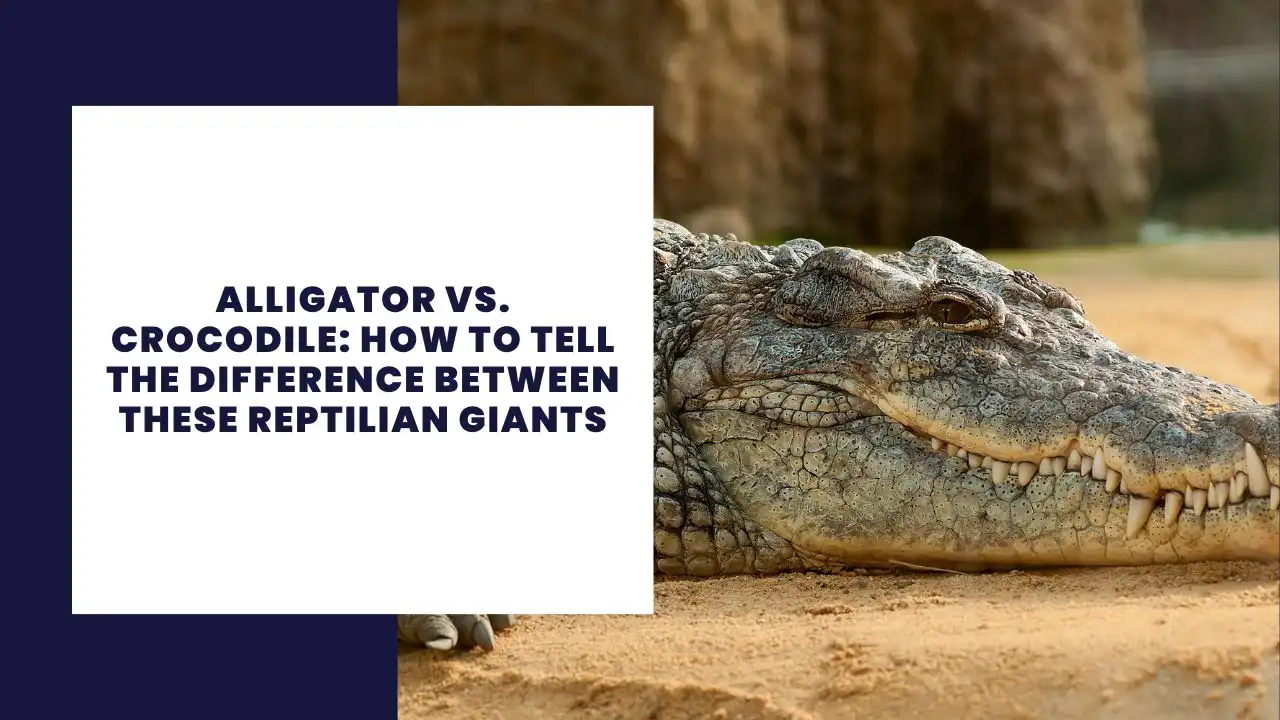
Alligator vs. Crocodile: How to Tell the Difference Between These Reptilian Giants
Alligators and crocodiles are often mistaken for one another due to their similar appearances, but there are key differences between the two. From their snout shape to their preferred habitats, these crocodilians each have unique characteristics that set them apart. Let’s dive into these distinctions to help identify whether you’re looking at an alligator or a crocodile.
DALL·E 2024-11-12 06.36.57 - A detailed comparison chart of an alligator and a crocodile in a natural setting, showing their physical differences. On the left
Crocodiles and alligator belong to different families within the crocodilian group, which further emphasizes the difference between a crocodile and an alligator. Understanding these differences requires looking at several physical and behavioral traits, as well as where they live.
1. Snout Shape: U-Shaped vs. V-Shaped
One of the most noticeable differences between alligators and crocodiles is the shape of their snouts:
Alligators have a broad, U-shaped snout. This rounded snout is often better suited to their diet, which includes crustaceans, fish, and other softer prey found in their typical freshwater habitats.
Crocodiles tend to have a V-shaped snout, which is narrower and pointed. This snout shape helps them hunt in both freshwater and saltwater environments, and it suits their diet, which can include larger prey.
2. Teeth and Jaw Structure: The “Toothy Grin”
Another key difference is visible when each animal’s mouth is closed:
Alligators have a wider upper jaw than their lower jaw, which means that when their mouth is closed, only the top teeth are typically visible. Their bottom teeth are hidden.
Crocodiles, on the other hand, have an upper and lower jaw of similar width, which results in their teeth interlocking when their mouth is closed. This creates a “toothy grin” where the fourth tooth on each side of the lower jaw is always visible.
3. Habitat Preferences: Freshwater vs. Brackish Water
Habitat is another distinction:
Alligators prefer freshwater environments like rivers, lakes, swamps, and marshes. The American alligator, Alligator mississippiensis, is primarily found in the southeastern United States, including the Florida Everglades and other freshwater habitats.
Crocodiles can tolerate a broader range of environments, including brackish water (a mix of saltwater and freshwater). The saltwater crocodile (Crocodylus porosusThe saltwater crocodile, for example, can be found in saltwater and is common in regions of Southeast Asia, Australia, and coastal Africa, demonstrating its adaptability compared to gators. The American crocodile The saltwater crocodile is also found in brackish water areas, like southern Florida, where gators and crocs coexist.
Comparing the Species: Alligators, Crocodiles, and Caymans
There are a few types of each reptile that you might encounter, particularly if you’re in North America or traveling to warmer regions.
Alligator Species
American Alligator (Alligator mississippiensis): The most common species, found in the southeastern United States.
Chinese Alligator (Alligator sinensis): A rare and critically endangered species, found in the Yangtze River basin.
Crocodile Species
Saltwater Crocodile (Crocodylus porosus): Known as the largest species of crocodile, found in saltwater and brackish water from Southeast Asia to Australia. Crocodiles can reach lengths of up to 20 feet, showcasing the impressive size difference between a crocodile and an alligator.
Nile Crocodile (Crocodylus niloticus): Found across Africa, this species is known for its powerful bite and aggressive behavior.
American Crocodile (Crocodylus acutusCrocodiles are found in southern Florida, Central America, and parts of South America, highlighting the difference between a crocodile and an alligator in their habitats. This species prefers brackish water and can be more aggressive than alligators.
Cayman
While not technically an alligator or crocodile, caymans are also members of the crocodilian family, closely related to alligators. They are primarily found in Central and South America.
Size Comparison: Which Reptile is Bigger?
In terms of size, crocodiles are generally larger than alligators.
Alligators can grow to about 15 feet in length, though most are smaller.
Crocodiles can reach impressive lengths, with the saltwater crocodile capable of growing up to 20 feet or more, making it the largest of all crocodilian species.
Behavior and Temperament: Aggressive Tendencies
Another major difference is the temperament of these two reptiles:
Alligators are typically more docile and avoid human interaction if possible. They are more likely to flee than fight when approached.
Crocodiles, however, are known for their aggressive nature, particularly species like the Nile crocodile and saltwater crocodile, which are responsible for most crocodile attacks on humans.
Age: These animals have been around for millions of years, with ancestors dating back to the dinosaur era.
Powerful Bite: Crocodiles have one of the strongest bite forces in the animal kingdom, with some species reaching up to 3,700 pounds per square inch.
Lifespan: Both can live for several decades; some crocodiles have been known to live for over 70 years.
How to Remember the Differences
If you struggle to remember which is which, here are a few tips:
Snout Shape Reminder:
U-shaped = Alligator (think “U for USA,” as the American alligator is common in the United States).
V-shaped = Crocodile.
Habitat Hint:
Alligators prefer Freshwater The ecosystems include various bodies of water, like lakes and rivers, which are home to both gators and crocodiles.
Crocodiles are versatile and can live in saltwater, brackish, or freshwater.
“Toothy Grin”:
If you see both top and bottom teeth when the mouth is closed, it’s likely a crocodile.
Frequently Asked Questions
1. What’s the difference between an alligator and a crocodile’s snout?
Alligators have a broad, U-shaped snout, while crocodiles have a narrow, V-shaped snout, which is the biggest difference between a crocodile and an alligator.
2. Which is more aggressive, an alligator or a crocodile?
Generally, crocodiles are more aggressive, particularly species like the Nile and saltwater crocodiles.
3. Can alligators live in saltwater?
Alligators prefer freshwater and are rarely found in saltwater environments, while some crocodiles can thrive in both.
4. Where can you find both alligators and crocodiles in the wild?
South Florida is one of the only places in the world where both American alligators and American crocodiles coexist.
Conclusion
Alligators and crocodiles, despite their similarities, have distinct characteristics that set them apart. By observing features like snout shape, jaw structure, and habitat, you can determine whether you’re looking at an alligator or a crocodile. Each has evolved unique adaptations to thrive in their respective environments, making them fascinating members of the crocodilian family.
We use cookies on our website to give you the most relevant experience by remembering your preferences and repeat visits. By clicking “Accept”, you consent to the use of ALL the cookies.
This website uses cookies to improve your experience while you navigate through the website. Out of these, the cookies that are categorized as necessary are stored on your browser as they are essential for the working of basic functionalities of the website. We also use third-party cookies that help us analyze and understand how you use this website. These cookies will be stored in your browser only with your consent. You also have the option to opt-out of these cookies. But opting out of some of these cookies may affect your browsing experience.
Necessary cookies are absolutely essential for the website to function properly. This category only includes cookies that ensures basic functionalities and security features of the website. These cookies do not store any personal information.
Any cookies that may not be particularly necessary for the website to function and is used specifically to collect user personal data via analytics, ads, other embedded contents are termed as non-necessary cookies. It is mandatory to procure user consent prior to running these cookies on your website.