If you’re a startup, you can’t just rely on verbal agreements when you’re doing business with another party. You need a business contract that defines the nature of your transaction so that everyone understands what is being agreed upon. The contract protects you and the other party should disagreements occur down the road.
But how do you write a business contract for your startup? Learn how to write a business contract with these five steps:
1. Start with the Basic Information
There are a few things you should include at the beginning of the document. First, make sure that you have the legal names and addresses of everyone involved in the business contract. But don’t just rely on what the other party says.
To avoid any possible legal issues due to spelling mistakes, ask for the other party’s official government documentation and copy the individual or company name and address as they appear there.
Include a description of the products or services that are being sold or offered by each party, or the party’s designation in their company, too. In contracts, the more identifying features of the parties you include, the better.
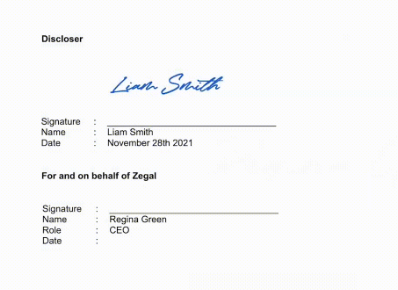
Once you have those out of the way, you can include other information such as the objective of the contract and the context of the business relationship. You’ll have to include the date the document was signed as well, as in our example above.
2. Make the Obligations Clear
Because a contract is a legally binding document, you need to ensure the obligations of every party are clear.
For example, if you’re hiring someone to work for your startup, you’ll want to ensure that they understand exactly what their role will be. Be as specific as possible.
If you hire a social media marketer, for instance, include in the contract whether you want them to just update your Instagram feed with quality posts or get IG followers, or both. Include the specific key performance indicators you’ll use to evaluate their performance.
A contract will usually require both parties to adhere to specified standards of quality when fulfilling the terms of their agreement.
The business contract should also outline how the parties will handle invoicing and payment. This will include how invoices are issued and what the due date is for payment.
3. Include Guidelines on Contract Termination
Knowing how to write a business contract also means knowing when to deem a contract terminated. You have to specify in the document what constitutes a breach of contract that leads to that contract termination and other reasons that constitute sufficient grounds for the same.
Here are reasons a contract may be terminated (the wordings used in written laws across different countries vary but the general idea behind each concept specified below is more or less the same):
By rescission (due to the other party’s misrepresentation, influence or duress)
Void contract (contract is void from the start due to a mistake and others)
By frustration (one party is unable to discharge their functions as specified in the contract)
By agreement (both parties agree to end the contract)
You should also include a clause that requires the submission of a written notice if a contract is to be ended by one party. Specify when the notice should be submitted, too.
This is a common practice in most industries. For example, if a client is terminating their contract with a marketing agency, they’re supposed to inform the agency at least one or two months in advance. The exact duration usually varies from one business to another.
The idea here is to give the other party enough time to prepare for the exit. It also allows the other party to look for a replacement for the party who wants out of the contract, if necessary.
4. Specify Which Local Laws Will Apply
When both parties live in different places, you have to specify which local law applies in your contract.
If you don’t do this before signing the business agreement, you could have both contract parties arguing that their local law applies when a disagreement occurs.
That poses a problem if the laws prevailing in the two places handle specific aspects of business contracts differently.
5. Include Dispute Resolution Section
This section of your contract will lay down how you and the other party can resolve disputes or disagreements in a fair, unbiased way.
A good example of a dispute resolution process is mediation. Both parties consent to have a mediator hear their case in order to help them come to an agreement outside of court.
The dispute resolution clause should be drafted in a concise, plain language so that both parties understand their responsibilities and legal rights in the event something goes wrong. If you’re unsure about what “concise and plain” here mean, check out the language you used in other business documents you shared with stakeholders. An effective business proposal, for instance, is a good starting point. You managed to convince people to become clients with your proposal. It follows the language you used there is precise and can be easily understood.
In Closing
As a startup, you have to put everything in writing when you’re transacting with another party. This can help prevent disagreements down the road since everyone is on the same page. If disagreements do happen, you’re protected legally.
In other words, you need to know how to write a business contract. As a recap, let’s go over the steps to writing one again:
Start with the basic information
Make the obligations clear
Include guidelines on contract termination
Choose which local laws will apply
Include dispute resolution section
As a final tip, don’t forget to consult legal professionals before getting your contract signed. You want to make sure your final document covers all the legal bases and will protect you if all else fails. Good luck!
We use cookies on our website to give you the most relevant experience by remembering your preferences and repeat visits. By clicking “Accept”, you consent to the use of ALL the cookies.
This website uses cookies to improve your experience while you navigate through the website. Out of these, the cookies that are categorized as necessary are stored on your browser as they are essential for the working of basic functionalities of the website. We also use third-party cookies that help us analyze and understand how you use this website. These cookies will be stored in your browser only with your consent. You also have the option to opt-out of these cookies. But opting out of some of these cookies may affect your browsing experience.
Necessary cookies are absolutely essential for the website to function properly. This category only includes cookies that ensures basic functionalities and security features of the website. These cookies do not store any personal information.
Any cookies that may not be particularly necessary for the website to function and is used specifically to collect user personal data via analytics, ads, other embedded contents are termed as non-necessary cookies. It is mandatory to procure user consent prior to running these cookies on your website.