A commercial roof is one of the most critical components of any commercial building. It protects your property from weather, preserves structural integrity, and plays a major role in energy efficiency and long-term operating costs. When your roof is aging, leaking, or no longer meeting building code standards, a commercial roof replacement becomes a serious consideration rather than a simple maintenance task.
Replacing a commercial roof is a major investment that affects budgets, business operations, and the life of your building. Before committing to a full replacement, building owners must evaluate the existing roof, understand their roofing needs, and plan carefully. Knowing what to consider when replacing a commercial roof helps you make informed decisions that protect your investment and deliver peace of mind for years to come.
1. Condition of the Existing Roof and Need for Replacement
The first thing to consider is whether your current roof truly requires a full replacement or if commercial roof repair services could extend its lifespan. A professional roof inspection and roof assessment will determine whether your roof system is structurally sound or if it has reached the end of its service life.
Signs such as persistent roof leaks, widespread membrane damage, water intrusion, storm damage, or insulation failure often indicate that the roof is compromised. If the commercial roof’s structure is deteriorating or repairs are becoming frequent and costly, replacing a commercial roof may be the most practical solution.
Regular roof maintenance and preventative maintenance can extend the life of your roof, but once the roof remains vulnerable despite repairs, a full replacement becomes the safer and more cost-effective choice.
2. Type of Commercial Roof and Roofing System Options
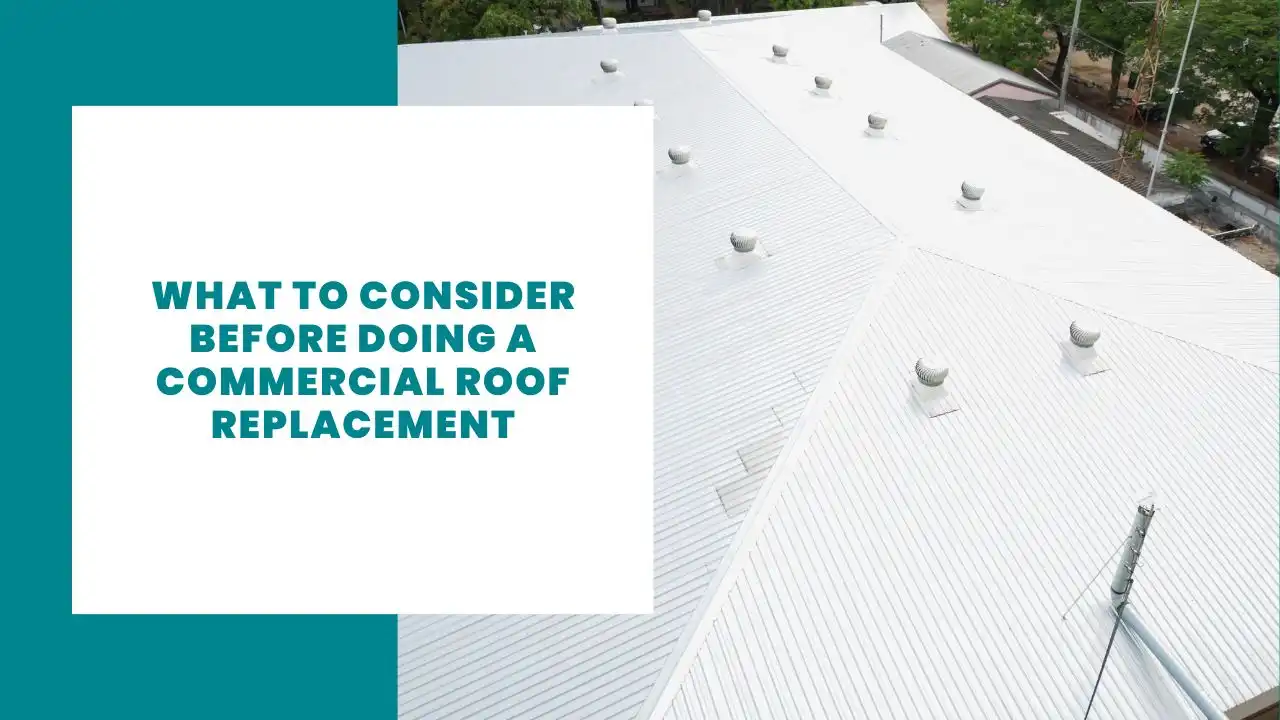
Understanding the type of roof on your commercial building is essential before planning a commercial roof replacement. Common commercial roofing types include built-up roofing, membrane roofing, and single-ply systems such as TPO, EPDM, and other membrane roofing materials.
Flat roofs and commercial flat roof systems require different approaches than sloped designs. The best commercial roofing system depends on your building structure, climate, usage, and long-term maintenance goals. TPO roofs, EPDM membranes, and other single-ply options offer different benefits in terms of durability, energy efficiency, and future maintenance.
Choosing the right roofing materials for commercial use means balancing cost, lifespan, and performance. An experienced commercial roofing contractor can explain the advantages of each system and recommend the most durable roofing solution for your specific roofing needs.
3. Budgeting for a Commercial Roof Replacement
Budgeting for a commercial roof replacement is one of the most important steps in the planning process. Costs vary based on roof size, type of roof, roof materials, insulation requirements, labor costs, and whether a full replacement is necessary or if roof coatings or partial replacement are possible.
Building owners should consider not only the initial replacement cost but also the long-term value of the roof system. Higher-quality materials, better insulation, and energy-efficient systems may cost more upfront but reduce operating expenses and extend the life of your roof.
It is also wise to consider setting aside funds for unforeseen issues discovered during the replacement process, such as structural repairs or drainage upgrades. A well-planned budget protects your investment and prevents delays once the roofing project begins.
4. Energy Efficiency, Insulation, and Building Code Compliance
Modern commercial roof replacement projects must address more than weather protection. Energy efficiency, insulation, and compliance with current building code and energy code requirements are critical factors.
A new commercial roof can significantly improve the efficiency of your building. Proper insulation reduces heat loss in winter and heat gain in summer, lowering utility costs. Reflective membranes such as TPO roofs can further enhance energy efficiency by reducing surface temperatures.
Your roofing contractor should ensure that the new roof system meets all local building code standards. Failing to comply with code can lead to fines, delays, or costly modifications later. Aligning your roof replacement project with current energy standards helps future-proof your building.
5. Drainage, Water Management, and Leak Prevention
Effective drainage is essential to the performance of any commercial roof, particularly flat roofs. Poor drainage can lead to standing water, accelerated membrane wear, and eventual roof leaks.
Before replacing a commercial roof, assess the existing drainage system, including internal drains, scuppers, and gutters. Upgrading drainage during the replacement process can prevent water intrusion and reduce the risk of future roof damage.
A properly designed roof system directs water away from vulnerable areas, protecting insulation, preventing leaks, and extending the life of your roof. Addressing drainage issues during replacement is far more cost-effective than repairing water damage later.
6. Choosing the Right Roofing Contractor and Partner
Selecting the right commercial roofing contractor is one of the most important decisions in the entire process. An experienced commercial roofing contractor understands the roofing industry, building codes, and the complexities of commercial roofing systems.
Look for roofing companies with a proven track record in commercial properties, strong references, and affiliations with organizations such as the National Roofing Contractors Association. Ask your roofing contractor about their experience with similar commercial roof replacement projects, the materials they recommend, and their approach to safety and quality control.
A reliable roofing partner provides clear communication, accurate timelines, and transparency throughout the project. Choosing the right contractor ensures that your roof replacement project is completed professionally and that your new roof remains durable and compliant.
7. Project Timeline, Business Operations, and Future Maintenance
Planning a commercial roof replacement requires careful consideration of project timeline and its impact on business operations. Commercial roofs last for decades, but the replacement process itself can affect daily activity, access points, and building use.
Work with your roofing contractor to develop a realistic timeline that minimizes disruptions. Scheduling around peak business periods, ensuring safety protocols, and maintaining access where possible help keep operations running smoothly.
Future maintenance should also be part of your planning. A new commercial roof still requires regular roof inspections and maintenance to extend the life of your roof. Understanding future maintenance needs, warranty coverage, and inspection schedules protects your investment and ensures that your roof system performs as expected.
FAQs About What to Consider Before Doing a Commercial Roof Replacement
How do I know if I need a full commercial roof replacement?
If your existing roof shows widespread damage, frequent roof leaks, water intrusion, or has exceeded its expected lifespan, a roof inspection may indicate that a full replacement is more cost-effective than ongoing repair.
What type of roofing system is best for commercial buildings?
The best commercial roofing system depends on your building type, climate, budget, and maintenance goals. Common options include TPO, EPDM, built-up roofing, and other single-ply membrane systems.
How long do commercial roofs last?
Commercial roofs last anywhere from 15 to 40 years depending on materials, installation quality, climate, and maintenance. Regular inspections and preventative maintenance can extend the life of your roof.
Does a new commercial roof improve energy efficiency?
Yes. Upgrading insulation and installing energy-efficient membranes can significantly reduce heating and cooling costs while improving overall building performance.
How do I choose the right commercial roofing contractor?
Look for experienced commercial roofing companies with proper licensing, strong references, industry certifications, and a proven track record. Ask your roofing contractor about past projects, warranties, and compliance with building codes.
Conclusion of What to Consider Before Doing a Commercial Roof Replacement
A commercial roof replacement is a major decision that affects the safety, efficiency, and value of your property. From evaluating the condition of your existing roof and selecting the right roofing system to budgeting carefully and choosing an experienced commercial roofing contractor, every step plays a critical role in the success of the project.
By understanding what to consider when replacing a commercial roof, building owners can protect their investment, ensure compliance with building codes, and secure long-term peace of mind. With proper planning, the right materials, and a trusted roofing partner, your new commercial roof will serve as a durable foundation for your business for decades to come.