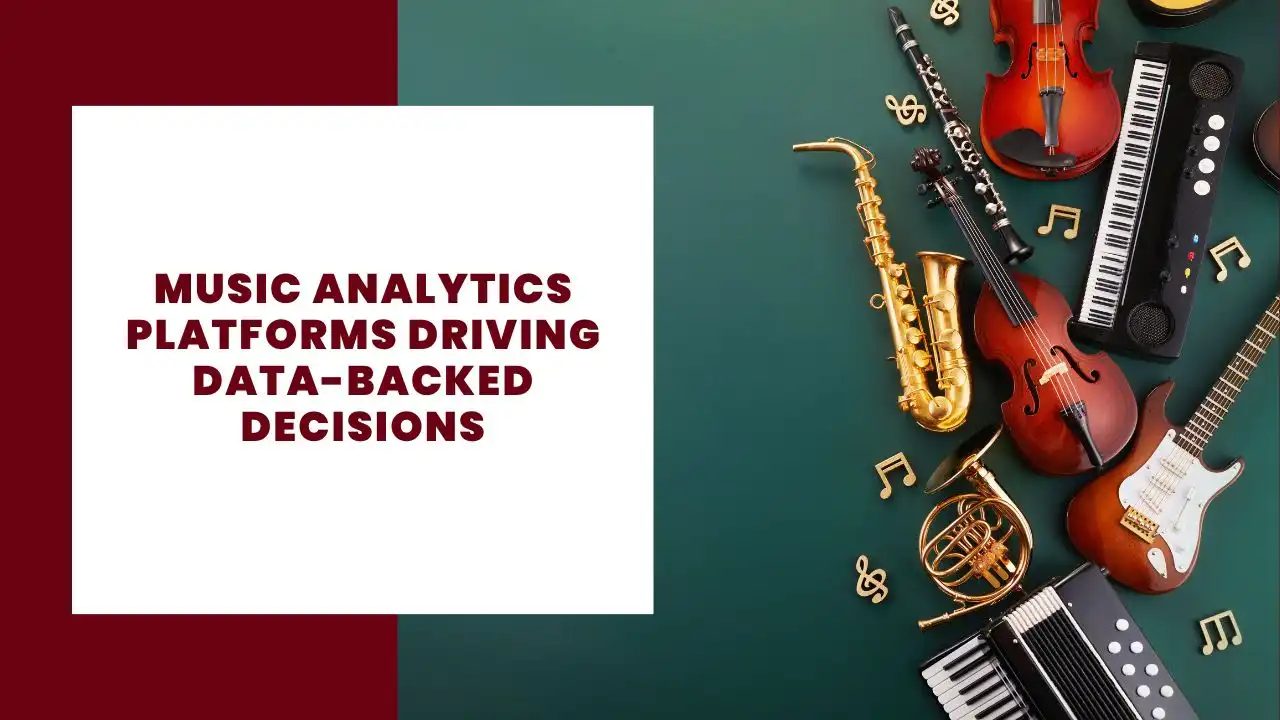
In the ever-evolving landscape of the music industry, understanding how to leverage data effectively has become more crucial than ever. A music analytics platform is at the forefront of this shift, enabling artists, producers, and marketers to make informed decisions that can significantly impact their success. By harnessing the power of data, we can not only interpret trends but also forecast what’s next in this vibrant field. In this text, we will explore how these platforms drive data-backed decisions, the importance of data in the music industry, and the features that set leading analytics platforms apart.
Understanding Music Analytics Platforms
Music analytics platforms serve as vital tools that collect, process, and analyze data from various sources within the music ecosystem. These platforms can track and process data from streaming services, social media, fan interactions, and ticket sales. By consolidating information from these diverse channels, we gain insights into listener behaviours, market trends, and overall performance metrics.
Also, these platforms often incorporate advanced features like predictive analytics and machine learning algorithms, allowing us to not only understand past data but also to predict future trends. For instance, if we notice a rise in listens for a specific genre on platforms like Spotify, we can analyse the demographic data behind those listens to inform our marketing strategies accordingly.
The Importance of Data in the Music Industry
The role of data in the music industry cannot be overstated. It’s no longer enough to rely on intuition or traditional methods of decision-making. Instead, data empowers us to make informed choices that can lead to increased revenue, more engaged fans, and eventually, greater success.
For example, understanding which tracks are performing well on streaming platforms can guide us in curating playlists or selecting singles for promotion. Similarly, monitoring social media engagement allows us to gauge fan sentiments and tailor our marketing messages to resonate more effectively with our audience.
Key Features of Music Analytics Platforms
When evaluating music analytics platforms, several key features stand out that can significantly enhance our decision-making processes.
How Music Analytics Informs Decision Making
Real-Time Data Monitoring: Access to live data allows us to react swiftly to trends as they occur, adjusting our strategies on the fly to capitalise on emerging opportunities.
Customised Dashboards: The ability to create tailored dashboards means we can focus on metrics most relevant to our specific needs, whether that’s audience demographics, sales figures, or engagement rates.
Comparative Analysis: Many platforms allow us to benchmark our performance against peers or industry standards, providing context that makes our data more actionable.
Predictive Analytics: By using historical data, we can predict future trends. This capability is essential for planning tours, releasing new music, or strategising marketing efforts.
Case Studies: Success Stories from the Industry
Several notable artists and labels have successfully utilised music analytics platforms to elevate their careers. For instance, a prominent independent label harnessed data insights to identify the optimal release window for a highly anticipated album. By analysing streaming patterns and social media buzz, they found that releasing during a particular festival led to a 40% increase in streams within the first week.
Similarly, an emerging artist used analytics to track which of their songs resonated best with listeners, leading to a targeted marketing campaign that increased their following by 25% in just a few months. These success stories illustrate the transformative power of music analytics platforms.
Challenges in Implementing Music Analytics
While the benefits of music analytics platforms are immense, implementing these systems can pose challenges. One significant obstacle is the integration of different data sources. Many organisations operate with legacy systems that may not seamlessly connect with modern analytics tools.
Also, the sheer volume of data can be overwhelming. Without the right expertise, teams can struggle to interpret complex data sets effectively, potentially leading to misinformed decisions. Training staff to utilise these platforms to their fullest potential is crucial yet often overlooked in the rollout phase.
Future Trends in Music Analytics
As we look to the future, several trends are emerging within the realm of music analytics. One key trend is the integration of artificial intelligence and machine learning, which will enhance the predictive capabilities of analytics platforms. This evolution will allow us to anticipate changes in listener preferences even before they occur.
Another trend is the increasing emphasis on fan engagement data. Companies are recognising that data about interactions can provide insights far beyond traditional metrics, allowing us to build stronger relationships with fans. Also, as more artists aim for global reach, platforms that provide insights into regional listening trends will become invaluable.
Conclusion
In a world where data-driven decision-making is no longer a luxury but a necessity, music analytics platforms stand as pivotal tools in the modern music landscape. By harnessing the power of data, we can make informed choices that enhance our strategies, foster fan engagement, and eventually drive success in the competitive music industry. As we move forward, embracing these analytics will not only future-proof our decisions but also empower us to thrive amidst change.
We use cookies on our website to give you the most relevant experience by remembering your preferences and repeat visits. By clicking “Accept”, you consent to the use of ALL the cookies.
This website uses cookies to improve your experience while you navigate through the website. Out of these, the cookies that are categorized as necessary are stored on your browser as they are essential for the working of basic functionalities of the website. We also use third-party cookies that help us analyze and understand how you use this website. These cookies will be stored in your browser only with your consent. You also have the option to opt-out of these cookies. But opting out of some of these cookies may affect your browsing experience.
Necessary cookies are absolutely essential for the website to function properly. This category only includes cookies that ensures basic functionalities and security features of the website. These cookies do not store any personal information.
Any cookies that may not be particularly necessary for the website to function and is used specifically to collect user personal data via analytics, ads, other embedded contents are termed as non-necessary cookies. It is mandatory to procure user consent prior to running these cookies on your website.