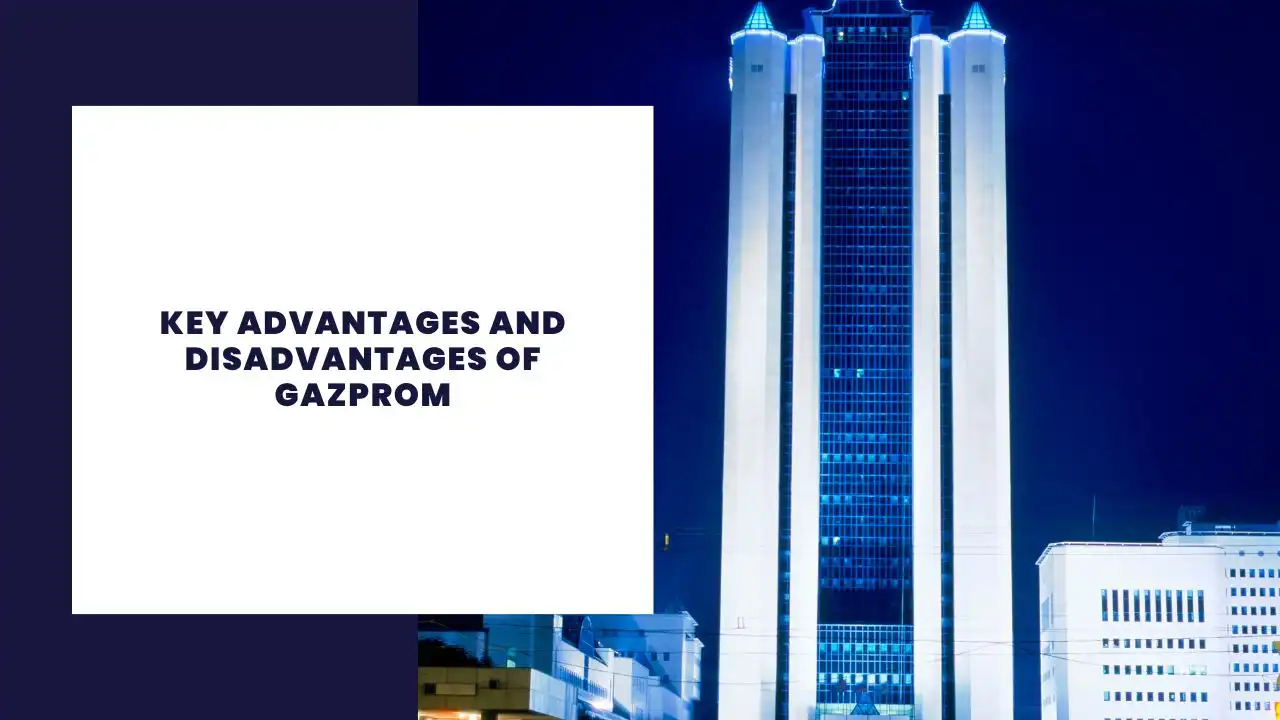
14 Key Advantages And Disadvantages Of Gazprom
Gazprom is one of the largest energy companies in the world, known primarily as Russia’s leading natural gas producer and exporter. It has a dominant role in the oil and gas sector, especially in supplying gas to Europe and other regions. With vast natural gas reserves, extensive pipeline projects, and control over major liquefied natural gas (LNG) exports, Gazprom plays a critical role in the global energy market. At the same time, its operations are tied to geopolitical issues, economic sanctions, and debates about energy security within the European Union (EU). Understanding the advantages and disadvantages of Gazprom helps assess its global influence and the challenges it faces.
Written by
- Redaction Team
- Business Planning, Entrepreneurship
Table of Contents
What is Gazprom?
Gazprom is a Russian state-owned energy giant that focuses on the production, transport, and export of natural gas. It controls a monopoly on pipeline exports of russian gas and maintains some of the world’s largest natural gas reserves, making it a key supplier of gas to many regions. Through projects like the Nord Stream 2 pipeline, the Power of Siberia pipeline, and other pipeline construction efforts, Gazprom connects russia to the EU, europe and asia, and even china.
The company also invests in LNG projects, oil trading, and joint ventures with other oil and gas companies. As one of the largest entities in the gas industry, Gazprom heavily influences energy prices, oil and gas accounted revenues, and the overall energy policy in Europe and beyond.
Advantages of Gazprom
1. Largest Natural Gas Reserves
Gazprom controls the largest natural gas reserves in the world, making it a reliable source of gas for international buyers. This gives the company an advantage in negotiations and long-term energy supply contracts.
2. Strong Position in the European Gas Market
As a leading supplier of gas to the European gas market, Gazprom provides billions of cubic meters annually to eu member states. Despite discussions about dependence on russian gas, its role is central to european energy.
3. Extensive Pipeline Network
The company owns an advanced gas pipeline system that connects russia and the eu, as well as new routes like the siberia pipeline to china. These pipeline projects increase export reliability and strengthen its dominance.
4. Development of LNG Projects
Gazprom invests heavily in LNG to Europe and other lng projects, allowing it to expand beyond pipeline dependency. Liquefied natural gas gives the company more flexibility in the global gas market.
5. Influence on Global Energy Markets
By controlling significant gas supplies, Gazprom directly affects natural gas prices and contributes to setting oil and gas prices. Its role in the global energy landscape is undeniable.
6. Strategic Partnerships
The company maintains cooperation with gazprom and rosneft, as well as international partners in joint venture projects. These alliances strengthen its position in the oil and gas industry.
7. Significant Export Revenues
Gazprom export generates billions in revenue from gas to europe, energy consumption, and gas imports worldwide. This supports Russia’s energy companies and broader russian energy economy.
Disadvantages of Gazprom
1. Dependence on the European Market
A major disadvantage is Gazprom’s reliance on exports to europe. While it supplies central and eastern europe, western europe, and beyond, this dependence makes it vulnerable to eu energy policy changes and diversification strategies.
2. Exposure to Sanctions
Ongoing us sanctions and EU measures, especially linked to ukraine and other geopolitical tensions, restrict investments, financing, and certain pipeline projects like stream 2.
3. Vulnerability to Oil and Gas Prices
Like other oil and gas companies, Gazprom suffers when oil price, gas price, or natural gas prices drop. Such volatility affects its gas sector profits.
4. High CO2 Emissions and Environmental Issues
Being heavily reliant on russian oil and gas production and natural gas trade, the company faces criticism over co2 emissions and its limited progress toward renewable energy alternatives.
5. Monopoly Concerns
Gazprom’s monopoly on gas exports has drawn criticism under the EU’s third energy package, which promotes competition in the european gas market. This creates legal and regulatory challenges.
6. Political Risks
As a russian state company, Gazprom’s operations are directly tied to russia and the eu relations. Geopolitical conflicts, such as those involving ukraine, threaten its energy security reputation.
7. High Maintenance and Investment Costs
Large-scale pipeline construction, oil and gas projects, and lng projects require immense capital. This is a significant drawback, especially when global energy prices are unstable.
Comparison Table of the Pros and Cons of Gazprom
| Pros (Advantages) | Cons (Disadvantages) |
|---|---|
| Largest natural gas reserves | Heavy dependence on European market |
| Strong role in European gas market | Exposure to sanctions |
| Extensive pipeline projects | Vulnerable to price volatility |
| Growing LNG projects | Environmental and CO2 concerns |
| Major influence on global energy | Monopoly restrictions under EU laws |
| Strategic partnerships | Political risks tied to Russian state |
| High export revenues | High maintenance and investment costs |
SWOT Analysis of Gazprom
Strengths
Gazprom has the largest natural gas reserves, an extensive pipeline network, and dominance in gas to the eu. Its investments in LNG projects and strategic partnerships further secure its market share.
Weaknesses
It remains highly dependent on gas supplies to Europe, faces frequent sanction risks, and struggles with environmental criticisms due to co2 emissions. High infrastructure costs are another weakness.
Opportunities
Expansion into lng to europe, growing natural gas trade with Asia, and the siberia pipeline to china provide new growth areas. Collaboration with oil and gas companies globally also offers opportunities.
Threats
Geopolitical instability, diversification by eu member states into renewable energy, and us shale gas competition threaten Gazprom’s long-term influence in the gas sector.
FAQs About Gazprom
Gazprom focuses on producing, transporting, and exporting natural gas, along with involvement in oil and gas projects and LNG exports.
Gazprom is one of the main suppliers of gas to the European Union, covering a large share of european gas consumption.
The biggest challenges include us sanctions, dependency on the european gas market, and competition from us lng and renewable energy projects.
No, Gazprom is expanding exports to Asia through the Power of Siberia pipeline, while also investing in LNG projects to reach global customers.
Fluctuations in oil and gas prices significantly impact Gazprom’s revenue, as its earnings depend on gas consumption and energy prices in global markets.
Conclusion of Advantages and Disadvantages of Gazprom
Gazprom is a giant gas producer with unparalleled natural gas reserves, a vast pipeline project network, and dominance in the european gas market. Its advantage lies in its ability to influence energy prices and maintain a central role in the global energy system. However, its strong reliance on gas to europe, exposure to sanctions, environmental concerns, and geopolitical vulnerabilities present significant disadvantages.
Understanding the pros and cons of Gazprom highlights both its power in the oil and gas industry and the risks tied to its political and economic environment. For eu member states, policymakers, and energy companies, the future of Gazprom will remain central to discussions about energy security, natural gas imports, and the shift toward renewable energy.
More about Business Planning