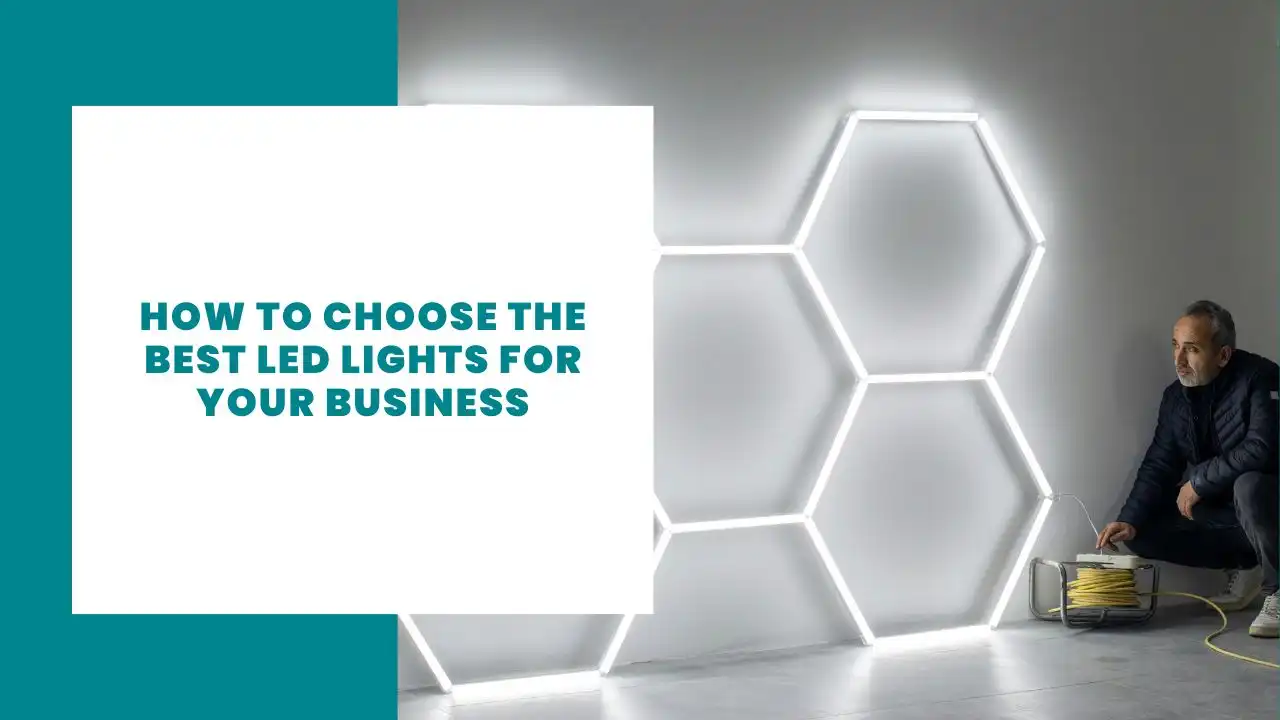
Lighting is one of the most important design and operational decisions in any commercial environment. The right lighting affects productivity, customer experience, energy consumption, and long-term maintenance costs. From retail spaces and restaurants to warehouses and offices, choosing LED lighting is no longer just a trend—it is a strategic investment. With so many LED options available, understanding how to choose the best LED lights for your business requires careful evaluation of performance, efficiency, and how each light source supports your specific lighting needs.
LED technology has replaced fluorescent, incandescent light, and even metal halide fixtures in many applications because of its long lifespan, energy savings, and superior light output. The following guide breaks down the key factors to consider when selecting LED lighting for commercial spaces, helping you choose the right LED light fixtures for both performance and cost efficiency.
1. Understand Your Lighting Needs and Business Environment
The first step in choosing LED is understanding how lighting for your business will be used. Different commercial environments require different types of illumination. A warehouse needs high-output lighting for safety and visibility, while retail stores and restaurants require lighting that enhances product displays and creates atmosphere.
Consider the type of work being performed in each area. Work lights in workshops need focused light for precision tasks. Retail spaces benefit from adjustable lighting and track lights that highlight merchandise. Offices often rely on panel lights and tube lights to provide even illumination across the ceiling without glare. Outdoor lighting requires durable fixtures designed for outdoor use and weather resistance.
When you define your lighting needs clearly, you can more easily choose the right LED for each space and avoid over- or under-lighting.
2. Evaluate Brightness and Light Output
Brightness is one of the most critical factors when selecting LED. Instead of watts, LED brightness is measured in lumens, which represent the actual light output. A higher lumen value means brighter illumination with fewer watts and lower energy use.
Spaces with higher ceilings, such as warehouses, manufacturing floors, and gymnasiums, may require high bay lights or LED high bay fixtures. These lights are particularly effective for large areas where traditional fluorescent or metal halide fixtures once dominated. In contrast, offices, classrooms, and commercial environments with standard ceiling heights often use LED panel lights, tube lights, or LED shop lights to provide consistent brightness without harsh glare.
Matching the brightness level to the function of the space ensures proper lighting, supports productivity, and prevents eye strain. Choosing the right LED light also helps avoid wasted energy from excessive illumination.
3. Choose the Right Color Temperature and Color Rendering
Color temperature plays a significant role in how a space feels and functions. Measured in Kelvin, color temperature determines whether light appears warm, neutral, or cool. Warm light is often preferred in restaurants and retail stores where atmosphere and comfort matter. Cooler color temperatures are better suited for warehouses, workshops, and commercial environments that require clear visibility.
Color rendering is another important factor. High-quality LED lights with strong color rendering accurately show product colors, signage, and materials. This is essential in retail spaces where lighting directly affects how products appear to customers. Choosing the best LED lights means selecting fixtures that not only provide adequate brightness but also deliver accurate, consistent color.
4. Select the Right Type of LED Fixture
There are many types of LED fixtures designed for different applications. Understanding the right type of light for each area will help you build an efficient and attractive lighting design.
High bay LED lights and LED high bay fixtures are ideal for warehouses, factories, and spaces that may require high bay lights due to ceiling height. Panel lights and LED panel lights are common in offices and commercial spaces where even illumination across the ceiling is essential. Track lights are useful in retail stores for product displays, allowing focused light on featured items. LED strip lights provide flexible lighting options for accent lighting, shelving, and under-cabinet applications. LED shop lights and work lights are well-suited for garages, workshops, and industrial areas.
Choosing the right LED light fixtures for each application ensures that lighting is both functional and visually appropriate.
5. Compare Energy Efficiency and Operating Costs
One of the biggest benefits of LED technology is energy efficiency. Compared to incandescent, fluorescent, and metal halide fixtures, LEDs use fewer watts to produce the same or greater light output. This translates directly into lower energy consumption and reduced utility bills.
When you buy LED lights, look for energy ratings, lumen-per-watt efficiency, and overall energy use. High-quality LED fixtures not only consume less power but also generate less heat, reducing cooling costs in commercial environments. Over time, the energy savings can be substantial, especially in large facilities such as warehouses, retail chains, and office buildings.
6. Factor in Lifespan and Maintenance Costs
LEDs are known for their long lifespan. While an incandescent bulb may last a few thousand hours and fluorescent lights require regular replacement, quality LED fixtures can operate for tens of thousands of hours. This durability significantly lowers maintenance costs, especially in spaces where replacing lights is difficult or disruptive.
For businesses operating across multiple locations, reducing maintenance through long-lasting LED solutions improves operational efficiency. Fewer replacements also mean less downtime and lower labor costs. Choosing the best LED lights is not just about the initial price but about total cost of ownership.
7. Consider Lighting Controls and Adjustability
Modern LED options often include advanced lighting controls such as dimming, motion sensors, and automated scheduling. Adjustable lighting allows you to tailor brightness levels to different times of day, occupancy, or tasks. This not only enhances comfort but also further reduces energy use.
In retail spaces and restaurants, adjustable lighting helps create the right ambiance for different times of day. In warehouses and offices, motion sensors ensure that lights are only on when needed. Selecting LED fixtures that support lighting controls adds another layer of efficiency and flexibility to your lighting for commercial environments.
8. Ensure Quality, Certification, and Safety
Not all LEDs are created equal. High-quality LED fixtures are designed with reliable components, proper heat dissipation, and consistent light output. Look for certifications and compliance with safety standards to ensure that your lighting investment is durable and safe.
Quality LED products maintain their brightness and color temperature over time, avoiding issues such as flickering or rapid degradation. When choosing LED lighting, prioritize reputable manufacturers and proven performance to protect your business investment.
9. Match Lighting to Specific Business Applications
Retail Stores and Product Displays
Retail stores benefit from lighting that enhances product visibility and encourages purchasing. Track lights, LED strip lights, and focused light fixtures highlight displays and create visual interest. Color rendering is especially important to present products accurately.
Warehouses and Industrial Facilities
Warehouses require high-output illumination for safety and efficiency. High bay LED lights and LED high bay fixtures provide powerful, uniform light across large areas with high ceilings. These lights are great for reducing shadows and improving visibility for workers.
Offices and Commercial Spaces
Panel lights, tube lights, and LED panel lights are common in offices, providing even, glare-free illumination that supports productivity. Choosing the right LED light in these environments improves comfort and reduces eye fatigue.
Outdoor Lighting and Exterior Areas
Outdoor lighting requires durable LED fixtures designed for outdoor use. Weather resistance, proper light output, and energy efficiency are essential for parking lots, building exteriors, and signage.
FAQs About How to Choose the Best LED Lights for Your Business
What makes LED better than fluorescent or incandescent lighting?
LEDs offer higher energy efficiency, longer lifespan, lower maintenance costs, and better light quality than fluorescent or incandescent light. They also provide more control over brightness, color temperature, and lighting design.
How do I determine the right brightness for my space?
Brightness is measured in lumens. The right level depends on the type of work, ceiling height, and the function of the area. Warehouses and industrial spaces need higher lumen output, while offices and retail spaces require balanced illumination.
Are high bay LED lights only for warehouses?
High bay LED lights are ideal for warehouses and spaces with higher ceilings, but they are also used in gyms, manufacturing facilities, and large retail environments where wide, powerful illumination is required.
Do LED lights really reduce energy consumption?
Yes. LED technology uses fewer watts to produce the same or greater light output than traditional bulbs, resulting in lower energy use and significant long-term energy savings.
What should I look for when buying LED fixtures?
Look for high-quality LED products with good color rendering, proper brightness, certifications, long lifespan, and compatibility with lighting controls. Choosing the right LED light fixtures ensures performance, safety, and value.
Conclusion of How to Choose the Best LED Lights for Your Business
Choosing the best LED lights for your business is a decision that impacts efficiency, comfort, and operating costs for years to come. By understanding your lighting needs, evaluating brightness, selecting the right color temperature, and matching fixtures to each application, you can design a lighting system that supports productivity and enhances your space.
From high bay LED lights in warehouses to panel lights in offices and focused lighting in retail stores, the right LED solutions provide energy savings, long lifespan, and superior illumination. When you choose the right LED light with quality, efficiency, and adaptability in mind, you invest in a lighting strategy that benefits both your business and your bottom line.