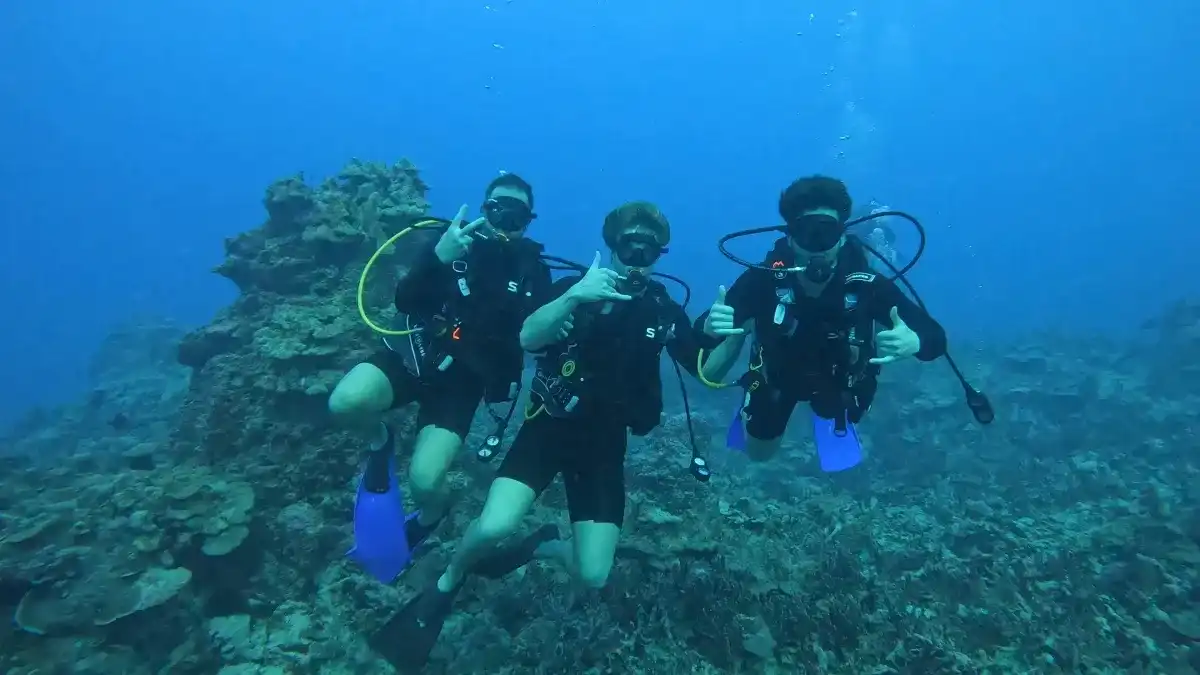
Essential Safety Tips Every Scuba Diver Should Know
Written by
Redaction Team
Scuba diving safety comes down to a few essential practices: always check your gear, follow the buddy system, control your depth and ascent, and stay calm in any situation. These core habits significantly reduce risks and help ensure every dive is both safe and enjoyable.
Located on the west coast of the Big Island, Kona is one of the few places in the world where divers can experience unique night dives with manta rays, along with visibility that often exceeds 100 feet year-round. Its volcanic underwater landscape, warm waters, and diverse marine life make it a top global destination for both beginner and experienced divers.
If you are planning scuba diving tours in Kona, understanding core safety practices is essential before you enter the water.
In this article, here are the essential safety tips every scuba diver should know before heading underwater.
Check Your Gear Before Every Dive
Equipment failure is one of the leading causes of diving incidents. A pre-dive gear check takes only a few minutes but can prevent serious problems underwater.
What to Inspect
Run through each piece of equipment before suiting up for any dive.
Check that your BCD inflates and deflates properly
Confirm your regulator breathes freely and has no leaks
Verify your tank valve is fully open
Inspect your mask, fins, and wetsuit for damage
Test your dive computer or pressure gauge
Never skip this step, even on a familiar dive site.
Follow the Buddy System Without Exception
Diving alone significantly increases the risk of a serious incident going unnoticed. A dive buddy can respond to emergencies, share air in a low-supply situation, and assist with equipment issues.
Before entering the water, agree on hand signals, maximum depth, and a turnaround pressure with your buddy. Stay close enough to reach each other within a few seconds throughout the dive.
Manage Your Depth and Time Carefully
Going too deep for too long puts you at risk of decompression sickness, nitrogen narcosis, and oxygen toxicity. These conditions range from uncomfortable to life-threatening.
Depth Limits and No-Decompression Limits
Staying within your training limits is a non-negotiable rule for safe scuba diving in Kona and any other location.
Recreational divers should stay within 40 meters or 130 feet
Always track your no-decompression limit on your dive computer
Ascend slowly at no more than 9 meters or 30 feet per minute
Make a safety stop at 5 meters for 3 to 5 minutes on every dive
Pushing depth limits without proper training puts both you and your buddy at risk.
Breathe Continuously and Never Hold Your Breath
Holding your breath while ascending is the most common cause of lung overexpansion injuries in scuba diving. As you rise, air in your lungs expands, and holding it in can cause serious damage.
Breathe in a slow, relaxed rhythm throughout your dive. If you feel anxious underwater, pause, focus on your breathing, and signal your buddy before making any moves.
Know How to Handle Common Underwater Emergencies
Being calm and prepared is the difference between a manageable situation and a dangerous one.
Steps to Take If Something Goes Wrong
Stop and assess the situation before reacting
Signal your buddy immediately using the agreed-upon hand signals
Establish neutral buoyancy to stabilize your position
Share air or switch to your backup regulator if needed
Ascend slowly and controlled, never rushing to the surface
Seek medical attention immediately if you feel any symptoms after surfacing
Panic is the biggest threat underwater. Training and preparation reduce the chance of it happening.
Key Takeaways
Always perform a full gear check before entering the water.
Never dive without a buddy, regardless of experience level.
Stay within your certified depth and no-decompression limits.
Breathe continuously and never hold your breath on ascent.
Agree on signals, depth limits, and air turnaround points with your buddy before diving.
Ascend slowly and always complete a safety stop at 5 meters.
Stay calm during emergencies and follow your training response steps.
We use cookies on our website to give you the most relevant experience by remembering your preferences and repeat visits. By clicking “Accept”, you consent to the use of ALL the cookies.
This website uses cookies to improve your experience while you navigate through the website. Out of these, the cookies that are categorized as necessary are stored on your browser as they are essential for the working of basic functionalities of the website. We also use third-party cookies that help us analyze and understand how you use this website. These cookies will be stored in your browser only with your consent. You also have the option to opt-out of these cookies. But opting out of some of these cookies may affect your browsing experience.
Necessary cookies are absolutely essential for the website to function properly. This category only includes cookies that ensures basic functionalities and security features of the website. These cookies do not store any personal information.
Any cookies that may not be particularly necessary for the website to function and is used specifically to collect user personal data via analytics, ads, other embedded contents are termed as non-necessary cookies. It is mandatory to procure user consent prior to running these cookies on your website.