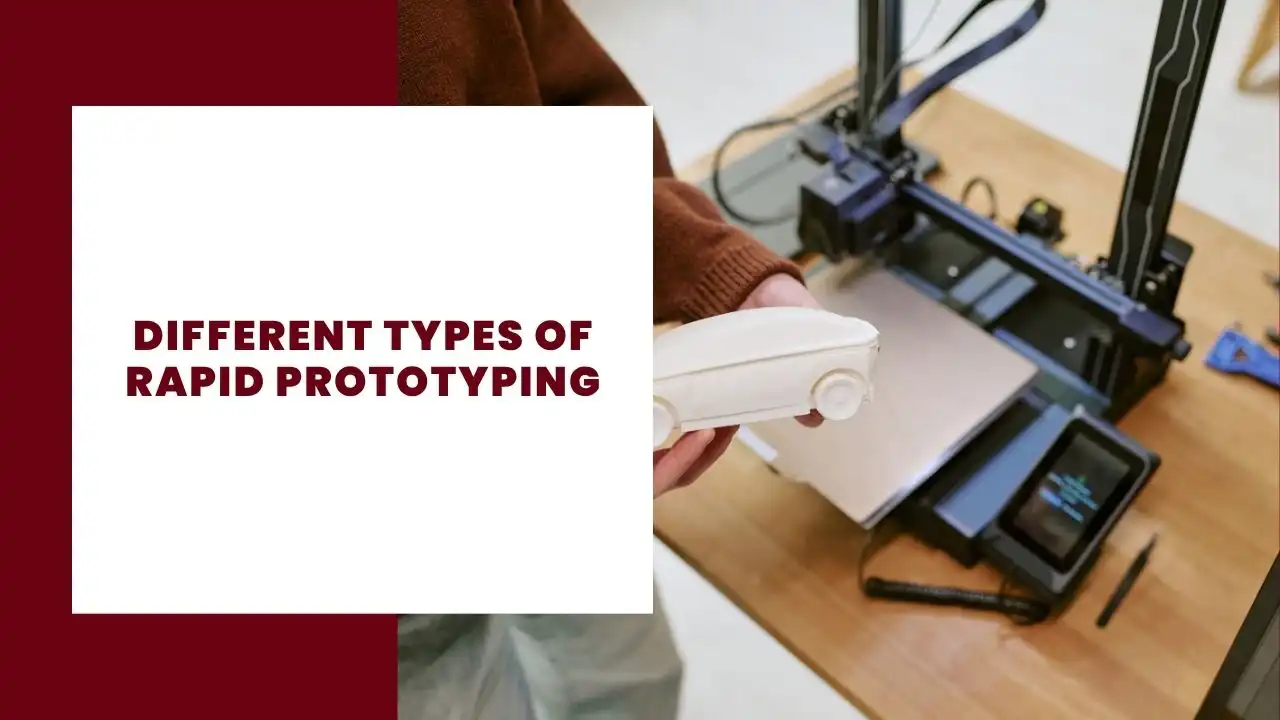
Understanding Rapid Prototyping and Why It Matters
Most new products begin as a basic concept that gradually takes shape through design and testing. Yet turning that idea into a physical product can take time, money, and many rounds of testing. This is where rapid prototyping becomes useful. Instead of waiting until the final product is ready, designers and engineers can create an early model and test it.
A prototype can reveal problems that are difficult to spot in drawings or computer models. It can also help a team understand how a product feels, fits, and works in real conditions. If something needs to change, the prototype can often be modified before expensive production begins.
1. 3D Printing
3D printing is one of the best-known forms of rapid prototyping. It creates an object layer by layer from a digital design. Depending on the printer, the material may be plastic, resin, metal, or another suitable substance.
One major advantage is flexibility. A designer can change a digital model and produce another version without making a new mold. This makes 3D printing useful when a product is still being developed.
Stereolithography, or SLA, uses liquid resin and can create detailed parts with smooth surfaces. Selective laser sintering, known as SLS, uses powdered material and can produce strong and complex components.
Because of this range, 3D printing can serve both simple testing and more advanced product development.
2. CNC Machining
Unlike many 3D printing methods, CNC machining is a subtractive process. The starting material is larger than the finished part, and unwanted material is cut away.
CNC machining is valuable when a prototype needs to be made from the same type of material used in a final product. Aluminum, steel, brass, plastics, and other materials can be machined.
However, CNC machining may not be the best choice for every design. Complex internal shapes can be difficult or expensive to machine. This approach can also produce more material waste than additive methods.
3. Injection Molding Prototypes
Traditional injection molding requires a mold, and producing a production-quality mold can be expensive. For that reason, it is usually not the first option when a design is changing every few days.
Still, prototype molds can be useful when a team needs to test a part under conditions that are close to actual production. A prototype mold can help evaluate the material, shape, surface finish, and performance of a plastic component.
Using such molds lets engineers detect flaws in advance, so they avoid spending on expensive production equipment too soon.
4. Vacuum Casting
Vacuum casting is another method used to create detailed prototypes, especially when several copies of a part are needed. The process often begins with a master model. A silicone mold is then created around that model.
Once the mold is ready, resin can be poured into it under controlled vacuum conditions. Vacuum casting can produce prototypes with good surface quality and fine details.
5. Stereolithography
Stereolithography deserves special attention because of its ability to produce detailed models.
The technology is often chosen for products that contain small features, curved surfaces, or detailed shapes. The finished parts can have a smooth appearance compared with some other forms of 3D printing.
SLA prototypes are commonly used for visual checks, fit testing, and presentation models.
There are limitations, too. Some resin materials may be less suitable for demanding mechanical applications. The parts may also require post-processing after printing.
6. Selective Laser Sintering
One useful feature of SLS is that support structures are often unnecessary. Unused powder can support parts during production. This gives designers greater freedom when creating complex geometries.
SLS is particularly useful for functional prototypes. Parts can be designed with unusual shapes, internal channels, and other features that may be difficult to create through traditional manufacturing.
7. Sheet Metal Prototyping
Not every prototype needs to be made from plastic or resin. Sheet metal prototyping is useful when the final product will contain metal panels, brackets, enclosures, or structural components.
The process may involve cutting, bending, punching, forming, and other operations. Modern equipment can produce accurate parts quickly from digital designs.
8. Choosing the Right Prototyping Method
There is no single prototyping method that works for every project. Choosing a method comes down to the outcome the prototype must deliver.
If the goal is to check appearance, a high-resolution 3D printing method may be enough. If the part needs to withstand mechanical testing, CNC machining or a stronger additive manufacturing process could be more suitable.
Material is another important consideration. A prototype made from a soft plastic may look correct but behave very differently from a metal component. Therefore, teams should think about the final application before selecting a process.
9. The Role of Rapid Prototyping in Product Development
A prototype gives designers something they can touch, measure, test, and improve. It can expose a weak connection, an uncomfortable shape, an assembly problem, or an unexpected manufacturing challenge.
For businesses, this can reduce the risk of making expensive mistakes later. A small investment in an early prototype may prevent much larger costs during mass production.
Teams looking to explore manufacturing options can learn more about Rapid Prototyping – AIXI Hardware when evaluating different approaches for product development.
Making Prototyping Part of a Smarter Development Process
Modern product development rarely follows a perfectly straight path. Designs keep evolving as engineers gather new knowledge. Feedback from customers can also drive surprising refinements. Rapid prototyping supports this process by making those changes easier to test.
Different techniques, from 3D printing and CNC machining to injection molding, vacuum casting, SLA, SLS, and sheet metal work, serve different roles. Some are better for visual models, while others are more suitable for functional testing or small production runs.
The important point is to select a method based on the actual goal of the prototype. When the right process is used at the right stage, teams can test ideas sooner, solve problems earlier, and approach final manufacturing with greater confidence. In turn, this can make product development more practical, controlled, and efficient.