7 Differences Between Switch and Switch Lite
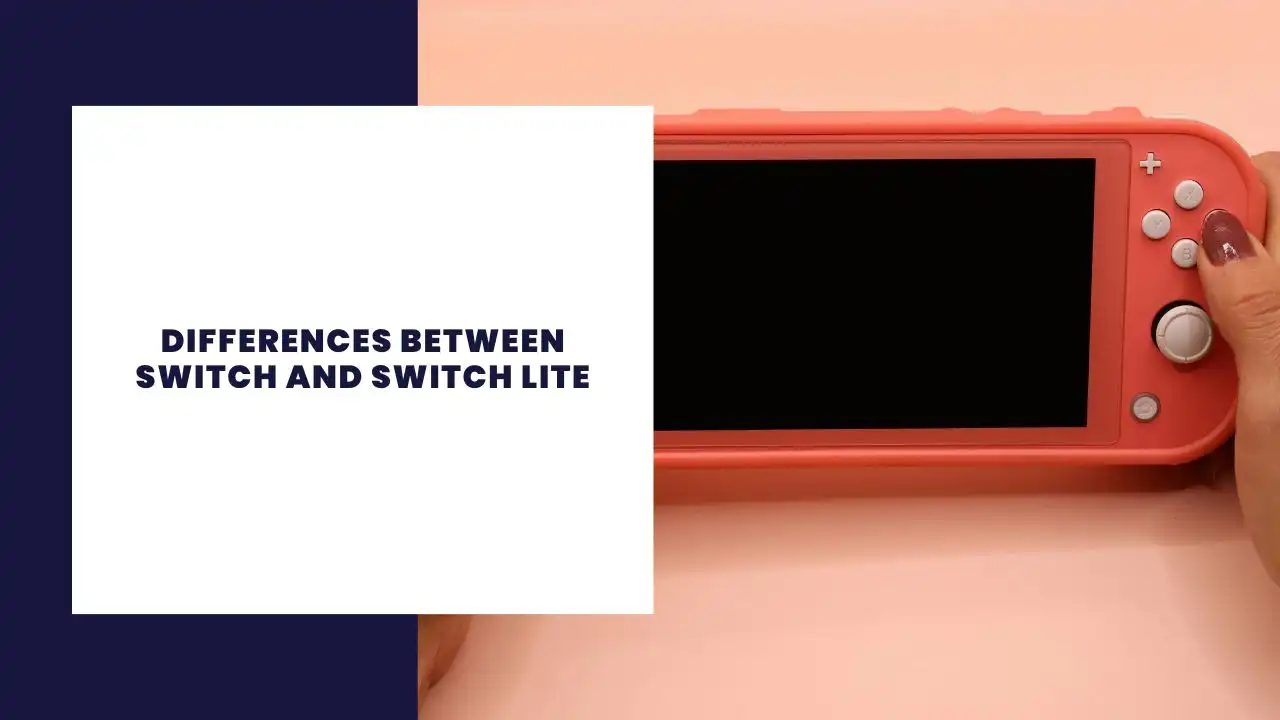
The Nintendo Switch family of consoles has redefined portable and home gaming. Since its release in 2017, the original Nintendo Switch has attracted millions of players with its hybrid functionality — allowing users to play games on a TV or on-the-go. Later, the Nintendo Switch Lite was introduced as a smaller, handheld-only version designed for portability and affordability.
While both consoles run the same Nintendo Switch games, they differ in important ways that affect how players experience gaming. Let’s explore the 7 key differences between the Switch and Switch Lite, including screen size, battery life, controllers, and game compatibility.
Written by
- Redaction Team
- Business Technology, Entrepreneurship
Table of Contents
1. Screen Size and Display Differences Between Nintendo Switch and Switch Lite
One of the most noticeable differences between the Nintendo Switch and the Switch Lite is the screen size.
The original Nintendo Switch features a 6.2-inch LCD screen, while the Switch Lite has a smaller 5.5-inch display. The Switch OLED model goes even further, with a 7-inch OLED screen, offering more vibrant colors and deeper contrast.
While the Lite model offers excellent clarity for a handheld console, its smaller screen may feel cramped for some players, especially during multiplayer sessions. If you value a larger display for immersive visuals, the standard Switch or OLED model is the better choice.
2. Handheld vs. Hybrid: How You Play Games
The biggest difference between the Switch and the Switch Lite lies in how you play games.
The regular Switch can function both as a home console and a handheld console. You can dock it to your TV and enjoy your favorite games on a big screen, or undock it for portable gaming. The Switch Lite, however, is designed purely for handheld gaming.
This means the Lite cannot be connected to a TV, making it a dedicated on-the-go game system. If you prefer playing Switch games like The Legend of Zelda or Mario Kart on a large screen, the standard or OLED Switch will suit you better.
3. Controller Design and Joy-Con Features
Another major difference is the controller setup.
The Nintendo Switch comes with two Joy-Con controllers that can be detached and used separately. These controllers support motion controls, HD rumble, and IR motion cameras, which are essential for games that require physical movement — such as 1-2 Switch or Switch Sports.
On the other hand, the Switch Lite has built-in controls that are not detachable, meaning you cannot use motion-based features unless you connect separate Joy-Con controllers wirelessly.
This difference makes the Lite model less versatile for party games but more stable for solo handheld play.
4. Battery Life and Performance
Battery life is another factor to consider when comparing the Switch and the Switch Lite.
The revised Nintendo Switch model and Switch OLED offer approximately 4.5 to 9 hours of battery life, depending on the game. The Switch Lite, being smaller and optimized for handheld use, provides 3 to 7 hours.
While the Lite’s battery life is slightly shorter, it’s still efficient for an on-the-go gaming system. For players who travel often or prefer quick sessions, this limitation is hardly noticeable.
5. Docking and Connectivity Options
A key difference between the Nintendo Switch and Switch Lite is dock compatibility.
The standard Switch comes with a dock that allows you to connect the console to a TV and charge it simultaneously. You can also use it in tabletop mode, detaching the Joy-Cons to play multiplayer games.
The Switch Lite, however, does not support docking or video output. You cannot use it with a Nintendo Switch dock or play on a TV. It’s designed purely for handheld gaming.
For those who want both home console and handheld flexibility, the regular or OLED Switch remains the superior choice.
6. Game Compatibility and Multiplayer Options
While both systems play the same Nintendo Switch games, not all titles are fully compatible with the Switch Lite.
Because the Lite doesn’t support detachable controllers or motion-based gameplay, some games require external Joy-Cons to function properly. Games like 1-2 Switch or Switch Sports, which rely heavily on motion control, can only be played with additional accessories.
However, for most mainstream titles — such as Zelda, Mario Odyssey, and Animal Crossing — the Lite model performs just as well. The game compatibility depends mainly on whether a title supports handheld mode.
7. Price and Portability
Finally, one of the most important differences between the Nintendo Switch and Switch Lite is their price.
The Switch Lite is the cheaper model, priced lower than the standard or OLED versions. Its smaller frame and lack of docking capability make it an affordable option for those who only need a portable console.
At the same time, its lightweight design and compact build make it the best version for travel or casual gaming sessions. The regular Switch remains ideal for players who want the full hybrid gaming experience — being able to switch between handheld and TV mode with ease.
FAQs About Switch and Switch Lite
You can play most Nintendo Switch games on the Switch Lite, but some titles that require motion controls or detachable Joy-Cons may need additional controllers to function correctly.
No, the Switch Lite cannot connect to a TV or use the Nintendo Switch dock. It is strictly a handheld console designed for on-the-go play.
The Switch Lite offers about 3 to 7 hours of battery life, depending on the game. The revised standard Switch and OLED model last longer, around 4.5 to 9 hours.
Both consoles offer similar performance and run the same games, but the Lite lacks TV output and has a smaller screen size.
The Switch Lite is an excellent choice for players who prefer handheld gaming and want a more affordable, lightweight console. However, if you want TV play and Joy-Con features, go for the standard or OLED Switch.
Conclusion
Choosing between the Nintendo Switch and Switch Lite depends on your gaming style. If you enjoy handheld play, travel frequently, and prefer a more compact console, the Switch Lite delivers exceptional value. However, if you want the full hybrid experience, complete with TV connectivity, motion controls, and larger screen options, the regular or OLED model is the better pick.
Both versions share the same library of Nintendo Switch games, ensuring that no matter which console you choose, you’ll have access to one of the most beloved gaming ecosystems ever created.
More about Business Technology