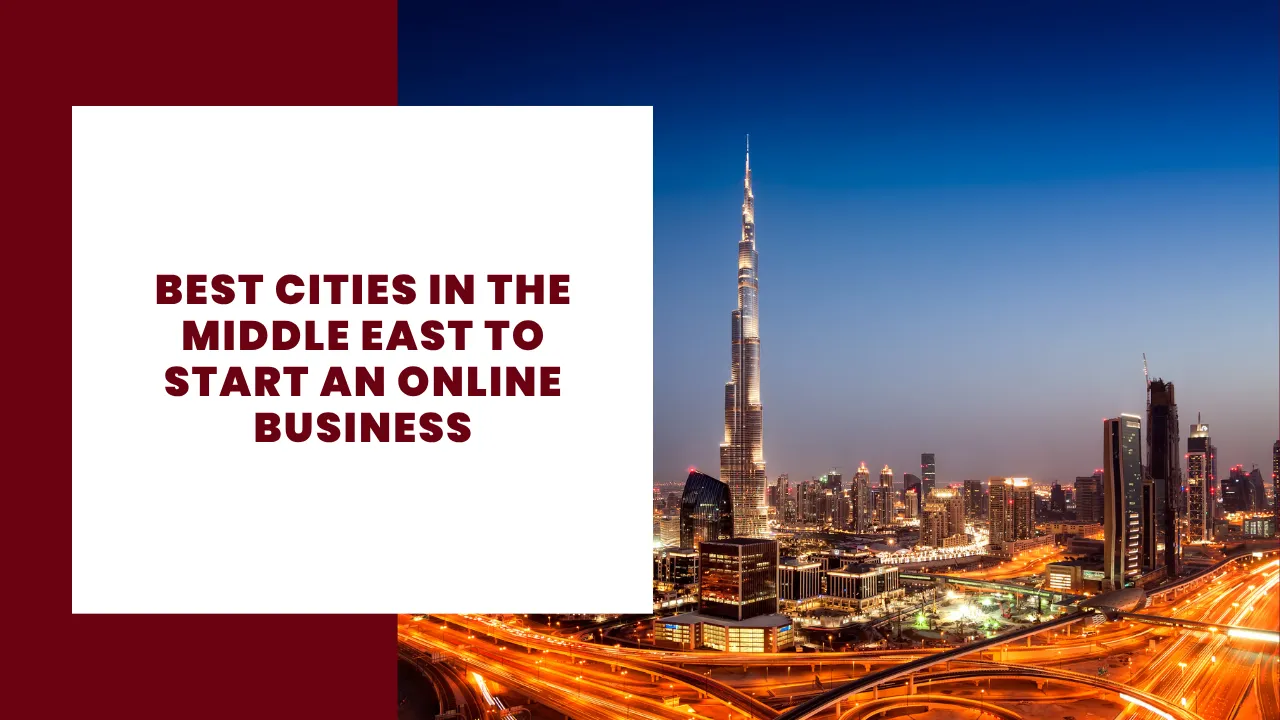
The best cities in the Middle East to start an online business offer low or no personal income tax, business-friendly free zones, fast company setup, world-class infrastructure and access to wealthy, digitally connected consumers. Heading into 2027, the region’s startup ecosystems are among the fastest-growing in the world: StartupBlink named Riyadh its 2026 “City of the Year” for the highest ecosystem growth rate globally, while Dubai and Abu Dhabi continue to attract founders and investors. This guide compares 15 Middle Eastern cities for digital entrepreneurs.
Dubai is the most popular starting point for many founders; our article on the advantages and disadvantages of Dubai gives a balanced overview.
How We Chose the Best Cities in the Middle East to Start an Online Business
- Taxes and free zones: Personal and corporate taxes and simplified setup zones.
- Visas and residency: Remote work, freelance, entrepreneur and long-term options.
- Startup ecosystem: Investors, accelerators and government support.
- Market access: Purchasing power and proximity to Gulf, Levant and North African markets.
- Cost of living and stability: Housing costs and security conditions.
The 15 Best Cities in the Middle East to Start an Online Business in 2027
1. Dubai, UAE – Best Overall Business Hub
Dubai combines no personal income tax, dozens of free zones for fast company setup, a remote work visa and a huge international community. Living costs are high, so budget carefully; our guide to renting property in Dubai explains the upfront costs.
2. Riyadh, Saudi Arabia – Best for Fast Growth and Market Size
Riyadh is the highest-ranked startup city in the Middle East and North Africa in StartupBlink’s 2026 index, backed by government programs, sovereign capital and the region’s largest consumer market. Success usually requires spending real time in the market.
3. Abu Dhabi, UAE – Best for AI and Deep Tech
Abu Dhabi is positioning itself as the region’s AI hub, with Hub71, the ADGM financial free zone and strong sovereign investment.
4. Tel Aviv, Israel – Best for Deep Tech and Venture Capital
Tel Aviv has long been the region’s most mature startup ecosystem, with world-class cybersecurity and AI talent. Security conditions require careful consideration.
5. Doha, Qatar – Best for Government-Backed Startup Programs
Doha offers no personal income tax, strong infrastructure and startup support from programs such as Qatar Science & Technology Park.
6. Manama, Bahrain – Best for Easy Setup and Fintech
Bahrain allows full foreign ownership in many sectors, has a fintech regulatory sandbox and offers lower costs than Dubai.
7. Sharjah, UAE – Best Affordable UAE Option
Sharjah offers lower living and setup costs than Dubai, with free zones and the Sheraa entrepreneurship center.
8. Ras Al Khaimah, UAE – Best for Low-Cost Company Setup
The RAKEZ free zone offers affordable licenses for e-commerce and service businesses, with a relaxed coastal lifestyle.
9. Ajman, UAE – Best Budget Free Zone
Ajman’s free zone is popular with freelancers and small online businesses seeking low-cost UAE licenses.
10. Jeddah, Saudi Arabia – Best for E-Commerce and Western Saudi Markets
Jeddah is a commercial hub with a strong retail culture and a growing startup scene.
11. Al Khobar, Saudi Arabia – Best for Eastern Province B2B
Al Khobar and nearby Dammam serve the energy and industrial sectors, offering B2B opportunities and proximity to Bahrain.
12. Muscat, Oman – Best for Calm Lifestyle and Growing Ecosystem
Muscat offers a relaxed pace, natural beauty and increasing government support for SMEs and startups.
13. Amman, Jordan – Best for Arabic Content and Tech Talent
Amman has a strong pool of developers and creators producing Arabic digital content, with lower costs than the Gulf.
14. Istanbul, Türkiye – Best for Large Market and Cross-Continental Access
Istanbul connects Europe and Asia, offers a large domestic market and skilled talent, and Türkiye offers a digital nomad visa, though currency volatility is a factor.
15. Kuwait City, Kuwait – Best for High-Spending Consumers
Kuwait’s affluent, mobile-first consumers create opportunities for e-commerce and delivery businesses.
Which Middle Eastern City Fits Your Business?
- International founders wanting simplicity: Dubai or Abu Dhabi.
- Selling to the largest Gulf market: Riyadh or Jeddah.
- Low-cost UAE license: Ras Al Khaimah, Ajman or Sharjah.
- Fintech: Manama or Abu Dhabi.
- Arabic content and lower costs: Amman.
Consider Regional Stability and Local Rules
The region faced conflict in 2026, including tensions around the Strait of Hormuz, and conditions can change quickly. Check your government’s travel advisories, review insurance coverage and keep business continuity plans in place. Also confirm local licensing, visa and tax requirements with official sources and qualified advisors. If you are visiting first, articles such as the advantages and disadvantages of Doha can help you get a feel for each city.
Final Thoughts
The best cities in the Middle East to start an online business in 2027 offer low taxes, modern infrastructure and some of the world’s fastest-growing startup ecosystems. Dubai leads for ease and international connections, Riyadh for growth and market size, and Abu Dhabi for AI ambitions. Weigh costs, visa options and stability carefully, and the region can be a powerful base for an online business.