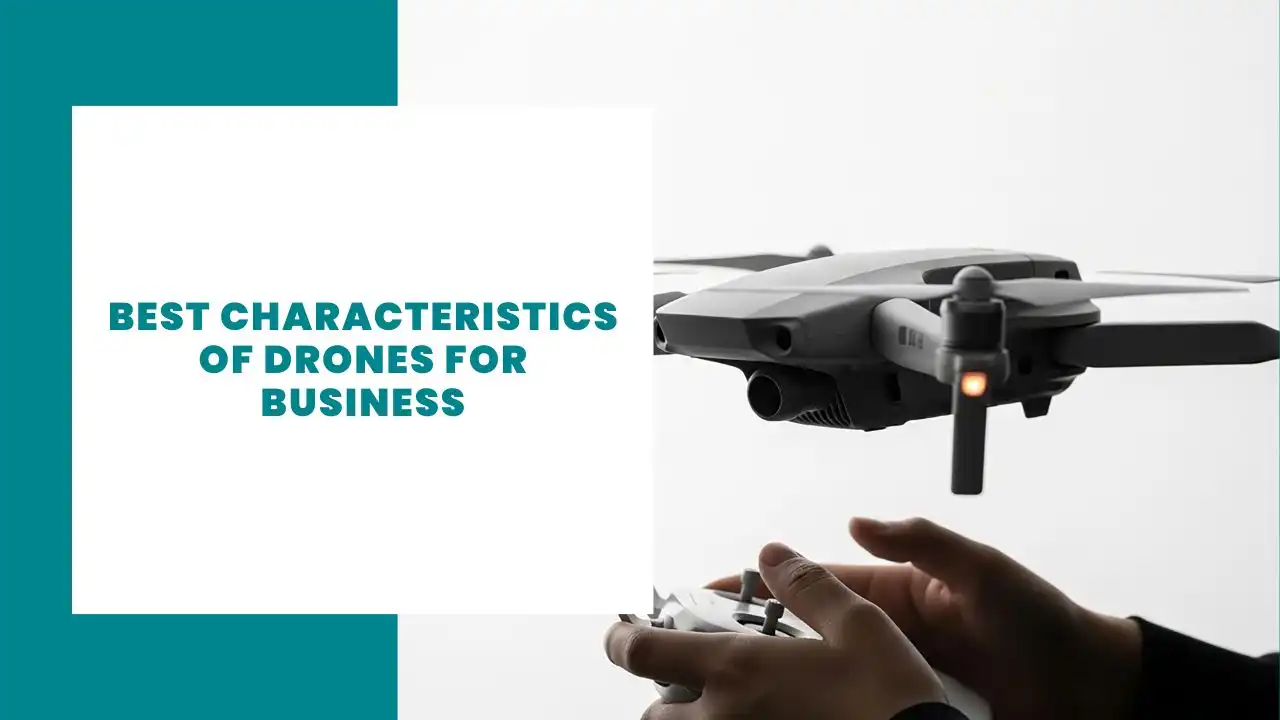
Drones have moved far beyond recreational flying and are now powerful tools for commercial applications across many industries. From aerial photography to industrial inspection and public safety, the use of drones continues to expand as technology improves and regulations mature. Choosing the right drone for your business requires understanding the characteristics that make professional drones reliable, scalable, and profitable in real-world operations.
Whether you plan to start a drone business or expand an existing drone program, these seven characteristics define what separates consumer drones from enterprise-grade solutions in the drone industry.
1. High-Performance Imaging And Sensor Systems
One of the most important characteristics of a commercial drone is its imaging capability. Professional drones rely on robust imaging systems that support data collection for inspection, mapping, and survey workflows.
Advanced camera systems such as a 4K camera, thermal camera, and Zenmuse payloads allow drones to capture detailed aerial data. Drones with thermal imaging are essential for industrial inspection, infrastructure inspections, and search and rescue operations. Photogrammetry and thermal imaging enable accurate measurements and actionable insights for commercial clients.
2. Precision Navigation And Positioning Technology
Accurate positioning is critical when drones are used for mapping, survey, and data processing. Technologies such as RTK and GNSS significantly improve accuracy and repeatability.
Enterprise models like the DJI Matrice 350 RTK are designed for high-precision missions where centimeter-level accuracy is required. Precision navigation supports safe flight within line of sight and ensures reliable results when managing business assets or conducting first commercial operations.
3. Long Flight Time And Efficient Power Management
Flight time directly impacts productivity and operational efficiency. Professional drones are built to maximize flight time while carrying heavier payloads such as advanced sensors and camera systems.
Extra batteries are a standard requirement for drone operators who fly a drone for extended missions. Efficient power management allows drone pilots to complete large aerial photography and videography projects without frequent interruptions, making the drone business more profitable.
4. Modular Design And Payload Flexibility
Modern drone technology emphasizes modularity. Many enterprise drones allow operators to swap payloads depending on the mission, making a single UAV suitable for multiple commercial applications.
Platforms such as the DJI Matrice series support different camera systems, thermal imaging sensors, and inspection payloads. This flexibility is a major advantage when choosing the right drone for diverse drone use cases, including public safety, search and rescue, and infrastructure inspections.
5. Regulatory Compliance And Operational Safety
Compliance with FAA regulations is essential for any commercial drone operation. Drone pilots must obtain Part 107 certification to fly your drone legally for business purposes in the United States.
Professional drones are designed with safety features that support regulatory compliance, including geofencing, obstacle avoidance, and secure drone controls. Maintaining line of sight, following FAA guidelines, and carrying hull insurance protects both personal and business assets.
6. Enterprise-Grade Reliability And Durability
Commercial drones must operate in challenging environments. Weather resistance, redundant systems, and durable airframes are essential characteristics of professional drones.
Many enterprise drones include redundant sensors, dual controllers, and fail-safe mechanisms that protect the unmanned aircraft during critical missions. This reliability is especially important for public safety, search and rescue, and industrial inspection where mission failure is not an option.
7. Integrated Software, SDK, And Data Management
A successful drone program depends on more than hardware alone. Integrated software, SDK support, and data management tools are essential for turning drone data into business value.
Advanced workflows streamline data processing, mapping, and reporting. Drone companies rely on software platforms that support aerial photography, videography, and drone data analysis. Effective data management helps transform raw aerial imagery into insights that support market research, inspections, and decision-making.
FAQs About Topic
What makes a drone suitable for business use?
A drone for your business should offer advanced sensors, long flight time, regulatory compliance, and reliable data management tools to support commercial applications.
Do I need certification to start a drone business?
Yes, Part 107 certification from the FAA is required for commercial drone operations, and drone pilots must follow all applicable regulations.
Which drone manufacturers are best for enterprise use?
DJI is one of the leading drone manufacturers, with models like the DJI Matrice series widely used by successful drone businesses.
How profitable is a drone business?
A drone business can be profitable when focused on high-demand services such as inspection, mapping, aerial photography, and public safety operations.
Should I buy a drone or lease one for commercial work?
Buying a drone is often the best choice for long-term operations, especially when launching a drone program or serving recurring commercial clients.
Conclusion of 7 Best Characteristics Of Drones For Business
Drones are used across industries because they deliver efficiency, accuracy, and unique perspectives that traditional methods cannot match. The best drones for business combine advanced imaging, precise navigation, long flight time, modular payloads, regulatory compliance, durability, and integrated software. By understanding these characteristics, drone operators can make informed decisions when choosing the right drone, launching a drone business, or scaling professional drone operations in the evolving drone market.