
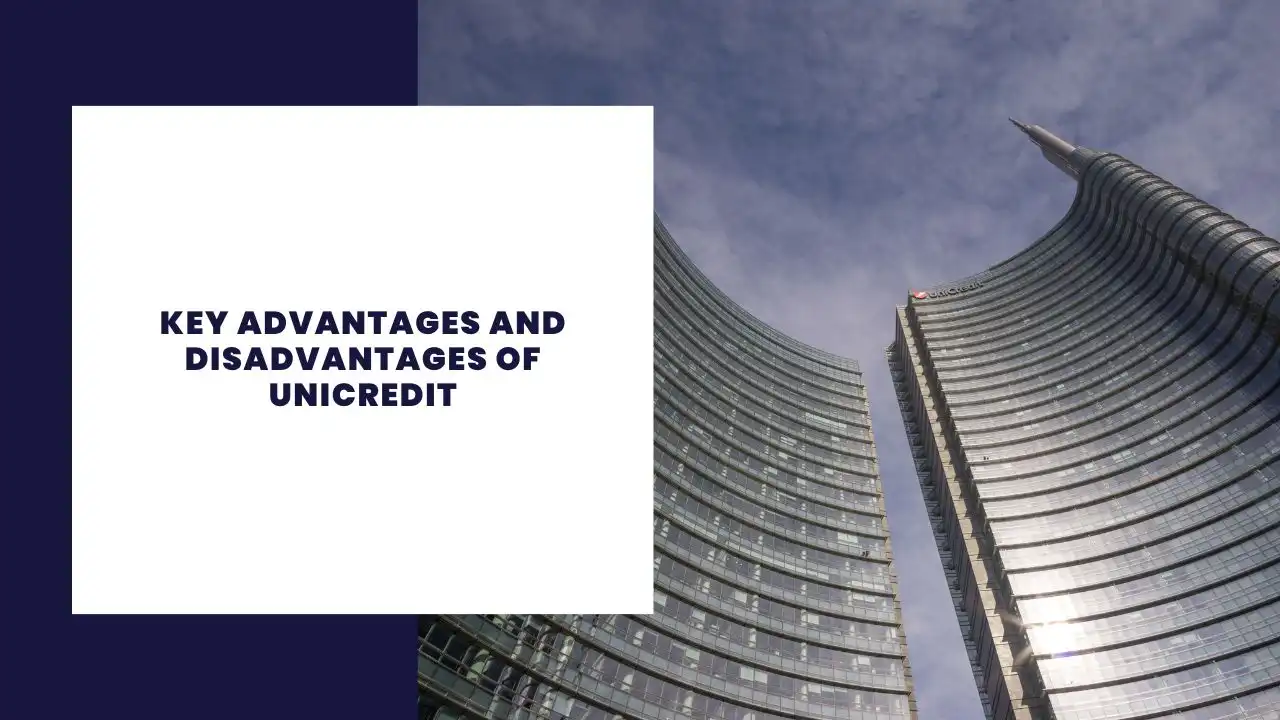
14 Key Advantages And Disadvantages Of UniCredit
UniCredit is one of the largest pan-European financial institutions, with a strong presence in Italy, Germany, Central, and Eastern Europe. The UniCredit Group provides a wide range of financial services including retail banking, corporate banking, wealth management, investment solutions, and digital banking. As a traditional bank that has successfully transitioned into offering online and mobile banking, UniCredit stands as an important player in the European banking sector.
However, like any large commercial bank, UniCredit presents both advantages and disadvantages. For clients considering opening a current account, making an investment, or exploring personal loans through UniCredit Bank, understanding its key features, potential drawbacks, and financial stability is essential.
Written by
- Redaction Team
- Business Planning, Entrepreneurship
Table of Contents
What Is UniCredit?
UniCredit Bank is a leading bank in Italy and one of the best banks in Europe in terms of scale and influence. UniCredit operates across several countries, offering financial products that cover everything from debit cards and deposit accounts to wealth management and corporate banking solutions.
The bank offers both traditional banking services and digital banking tools. With mobile banking, clients can withdraw cash, make international transfers, and manage their financial needs through online platforms. UniCredit provides access to financial markets, various financial instruments, and even promotes sustainable finance initiatives, reflecting an evolving strategy aligned with European Central Bank regulations.
Additionally, UniCredit is known for its art collection, long history as a first bank in Italy, and its role in mergers and acquisitions across the European financial system. By 2025, UniCredit’s plans aim to further leverage digitalization while maintaining a strong retail banking and corporate banking presence.
Advantages Of UniCredit
1. Strong Pan-European Presence
UniCredit Group has a significant market position across multiple European countries. This wide reach gives it a strong foundation and makes it one of the largest financial institutions in the region.
2. Wide Range Of Services
The bank offers a range of financial services, including retail banking, corporate banking, investment, and wealth management. This diversity allows clients to find financial solutions tailored to their specific needs.
3. Digital And Mobile Banking Innovation
UniCredit’s mobile banking and online platforms provide easy access to financial products. Customers can manage their current accounts, transfer currency, and withdraw cash without needing to visit a branch.
4. Personalized And Tailored Service
For high-net-worth clients, UniCredit offers private and wealth management services that are tailored to the needs of clients with complex financial goals.
5. Financial Stability And Regulation
Being closely supervised by the European Central Bank, UniCredit benefits from strong oversight that ensures financial stability and compliance with evolving banking systems and regulations.
6. Access To Global Markets
Through its international structure, UniCredit provides access to global financial markets and various financial instruments, making it attractive for investors and businesses seeking cross-border opportunities.
7. Commitment To Sustainable Finance
The bank’s 2025 strategy includes a focus on sustainable finance, supporting green investments and socially responsible financial products. This strengthens its long-term reputation in the financial sector.
Disadvantages Of UniCredit
1. Complexity Of Its Structure
As a large pan-European institution, UniCredit’s structure can be complicated for clients to navigate. The range of services and account types may overwhelm those seeking straightforward banking solutions.
2. Potential Fees And Costs
While UniCredit offers many benefits, it may also charge a monthly fee or require a minimum deposit, depending on the account type. These requirements can be a disadvantage for clients looking for cheaper alternatives.
3. Regulatory Challenges
The banking sector in Europe is subject to evolving regulatory requirements, and UniCredit may face additional compliance costs, which can affect its profitability and long-term growth strategy.
4. Drawbacks Of Being A Traditional Bank
Although digital banking has improved, UniCredit still operates as a traditional bank with some processes requiring branch visits, which can reduce convenience compared to online-only financial institutions.
5. Risk Exposure From Mergers And Acquisitions
The UniCredit Group has been involved in multiple mergers and acquisitions, which, while beneficial for growth, can also create risks, cultural challenges, and integration difficulties.
6. Competitive European Banking Market
The European banking landscape is highly competitive, with banks similar to UniCredit offering comparable financial instruments and services. This creates pressure to continuously differentiate and innovate.
7. Potential For Customer Dissatisfaction
Some customers report challenges with personalized service, particularly with online and mobile banking support. Inconsistent customer experience across countries may be considered a potential drawback.
Comparison Table Of The Pros And Cons Of UniCredit
| Pros (Advantages) | Cons (Disadvantages) |
|---|---|
| Strong pan-European presence | Complex structure and processes |
| Wide range of financial services | Fees and minimum deposit requirements |
| Advanced online and mobile banking | Branch reliance in some cases |
| Personalized wealth management | Regulatory compliance costs |
| Financial stability under ECB oversight | Risks from mergers and acquisitions |
| Access to global markets | Intense competition in European banking |
| Commitment to sustainable finance | Potential gaps in customer satisfaction |
SWOT Analysis Of UniCredit
Strengths
Strong pan-European reach across many countries.
Wide range of financial products from retail to wealth management.
Financial stability supported by ECB oversight.
Weaknesses
Complex organizational structure.
Fees and minimum deposits create barriers for some clients.
Traditional banking processes remain in parts of the system.
Opportunities
Digital banking expansion and online banking innovation.
Growing focus on sustainable finance in Europe.
New opportunities in financial markets and global investments.
Threats
Strong competition from other financial institutions.
Regulatory pressures and evolving requirements.
Market volatility affecting financial instruments and investments.
FAQs About UniCredit
Yes, UniCredit Bank is one of the best banks in Italy, offering a wide range of services from retail banking to wealth management.
Yes, UniCredit’s mobile banking allows clients to make international transfers, manage their current accounts, and withdraw cash using debit cards.
UniCredit offers various account types, including deposit accounts, current accounts, and tailored accounts depending on your financial needs.
Some accounts may charge a monthly fee or require a minimum deposit. Minimum deposit requirements vary depending on the account type and country.
UniCredit plans to leverage digital banking, expand sustainable finance, and strengthen its role in pan-European financial services by 2025.
Conclusion Of Advantages And Disadvantages Of UniCredit
The advantages and disadvantages of UniCredit highlight its strengths as a leading pan-European financial institution and the challenges it faces in a rapidly changing banking sector. On the positive side, UniCredit offers a wide range of financial services, strong digital banking features, and the financial stability of being regulated by the European Central Bank. On the negative side, clients may face fees, minimum deposit requirements, and complexities tied to its traditional bank structure.
By 2025, UniCredit’s strategy to focus on sustainable finance, digital transformation, and tailored financial products could make it even more competitive. For those evaluating whether UniCredit Bank suits their banking needs, the decision will ultimately depend on their specific needs, tolerance for potential drawbacks, and preference for a pan-European bank with both traditional and modern features.
More about Business Planning