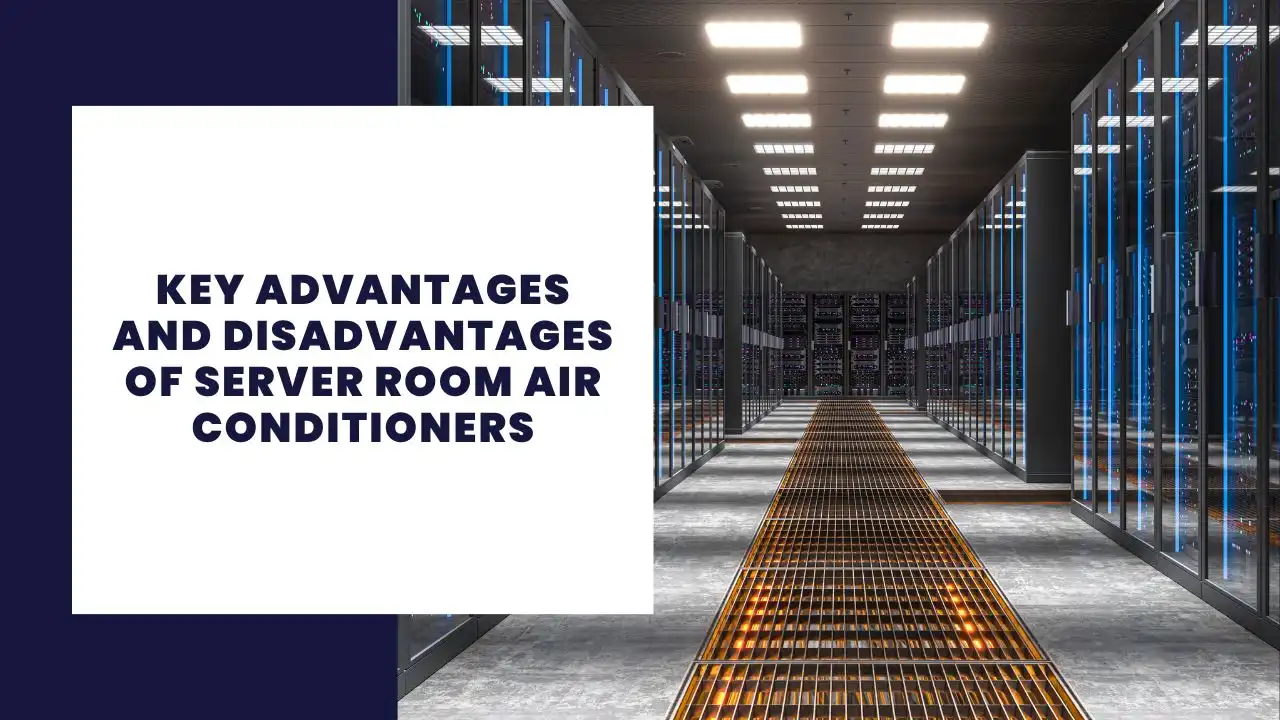
Server rooms are essential components of modern IT operations, supporting data storage, processing, and business-critical applications. These environments generate a lot of heat due to servers, networking equipment, and backup systems running continuously. Without a reliable cooling solution, server rooms may overheat, leading to downtime, performance degradation, and even data loss. Server room air conditioners play a vital role in maintaining stable temperature and humidity levels to protect an organization’s IT infrastructure and ensure operational continuity.
Understanding the advantages and disadvantages of server room air conditioners helps decision-makers justify the investment, choose the right cooling strategy, and plan for future scalability.
What Is Server Room Air Conditioning
Server room air conditioning refers to specialized air conditioning systems designed to cool a server room or data center. Unlike a standard air conditioning system used in offices, these systems are built to handle high heat loads, maintain precise temperature and humidity control, and operate continuously.
Server room cooling solutions include computer room air conditioners, computer room air handlers, CRAC systems, CRAH units, chilled water systems, and other advanced cooling systems. These systems work by managing airflow, removing hot air, supplying cold air, and ensuring efficient cooling for servers and other sensitive equipment.
Advantages Of Server Room Air Conditioners
1. Reliable Temperature And Humidity Control
Server room air conditioners are designed to maintain consistent temperature and humidity, which is critical for server performance and reliability. Precise control prevents equipment from overheating and protects sensitive components from moisture-related damage.
2. Reduced Risk Of Downtime And Data Loss
Reliable cooling systems help prevent downtime caused by thermal shutdowns or hardware failures. By keeping servers within safe operating ranges, organizations reduce the risk of data loss and service interruptions.
3. Optimized Airflow For Efficient Cooling
Dedicated server room cooling systems are engineered to manage airflow effectively. They direct cold air to equipment intakes and remove hot air efficiently, improving overall cooling performance compared to traditional air conditioning.
4. Support For High-Density Server Environments
Many server rooms and data centers house thousands of servers in compact layouts. Server room air conditioners are capable of cooling large server rooms and high-density racks where heat loads are significantly higher.
5. Compatibility With Advanced Cooling Strategies
Server room air conditioning integrates well with advanced cooling systems such as hot aisle and cold aisle containment, liquid cooling, direct-to-chip cooling, and chilled water systems. This flexibility allows data centers to evolve their cooling methods as requirements change.
6. Improved Equipment Lifespan
Maintaining optimal temperature and humidity reduces wear on hardware components. Efficient cooling helps extend the lifespan of servers, storage systems, and networking equipment, contributing to long-term cost savings.
7. Energy-Efficient Cooling Options
Modern air conditioning units for server rooms are increasingly energy efficient. Advanced cooling equipment, variable speed fans, and intelligent controls help reduce power consumption and lower operational costs.
Disadvantages Of Server Room Air Conditioners
8. High Initial Installation Costs
Server room air conditioning systems often require a significant upfront investment. Specialized cooling equipment, air handlers, and infrastructure upgrades can increase initial costs, especially for larger data centers.
9. Increased Operational And Energy Costs
Although energy efficient models exist, server room cooling systems typically run 24/7. This continuous operation can lead to increased operational costs and higher energy consumption compared to standard office HVAC systems.
10. Limited Scalability Without Redesign
As server rooms grow, cooling requirements increase. Some air cooling systems may struggle to scale efficiently, requiring redesigns or additional cooling units to handle increased heat loads.
11. Space Requirements For Cooling Equipment
Air conditioning units, air handlers, and ventilation systems require physical space within or adjacent to the server room. In smaller facilities, this can limit available space for servers or cable management.
12. Dependence On Backup Cooling Systems
Server room air conditioners are critical systems that require redundancy. Without backup cooling, a single system failure can lead to rapid overheating, making additional backup systems necessary and increasing complexity.
13. Less Efficient For Extremely High Heat Loads
In environments with extremely high server density, traditional air cooling systems may be less effective than liquid cooling or direct-to-chip cooling solutions. Air cooling may struggle to remove heat quickly enough in such scenarios.
14. Maintenance And Monitoring Requirements
Server room air conditioning systems require regular maintenance, monitoring, and calibration. Filters, fans, and sensors must be maintained to ensure reliable cooling, adding to ongoing operational responsibilities.
Comparison Table Of The Pros And Cons Of Server Room Air Conditioners
| Aspect | Advantages | Disadvantages |
|---|---|---|
| Temperature Control | Precise and reliable | Requires constant monitoring |
| Cooling Capacity | Supports many servers | May struggle with extreme densities |
| Energy Use | Energy efficient options available | Continuous operation increases costs |
| Scalability | Works well for medium to large rooms | Scaling may require redesign |
| Reliability | Reduces downtime and data loss | Needs backup cooling systems |
| Cost | Long-term cost savings | High initial investment |
The Future Of Server Room Air Conditioners
The future of server room air conditioners is closely tied to advancements in data center cooling solutions. As data centers tend to support growing data volumes and higher computing demands, cooling strategies are evolving. Hybrid approaches combining air cooling systems with liquid cooling, chilled water systems, and outside air economization are becoming more common.
Artificial intelligence and automation are also shaping advanced cooling systems, enabling predictive maintenance, adaptive airflow control, and improved energy efficiency. These innovations help data centers use less power while maintaining reliable cooling for performance and reliability.
FAQs About Topic
What is the difference between server room and data center cooling?
Server room cooling typically supports smaller environments, whereas data center cooling systems are designed for larger, more complex facilities with thousands of servers and higher cooling requirements.
Are server room air conditioners different from standard HVAC systems?
Yes, unlike traditional air conditioning, server room systems are designed for continuous operation, precise temperature control, and higher heat loads.
How do CRAC and CRAH systems differ?
CRAC systems use refrigerant-based cooling, while CRAH systems rely on chilled water supplied by a central chiller. Both are common in data center cooling.
Can air conditioning alone cool a high-density server room?
Air conditioning can cool many server rooms, but extremely high-density environments may benefit from advanced cooling methods such as liquid cooling or direct-to-chip cooling.
How important is airflow in server room cooling?
Airflow is critical. Proper airflow ensures cold air reaches equipment and hot air is removed efficiently, preventing hotspots and improving cooling effectiveness.
Conclusion Of Advantages And Disadvantages Of Server Room Air Conditioners
Server room air conditioners remain a foundational cooling solution for server rooms and data centers. They provide reliable temperature control, protect critical data, and support business continuity by preventing overheating and downtime. At the same time, they come with challenges such as high initial costs, energy consumption, and scalability limitations.
By understanding the advantages and disadvantages, organizations can choose the right cooling solution, implement an effective cooling strategy, and ensure their IT infrastructure remains protected, efficient, and ready to support future growth.