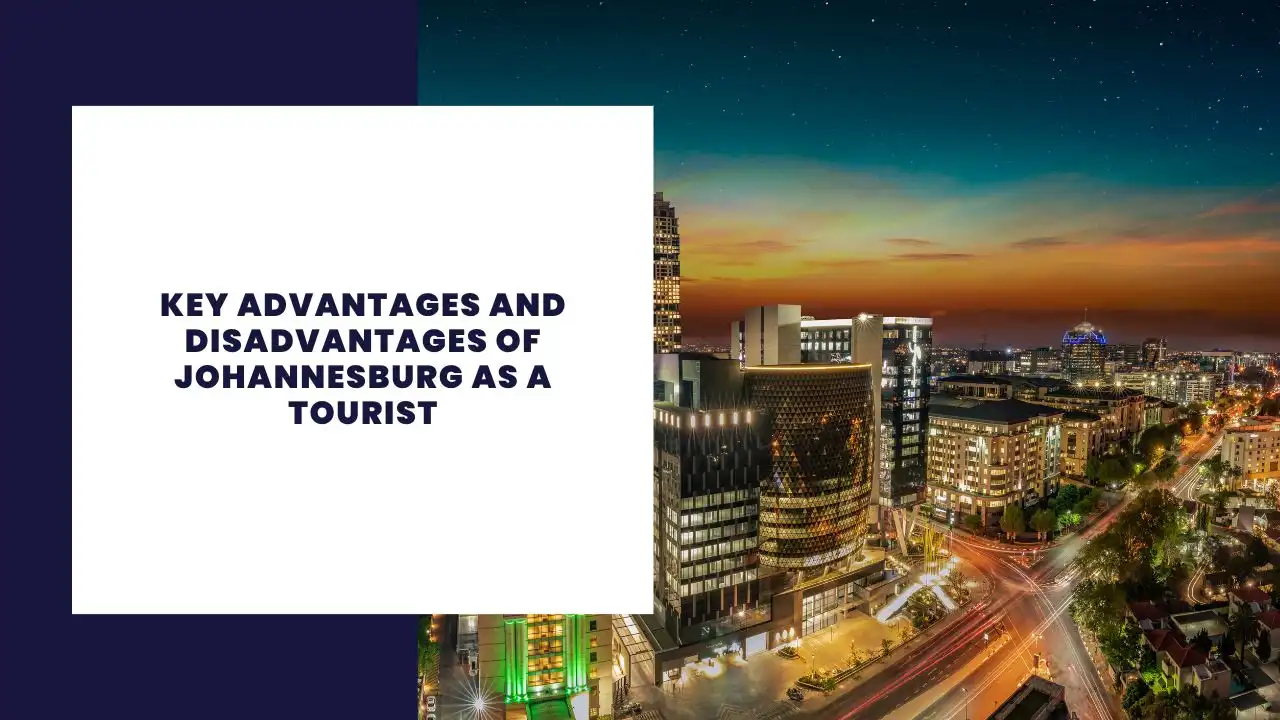
14 Key Advantages And Disadvantages Of Johannesburg As A Tourist
Johannesburg, often called Joburg, stands as one of Africa’s most dynamic urban destinations. As the economic powerhouse of South Africa, it blends modern city energy with powerful historical sites, diverse cultures, and access to unforgettable wildlife experiences. Many travellers choose to visit Johannesburg before continuing to other parts of the country, while others stay longer to dive into its art scene, museums, and vibrant township culture. But just like any major destination, there are pros and cons to consider before planning your trip.
This guide explores the advantages and disadvantages of visiting Johannesburg as a tourist so you can know before you go and plan your adventure with confidence.
Written by
- Redaction Team
- Entrepreneurship, Remote Work
Table of Contents
What Is Johannesburg?
Johannesburg is the largest city in South Africa and the capital of Gauteng province, one of the most developed regions in the country. Home to O.R. Tambo International Airport, the largest airport in South Africa, it serves as a major gateway for international travellers entering the region. Johannesburg is home to important historical and cultural landmarks, including the Apartheid Museum and Nelson Mandela’s House in Soweto.
Unlike coastal cities like Cape Town or Durban, Johannesburg is an inland metropolis known for its business district in Sandton, energetic neighbourhoods like Braamfontein and Melville, and access to world-renowned safari destinations. Many travellers use Johannesburg as a base to explore South Africa’s history, arts, and wildlife, or as a starting point before heading to Kruger National Park or Pilanesberg National Park.
Advantages of Johannesburg
1. Gateway to Safari Experiences
Johannesburg’s location makes it ideal for travellers planning to visit Kruger National Park or Pilanesberg National Park. These iconic game reserves offer unforgettable safari experiences and the chance to see Africa’s famous wildlife. Whether you’re heading to Kruger National Park for an extended safari or planning a day trip to Pilanesberg, Joburg serves as a convenient hub.
2. Rich Cultural and Political History
Johannesburg is a place to learn about South Africa’s complex history and journey to freedom. The Apartheid Museum offers a powerful educational experience, while Nelson Mandela’s House in Soweto and the nearby Hector Pieterson Museum give insight into the struggle for equality. Visiting these sites provides deeper understanding of South Africa’s past, making Johannesburg an important cultural destination.
3. Vibrant Arts, Fashion, and Urban Culture
From hipster cafes in Melville and Braamfontein to art galleries and vintage stores in Rosebank, Johannesburg is a stylish and expressive city. The city’s creative scene makes exploring downtown Johannesburg and surrounding suburbs exciting. You’ll find markets, street art, emerging designers, and lively nightlife for those staying in Johannesburg a few days.
4. Excellent Shopping and Upscale Areas
Sandton and Rosebank offer world-class shopping, luxury hotels, and dining options. Sandton City Mall and the surrounding business district are modern and polished, giving travellers access to premium amenities and a comfortable stay in Johannesburg.
5. Transportation Options and Key Connectivity
Johannesburg has the Gautrain rapid-transit system connecting the airport, Sandton, Rosebank, and Pretoria. For travellers landing at Tambo Airport, Gautrain provides a safe and efficient way to move between key areas. Additionally, taxi services and rideshare apps are increasingly common, although knowing travel tips and safety precautions is important.
6. Unique Township Experiences
Soweto, South Africa’s most famous township, provides meaningful cultural immersion. Guided tours take visitors through historical sites, markets, eateries, and the iconic cooling towers. This neighbourhood offers a closer look at South African life, resilience, and creativity.
7. Good Weather and Mild Winters
Johannesburg enjoys a pleasant climate with mild winters and sunny days throughout the year. This makes outdoor exploring comfortable, whether you’re heading to a gallery, taking a city tour, or planning day trips to surrounding parks and game reserves.
Disadvantages of Johannesburg
1. High Crime Levels
High crime in certain areas remains one of the major cons of visiting South Africa’s largest city. While many parts of Johannesburg are safe for travellers, visitors should stay alert, avoid walking alone at night, and not take unnecessary risks. Keeping valuables such as cameras and phones secured is essential.
2. Limited Walkability in Some Areas
Unlike compact tourist cities, Johannesburg’s size and layout mean walking or driving are necessary to reach many destinations. Some areas are not designed for pedestrians, and choosing safe neighbourhoods is important. A reliable taxi or rideshare service is often a better option for tourists.
3. Public Transport Concerns
Although systems like the Gautrain and Rea Vaya bus exist, public transportation is limited compared to other major global cities. Minibus taxis are widely used by locals but are not recommended for most tourists due to safety and navigation challenges. Renting a car is common, but roads in South Africa can vary in condition and require careful driving.
4. Safety Precautions Can Feel Restrictive
For some travellers, the emphasis on safety, gated communities, and car guards can feel overwhelming. This is something to be aware of when experiencing daily life in Johannesburg as a visitor.
5. Higher Travel Costs for Security and Transport
Taxi rides, private tour guides, secure accommodation, and travel insurance can add to your budget. These precautions help ensure a safe trip but can increase the overall cost compared to other destinations.
6. Less Tourist-Oriented Than Cape Town
Johannesburg lacks some of the natural tourist appeal of Cape Town, such as beaches, Table Mountain, and coastal views. It is more urban and industrial, which may not appeal to every traveller planning to visit South Africa.
7. Traffic and Urban Crowds
Traffic in the central business districts, Sandton, and northern suburbs can be heavy, especially during peak hours. Planning your route and travel time is helpful when navigating Johannesburg’s streets.
Comparison Table of the Pros and Cons of Johannesburg
| Pros | Cons |
|---|---|
| Gateway to Kruger National Park and safaris | High crime levels in certain areas |
| Rich cultural and historical attractions | Limited walkability |
| Vibrant arts and urban culture | Public transportation limitations |
| Great shopping and modern amenities | Safety precautions necessary |
| Excellent weather and mild winters | Higher costs for secure travel |
| Unique township experiences | Less scenic than Cape Town |
| Major airport and good connectivity (Gautrain) | Traffic congestion |
Recommended Places To Visit In Johannesburg
Apartheid Museum
Soweto and Mandela’s House
Sandton City and Nelson Mandela Square
Rosebank Art & Craft Market
Constitutional Hill
Maboneng Precinct
Gold Reef City
Pilanesberg National Park (nearby safari trip)
Lion & Safari Park
Cradle of Humankind UNESCO site
These destinations allow travellers to explore Johannesburg’s history, culture, urban vibe, and natural beauty.
FAQs About Johannesburg
Yes, Johannesburg is worth visiting if you’re interested in history, culture, and safari access. Many travellers find Johannesburg is a great starting point for weeks in South Africa.
Travel is safe when using caution. Stick to reputable areas, keep valuables secure, and don’t walk alone at night.
Renting a car is helpful, but Gautrain and taxi services can work well for short stays in Johannesburg.
Kruger National Park is about 4–5 hours by car, making it accessible for multi-day safari trips.
Johannesburg enjoys mild winters and sunny days year-round, making it a comfortable destination in most seasons.
Conclusion of Advantages and Disadvantages of Johannesburg
Johannesburg offers travellers a captivating mix of culture, history, and adventure. From emotional and educational experiences at the Apartheid Museum to bustling creative districts in Rosebank and Braamfontein, the city invites visitors to discover South Africa’s spirit and diversity. Its role as a major gateway to Kruger National Park and other game reserves makes it an essential stop for wildlife lovers planning to visit South Africa.
At the same time, the city has challenges, including safety precautions, limited walkability in certain areas, and the need for mindful travel planning. With awareness and preparation, many travellers enjoy a rewarding and eye-opening experience in Johannesburg. Whether your goal is to explore Nelson Mandela’s legacy, discover urban culture, or begin a safari adventure, Johannesburg can be a fascinating and meaningful destination.
More about Remote Work