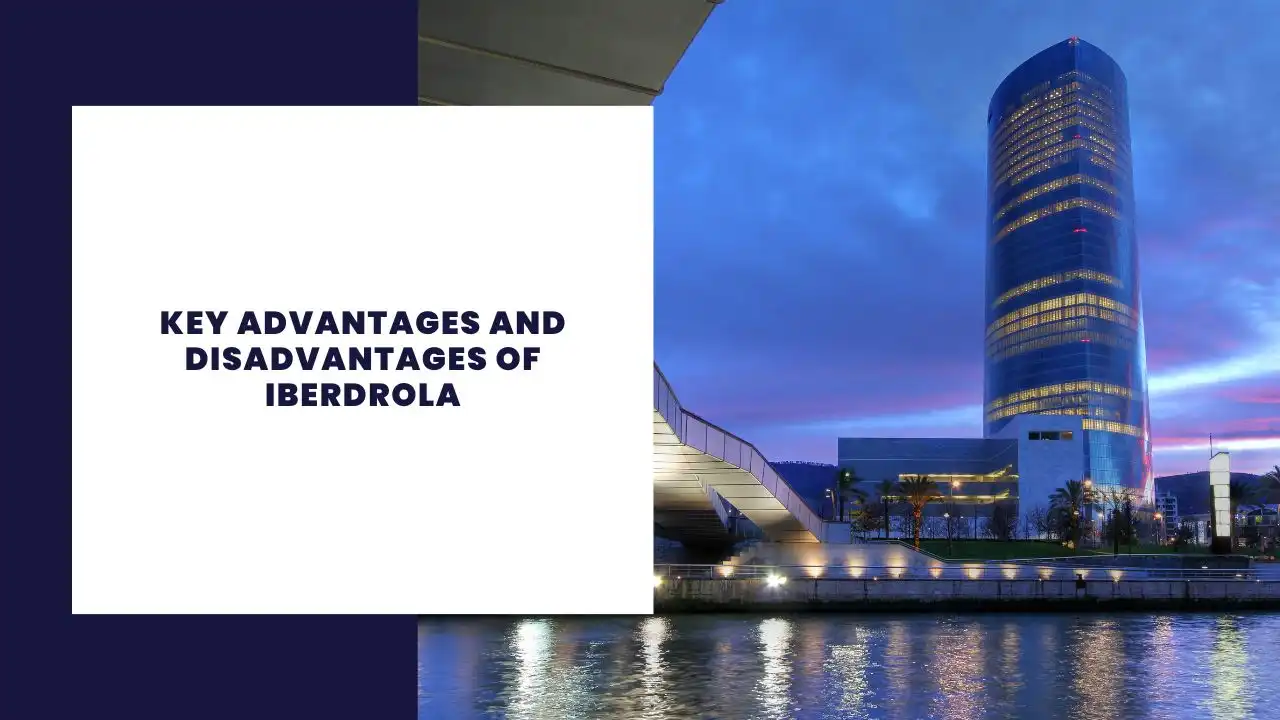
14 Key Advantages and Disadvantages of Iberdrola
Iberdrola is one of the most prominent players in the global energy market, known for its commitment to renewable energies and sustainability. As a Spanish multinational electric utility company headquartered in Bilbao, it has undergone significant technological transformation in recent years to meet the growing global energy demand and address the challenges of climate change.
With a presence in many countries and a strong focus on clean energy, Iberdrola’s strategy has positioned it as a leader in the renewable sector. However, like any large utility, it comes with both advantages and disadvantages that customers, investors, and policymakers should understand. From its investment in renewable energy sources to its operational efficiency and potential drawbacks related to market volatility, a balanced perspective can provide valuable insights into its role in the energy transition leading up to 2025.
Written by
- Redaction Team
- Business Planning, Entrepreneurship
Table of Contents
What is Iberdrola?
Iberdrola is a Spanish multinational electric utility company that operates in electricity generation, transmission, and distribution across many countries. Its portfolio includes renewable energy sources such as solar, wind, and hydro, as well as more traditional energy sources. Over the past decades, Iberdrola’s strategy has shifted significantly toward clean energy, making it a global leader in renewable energies.
With a focus on sustainability, energy efficiency, and innovation, Iberdrola’s operations leverage advanced ICT systems, smart grids, and storage capacity solutions to enhance resilience and optimize energy production. This has given the company a competitive advantage in the renewable sector, allowing it to generate electricity more sustainably while reducing environmental impact.
Its headquarters in Bilbao serves as the nerve center for international operations, including projects in Europe, the Americas, and other regions. The company’s investments in technology and infrastructure aim to improve operational efficiency and guarantee price stability for consumers while contributing to a cleaner global energy market.
Advantages of Iberdrola
1. Strong Commitment to Renewable Energies
Iberdrola’s dedication to renewable energy sources such as solar, wind, and hydro has positioned it as a leader in the global energy transition. This commitment helps reduce pollution and supports global sustainability goals.
2. Competitive Advantage Through Innovation
By leveraging technological advancements, Iberdrola has enhanced its energy production processes. The integration of smart grid technology and storage capacity solutions gives it a competitive edge over other utilities.
3. Broad International Presence
Operating in many countries allows Iberdrola to diversify its market base, reducing dependency on any single region’s economic or regulatory environment.
4. Contribution to Climate Change Mitigation
The company’s focus on clean energy helps reduce greenhouse gas emissions, playing a key role in addressing climate change while promoting sustainable energy sources.
5. Investment in Infrastructure and Technology
Ongoing investment in modern infrastructure, renewable energy projects, and ICT systems ensures Iberdrola can meet increasing energy demand efficiently and sustainably.
6. Resilience in the Energy Market
Iberdrola’s mix of renewable energy sources and flexible production processes enhances resilience against volatility in fossil fuel prices and supply disruptions.
7. Focus on Operational Efficiency
The company’s commitment to improving operational efficiency helps optimize costs and guarantee price stability for consumers, even in competitive markets.
Disadvantages of Iberdrola
1. Exposure to Market Volatility
Despite its renewable focus, Iberdrola operates in a sector affected by electricity price fluctuations, regulatory changes, and international market volatility.
2. High Capital Requirements
Investments in renewable energy, grid upgrades, and technological infrastructure require significant financial resources, which can impact profitability in the short term.
3. Dependence on Government Policies
As a utility involved heavily in renewable energy, Iberdrola relies on favorable government policies, subsidies, and regulations, which can change unpredictably.
4. Operational and Technological Risks
While technological innovation offers advantages, it also introduces risks related to system failures, cybersecurity threats, and the lifecycle of new infrastructure.
5. Long Project Lifecycles
Renewable energy projects often have long development timelines, which can delay returns on investment and affect financial performance.
6. Workforce and Skills Challenges
The adoption of advanced ICT systems and renewable technologies requires specialized skills, meaning Iberdrola must continuously invest in workforce training.
7. Environmental and Land Use Challenges
While cleaner than fossil fuels, renewable projects still have an environmental impact, such as land use for wind farms or ecological effects of hydro projects.
Comparison Table of the Previous Advantages and Disadvantages of Iberdrola
| Advantages | Disadvantages |
|---|---|
| Strong commitment to renewable energies | Exposure to market volatility |
| Competitive advantage through innovation | High capital requirements |
| Broad international presence | Dependence on government policies |
| Contribution to climate change mitigation | Operational and technological risks |
| Investment in infrastructure and technology | Long project lifecycles |
| Resilience in the energy market | Workforce and skills challenges |
| Focus on operational efficiency | Environmental and land use challenges |
SWOT Analysis of Iberdrola
Strengths
Global renewable energy leader: Significant presence in wind and hydro power, with strong sustainability credentials.
Diversified geographic portfolio: Operations across Europe, the Americas, and other regions reduce market risk.
Robust financial position: Stable revenues and strong investment capacity for large-scale projects.
Technological innovation: Investments in smart grids, energy storage, and digital transformation.
Weaknesses
High capital intensity: Large investments in infrastructure require substantial funding and debt management.
Regulatory exposure: Dependent on energy policies and incentives in multiple countries.
Operational complexity: Managing diverse markets and technologies increases operational challenges.
Opportunities
Global energy transition: Rising demand for renewable energy and decarbonization solutions.
Hydrogen economy: Potential growth in green hydrogen production and infrastructure.
Emerging markets: Expansion opportunities in regions with growing electricity demand.
Threats
Market volatility: Fluctuating energy prices and demand can affect profitability.
Competition: Increasing rivalry from other renewable and traditional energy providers.
Climate risks: Extreme weather events may disrupt generation and infrastructure.
The Future of Iberdrola
Looking toward 2025, Iberdrola is set to expand its renewable energy portfolio even further, continuing its leadership in clean energy production. The company plans to acquire new renewable projects, invest in storage capacity, and enhance transmission and distribution systems to improve resilience and efficiency.
The global push for sustainability and the energy transition offers Iberdrola opportunities to strengthen its competitive position. However, the company will also need to navigate challenges such as price volatility, technological risks, and evolving government regulations. Advances in solar technology, offshore wind projects, and smarter grid management are expected to shape Iberdrola’s future growth and operational strategy.
FAQs About Iberdrola
Iberdrola is a Spanish multinational electric utility company specializing in electricity generation, transmission, and distribution, with a strong focus on renewable energies.
Iberdrola’s headquarters are located in Bilbao, Spain.
While Iberdrola focuses heavily on renewable energy sources like wind, solar, and hydro, it also operates some conventional power generation facilities.
Through investment in clean energy, technological innovation, and efficiency improvements, Iberdrola reduces pollution and supports climate change mitigation.
Iberdrola plays a leading role in the energy transition by increasing renewable energy production, enhancing grid infrastructure, and promoting sustainable energy adoption globally.
Conclusion of Advantages and Disadvantages of Iberdrola
Iberdrola’s strengths lie in its commitment to renewable energy, operational efficiency, and technological innovation, which provide a strong competitive advantage in the global energy sector. Its presence in many countries and its dedication to sustainability make it a significant player in the fight against climate change.
However, the company faces challenges such as market volatility, high capital requirements, and long project lifecycles. Balancing these advantages and disadvantages will be critical for Iberdrola to maintain its leadership position and continue driving the global energy transition in a sustainable and economically viable way.
More about Business Planning