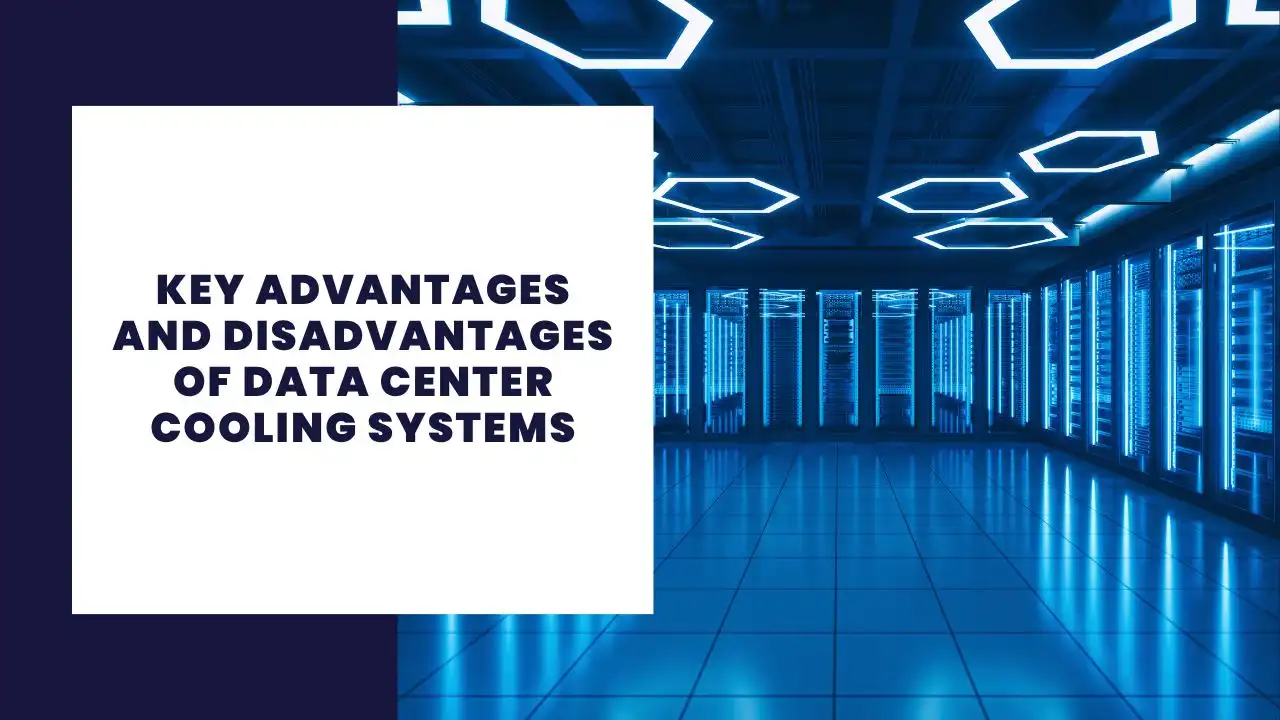
Data centers are the backbone of the digital economy, supporting cloud computing, AI workloads, streaming platforms, and enterprise IT operations. As computing density increases, managing heat becomes one of the most critical aspects of data center design and operation. Data center cooling systems are essential to keep equipment running reliably, prevent downtime, and control operational costs. At the same time, each cooling method comes with trade-offs related to efficiency, complexity, and long-term scalability.
What Is Data Center Cooling Systems
Data center cooling systems are technologies and processes designed to remove heat generated by data center equipment such as servers, storage devices, and networking hardware. As hot air is generated by IT loads, cooling systems work to replace it with cool air or absorb heat using liquid. The goal is to maintain optimal operating temperatures across the entire data center facility.
Cooling in data centers can rely on traditional air cooling, conventional air conditioning systems, or advanced liquid cooling technologies such as direct-to-chip cooling and immersion cooling. The choice of cooling solution depends on data center requirements, workload density, energy efficiency targets, and the overall design of today’s data center.
Advantages Of Data Center Cooling Systems
1. Protects Data Center Equipment From Overheating
One of the primary advantages of data center cooling is protecting critical hardware. Servers generate hot air continuously, and without effective cooling, components can fail prematurely. Cooling systems ensure that warm air is removed and replaced with cool air, extending the lifespan of data center equipment.
This protection is essential for maintaining uptime and avoiding costly disruptions.
2. Improves Reliability And Uptime
Efficient cooling reduces thermal stress on components, leading to higher system reliability. Data center operators depend on stable temperatures to meet service-level agreements and maintain consistent performance across workloads.
Cooling reduces the risk of unexpected shutdowns caused by overheating, especially in larger data centers with dense server racks.
3. Supports Higher Computing Density
Modern data centers, including AI data centers, require much higher power densities than older facilities. Advanced cooling technologies such as liquid cooling in data centers allow operators to deploy more computing power in the same physical footprint.
Liquid absorbs the heat more effectively than air, making it possible to cool high-density racks that traditional air cooling systems cannot handle.
4. Enhances Cooling Efficiency
Cooling efficiency is a major advantage of modern cooling solutions. Liquid cooling efficiency is significantly higher compared to air cooling, as liquid absorbs heat more efficiently and transfers it away from components faster.
Efficient cooling reduces energy waste and helps lower cooling costs over time.
5. Reduces Energy Consumption
Cooling can account for a large portion of a data center’s energy usage. Advanced cooling options, such as using outside air or liquid cooling solutions, can significantly reduce reliance on conventional air conditioning units.
Cooling reduces data center energy consumption, improving overall sustainability and operational efficiency.
6. Enables Flexible Data Center Design
Different cooling methods allow flexibility in data center design. Raised floor systems, computer room air conditioners, and computer room air handlers are common cooling equipment used in traditional air cooling environments.
Liquid cooling systems open new design possibilities by reducing the need for extensive airflow management across the entire data center.
7. Prepares Data Centers For Future Growth
As data centers are projected to grow in size and complexity, scalable cooling solutions become a strategic advantage. Advancements in liquid cooling technology make it easier to adapt cooling systems as workloads evolve.
This future-proofing helps data center operators plan long-term infrastructure investments.
Disadvantages Of Data Center Cooling Systems
8. High Initial Installation Costs
A key disadvantage of data center cooling systems is the upfront cost. Advanced cooling technologies, particularly liquid immersion cooling and direct liquid cooling, require specialized equipment and infrastructure.
Compared to conventional air conditioning, these systems can be expensive to install in a new data center or retrofit into an existing facility.
9. Increased System Complexity
Cooling systems add complexity to data center operations. Liquid cooling systems involve pumps, heat exchangers, and monitoring tools that require specialized knowledge.
This complexity can increase maintenance requirements and demand skilled personnel.
10. Risk Of Leaks In Liquid Cooling Systems
Liquid cooling reduces heat efficiently, but it introduces the risk of leaks. Although modern liquid cooling technology is designed to minimize this risk, data center operators must still account for potential damage to sensitive equipment.
This concern makes some operators hesitant to adopt liquid cooling solutions.
11. Compatibility Challenges With Existing Infrastructure
Not all data centers are designed to support advanced cooling methods. Traditional air cooling systems may not easily integrate with direct liquid cooling or immersion cooling systems.
Upgrading cooling infrastructure can require significant changes to the data center facility and layout.
12. Cooling Can Be Less Effective In Poorly Designed Facilities
Cooling efficiency depends heavily on data center design. Poor airflow management, hot air recirculation, or inadequate separation of hot and cool air can reduce the effectiveness of air cooling systems.
Even the best cooling equipment may underperform if the overall cooling strategy is flawed.
13. Ongoing Operational And Maintenance Costs
Cooling requires continuous operation, leading to ongoing energy and maintenance expenses. Air conditioning units, computer room air conditioners, and liquid cooling systems all require regular servicing.
Over time, these costs can impact the total cost of ownership for the data center.
14. Environmental Impact And Water Usage
Some cooling solutions, especially certain liquid cooling systems, may rely on water-based processes. In regions with water scarcity, this can be a significant disadvantage.
Balancing cooling efficiency with environmental responsibility is an ongoing challenge for data center operators.
Comparison Table Of The Pros And Cons Of Data Center Cooling Systems
| Aspect | Pros | Cons |
|---|---|---|
| Equipment protection | Prevents overheating | Requires constant monitoring |
| Cooling efficiency | Liquid cooling offers higher efficiency | Advanced systems are costly |
| Scalability | Supports high-density computing | Infrastructure upgrades may be needed |
| Energy use | Lower cooling costs with efficient systems | Traditional air cooling is energy intensive |
| Design flexibility | Enables modern data center layouts | Retrofitting can be complex |
| Reliability | Improves uptime and performance | Added operational complexity |
The Future Of Data Center Cooling Systems
The future of data center cooling systems is moving toward liquid-based solutions. As workloads grow denser and AI data centers become more common, traditional air cooling may no longer be sufficient. Many new data center projects are turning to liquid immersion cooling and direct-to-chip cooling as a more advanced cooling approach.
Data centers are projected to adopt hybrid cooling models that combine air and liquid cooling to balance efficiency, cost, and reliability. Cooling is becoming a strategic component of data center construction rather than an afterthought.
FAQs About Data Center Cooling Systems
What is the most common cooling method in data centers?
Traditional air cooling using air conditioning units and computer room air conditioners remains common, especially in older data centers.
How does liquid cooling differ from air cooling?
Liquid cooling absorbs heat directly from components, while air cooling relies on moving cool air through the data center. Liquid cooling offers higher efficiency compared to air cooling.
Is immersion cooling safe for data center equipment?
Yes, immersion cooling systems use non-conductive liquids designed specifically for data center use, making them safe when properly implemented.
Do all data centers need advanced cooling technologies?
Not necessarily. The need depends on data center requirements, workload density, and power usage. Smaller or low-density data centers may rely on conventional air cooling.
How does cooling impact data center operating costs?
Cooling can represent a significant portion of energy use. Efficient cooling solutions help reduce long-term operational expenses.
Conclusion Of Advantages And Disadvantages Of Data Center Cooling Systems
The advantages and disadvantages of data center cooling systems reflect the balance between performance, cost, and complexity. Effective cooling is essential to protect equipment, improve reliability, and support modern computing demands. At the same time, cooling systems can introduce high upfront costs, operational challenges, and design constraints.
Choosing the right cooling solution depends on the specific needs of the data center, future growth plans, and efficiency goals. As cooling technologies continue to evolve, data centers that invest in efficient and scalable cooling strategies will be better positioned to meet the demands of an increasingly digital world.