
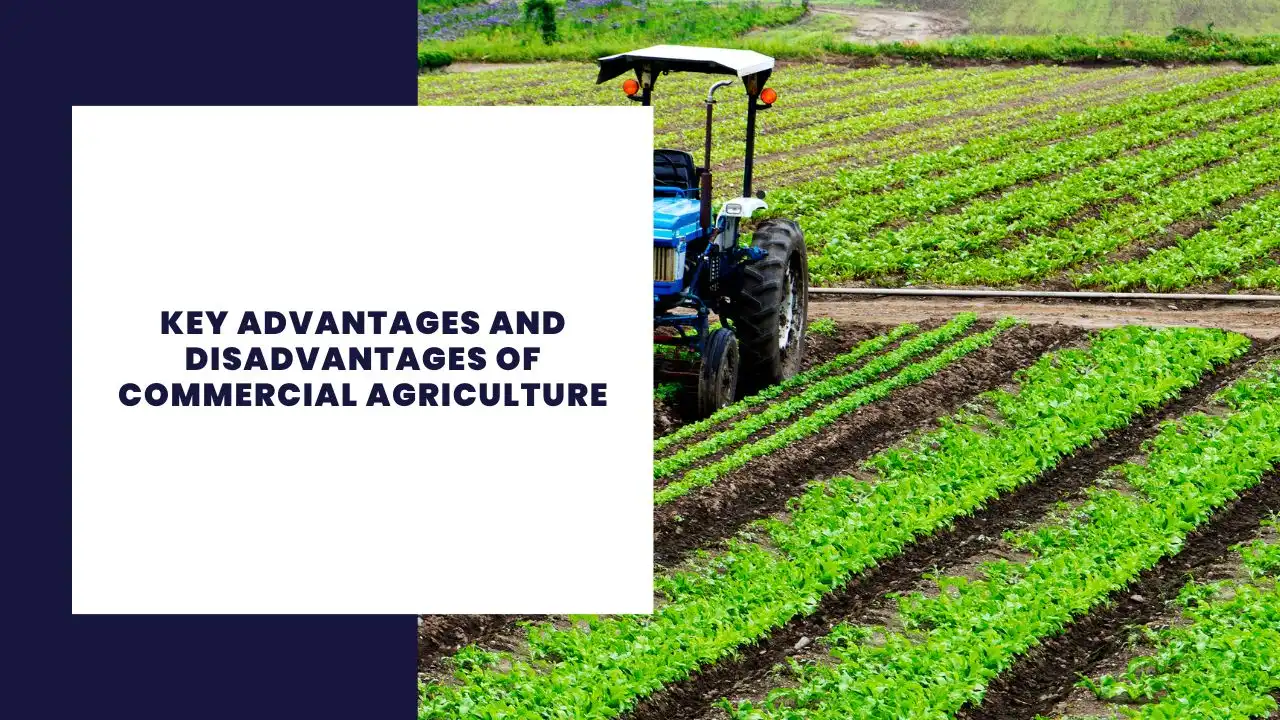
16 Key Advantages And Disadvantages Of Commercial Agriculture
Commercial agriculture has become a dominant form of farming in many countries, transforming traditional agricultural practices into large-scale, profit-driven operations. Unlike subsistence farming, which primarily focuses on growing food for personal consumption, commercial farming aims to generate profit by producing crops and livestock for sale in local and international markets. The growth of commercial agriculture has significant implications for food production, economic development, and technological innovation in farming.
While commercial agriculture offers numerous advantages, including increased productivity and market competitiveness, it also comes with notable disadvantages such as environmental degradation, dependence on chemical inputs, and market vulnerabilities. Understanding the advantages and disadvantages of commercial agriculture can help farmers, policymakers, and stakeholders make informed decisions about agricultural practices and sustainable development.
Written by
- Redaction Team
- Business Planning, Entrepreneurship
Table of Contents
What is Commercial Agriculture
Commercial agriculture refers to the large-scale production of crops and livestock intended primarily for sale rather than personal consumption. It involves the use of advanced technology, mechanization, irrigation, fertilizers, pesticides, and other inputs to maximize productivity and profitability. Types of commercial agriculture include plantation farming, grain farming, dairy farming, poultry farming, and livestock farming.
The primary goal of commercial farming is to meet market demands and generate profit. Commercial farmers often implement intensive farming practices, including large-scale cultivation of crops, mechanized farming techniques, and advanced irrigation systems. Unlike traditional farming, commercial agriculture is highly organized, requires significant investment in machinery and inputs, and focuses on maximizing crop yields and livestock production for the market rather than local subsistence.
Advantages of Commercial Agriculture
1. Increased Productivity
Commercial agriculture boosts productivity through the use of advanced technology, machinery, irrigation, and fertilizers. Large-scale cultivation allows farmers to produce higher crop yields and more livestock compared to traditional farming methods, ensuring a steady supply of agricultural products.
2. Economic Growth
Commercial agriculture contributes significantly to the economy by generating employment, creating business opportunities, and increasing foreign exchange earnings through the export of crops and livestock products.
3. Efficient Use of Resources
Large-scale farming operations can efficiently manage water, fertilizers, and labor. Mechanization and modern farming techniques reduce manual labor, optimize inputs, and increase the overall efficiency of agricultural production.
4. Access to Market Demand
Commercial farmers focus on producing crops and livestock that meet market demands. By aligning production with consumer preferences and global trade trends, commercial agriculture ensures that agricultural products are available for sale in both local and international markets.
5. Technological Advancement
Commercial farming promotes the adoption of advanced technology and mechanization. Precision agriculture, vertical farming, and integrated pest management are examples of techniques that improve productivity, reduce waste, and enhance the sustainability of farming practices.
6. Diversification of Products
Commercial agriculture allows farmers to diversify their production, including crops, livestock, dairy products, and ornamental plants. This reduces the risk associated with relying on a single type of crop or product and helps farmers respond to market fluctuations.
7. Contribution to Food Security
By producing large quantities of food for sale, commercial agriculture ensures a steady supply to meet the needs of growing populations. Industrial agriculture and large-scale farming operations play a key role in national and global food production systems.
8. Potential for Sustainable Practices
With careful management, commercial agriculture can integrate sustainable farming practices, regenerative agriculture, and soil conservation techniques to maintain long-term productivity while reducing environmental impact.
Disadvantages of Commercial Agriculture
1. Environmental Degradation
Heavy use of fertilizers and pesticides can lead to soil degradation, water pollution, and loss of biodiversity. Excessive chemical inputs compromise soil health and can harm local ecosystems.
2. Dependence on Chemical Inputs
Commercial farming often relies on synthetic fertilizers, pesticides, and other inputs. Overdependence on these chemicals increases production costs and can lead to negative health and environmental consequences.
3. High Capital Requirements
Starting and maintaining commercial agriculture operations requires significant investment in machinery, irrigation, seeds, fertilizers, and labor. Small farmers may find it difficult to enter the market without substantial financial resources.
4. Vulnerability to Market Fluctuations
Commercial agriculture is closely tied to market demand and global trade. Fluctuations in crop prices, livestock markets, or international trade policies can significantly impact farmers’ income and profitability.
5. Reduction in Traditional Farming Practices
The rise of industrial agriculture and commercial farming often displaces traditional and subsistence farming methods. This shift may reduce local food diversity and cultural farming knowledge.
6. Risk of Soil Depletion
Intensive farming practices, including monoculture and large-scale cultivation, can lead to soil exhaustion and long-term decreases in soil fertility if not managed with sustainable techniques.
7. Social Impact
Large-scale commercial agriculture can lead to land consolidation, reducing access to land for small farmers and impacting rural communities. This can also exacerbate inequalities in the agricultural sector.
8. Potential Overproduction
In some cases, commercial agriculture may produce more crops or livestock than the market demands, leading to waste, reduced prices, and economic inefficiency.
Comparison Table of the Pros and Cons of Commercial Agriculture
| Advantages | Disadvantages |
|---|---|
| Increased productivity and crop yields | Environmental degradation due to heavy use of chemicals |
| Boosts economic growth and foreign exchange | High capital investment required |
| Efficient resource management | Vulnerable to market fluctuations |
| Meets market demand and diversifies products | Reduction of traditional farming practices |
| Promotes technological advancement | Risk of soil depletion |
| Contributes to food security | Social impact on small farmers |
| Potential for sustainable practices | Risk of overproduction |
The Future of Commercial Agriculture
The future of commercial agriculture is expected to be shaped by technology, sustainability, and climate adaptation. Precision agriculture, automation, vertical farming, and regenerative practices will increasingly define the sector. Farmers will likely focus on balancing large-scale productivity with environmental sustainability, integrating sustainable practices such as water management, soil conservation, and integrated pest management.
Additionally, market trends and consumer demand for organic and responsibly produced food will influence commercial farming methods. The adoption of advanced technology will make it possible for commercial agriculture to meet global food demands while mitigating the negative environmental and social impacts traditionally associated with industrial farming.
FAQs About Commercial Agriculture
Commercial agriculture is the large-scale production of crops and livestock intended for sale in local or international markets, rather than for personal consumption.
Unlike subsistence farming, which focuses on producing food for personal use, commercial farming aims to generate profit and meet market demands.
Key advantages include increased productivity, economic growth, efficient resource management, technological advancement, and improved food security.
Disadvantages include environmental degradation, dependence on chemical inputs, high capital requirements, market vulnerability, and potential negative social impacts.
Yes. By implementing sustainable practices such as integrated pest management, regenerative agriculture, and soil conservation, commercial farming can be both productive and environmentally responsible.
Conclusion of Advantages and Disadvantages of Commercial Agriculture
Commercial agriculture plays a vital role in modern food production, economic growth, and technological advancement in farming. The advantages of commercial agriculture, such as increased productivity, access to markets, and potential for sustainable practices, make it an attractive choice for large-scale farming operations. However, the disadvantages, including environmental degradation, high capital investment, and market vulnerabilities, cannot be overlooked.
Balancing productivity with sustainability and adopting advanced farming techniques will be crucial for the future of commercial agriculture. By understanding the advantages and disadvantages of commercial agriculture, farmers, policymakers, and stakeholders can make informed decisions that support both profitability and environmental stewardship.
More about Business Planning