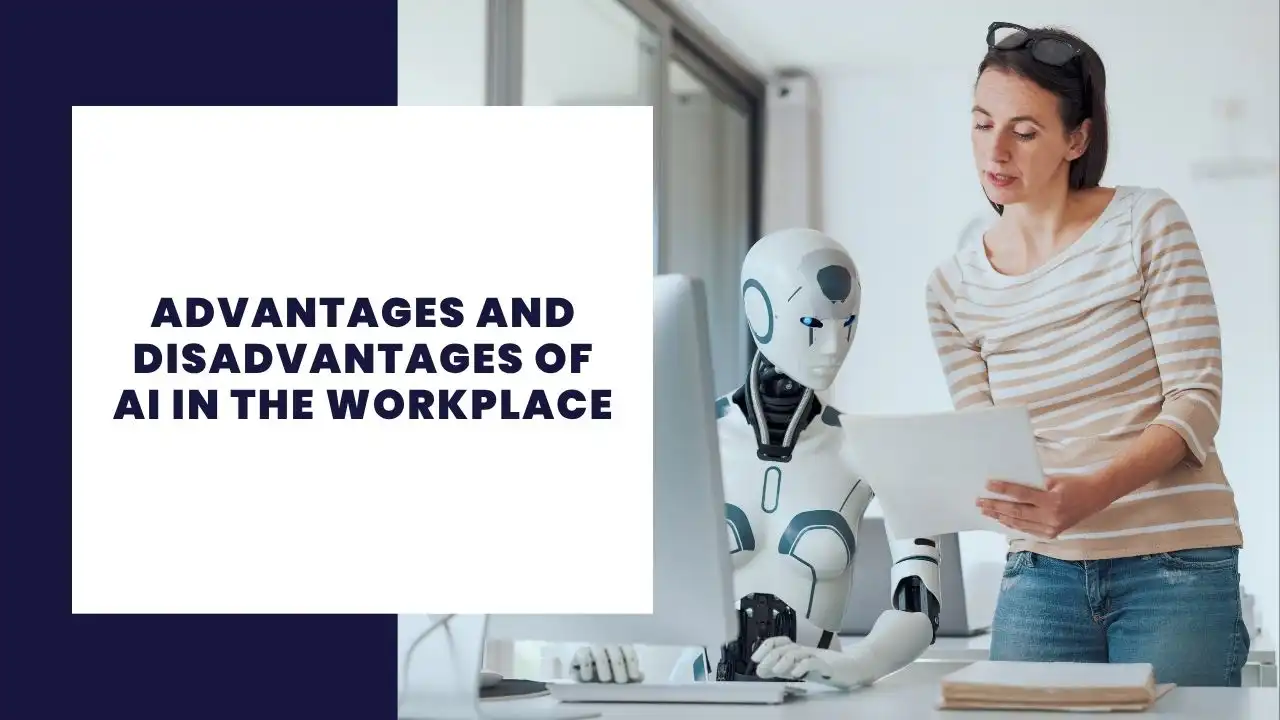
Artificial Intelligence (AI) has rapidly transformed the modern workplace, influencing how businesses operate, communicate, and innovate. From automating routine tasks to enhancing decision-making, AI’s impact is undeniable. However, alongside its many benefits, AI also presents challenges that organizations must address. Understanding both the advantages and disadvantages of AI in the workplace is crucial for leveraging its potential effectively while mitigating risks.
What is AI in the Workplace?
AI in the workplace refers to the integration of artificial intelligence technologies into business processes, workflows, and decision-making systems. These technologies include machine learning, natural language processing, robotics, and computer vision, among others. AI systems can analyze vast amounts of data, automate repetitive tasks, provide insights, and even interact with humans through chatbots or virtual assistants.
The goal of AI in the workplace is to improve efficiency, productivity, and innovation. It helps organizations reduce operational costs, enhance employee experiences, and adapt quickly to changing market conditions. However, the adoption of AI also raises questions about job displacement, privacy, and ethical considerations.
Advantages of AI in the Workplace
1. Increased Efficiency and Productivity
AI can automate mundane and repetitive tasks, freeing employees to focus on more strategic and creative work. Automation of data entry, scheduling, and customer service inquiries speeds up processes and reduces human error, resulting in higher overall productivity.
2. Enhanced Decision-Making
By analyzing large datasets quickly and accurately, AI provides insights that support better decision-making. Predictive analytics and data-driven recommendations help managers and teams make informed choices, improving business outcomes.
3. Cost Reduction
Implementing AI can significantly lower operational costs by reducing the need for manual labor in certain areas, minimizing errors, and optimizing resource allocation. Over time, these savings can be substantial and contribute to a healthier bottom line.
4. 24/7 Availability
Unlike human employees who require breaks and rest, AI-powered systems such as chatbots and virtual assistants can operate round the clock. This ensures continuous customer support and uninterrupted business operations.
5. Improved Customer Experience
AI enables personalized interactions with customers by analyzing preferences and behaviors. This personalization leads to better customer satisfaction and loyalty, as businesses can tailor products, services, and communications more effectively.
6. Enhanced Workplace Safety
Robotics and AI-driven monitoring systems can perform hazardous tasks or oversee workplace safety protocols, reducing the risk of accidents and injuries. AI can also predict potential safety issues by analyzing patterns and alerting supervisors in advance.
7. Facilitation of Remote Work
AI tools help manage remote teams by automating workflow tracking, facilitating communication, and supporting virtual collaboration. This flexibility has become increasingly important in the evolving work landscape.
Disadvantages of AI in the Workplace
1. Job Displacement and Unemployment
One of the most significant concerns about AI is its potential to automate jobs traditionally performed by humans. This can lead to job losses, especially in roles involving repetitive or routine tasks, creating economic and social challenges.
2. High Implementation Costs
While AI can reduce costs in the long run, the initial investment in AI technologies, infrastructure, and employee training can be substantial. Small and medium-sized enterprises may find these upfront costs prohibitive.
3. Lack of Human Judgment and Creativity
AI systems operate based on data and algorithms but lack the emotional intelligence, intuition, and creativity that humans bring to problem-solving. Overreliance on AI can stifle innovation and reduce the human element in decision-making.
4. Privacy and Security Concerns
AI systems often require access to vast amounts of sensitive data, which raises concerns about data privacy and security. Breaches or misuse of data can have serious consequences for both employees and customers.
5. Bias and Discrimination
AI algorithms can unintentionally perpetuate or amplify biases present in training data, leading to unfair treatment or discrimination in hiring, promotions, or customer interactions. Addressing these biases is a complex and ongoing challenge.
6. Dependence on Technology
Excessive reliance on AI can make organizations vulnerable to system failures, technical glitches, or cyberattacks. Without proper contingency plans, such disruptions can severely impact business continuity.
7. Ethical and Legal Issues
The use of AI raises ethical questions about transparency, accountability, and consent. Navigating legal regulations and ensuring responsible AI use requires ongoing attention and adaptation.
Comparison Table of the Pros and Cons of AI in the Workplace
| Advantages | Disadvantages |
|---|---|
| Increased efficiency and productivity | Job displacement and unemployment |
| Enhanced decision-making | High implementation costs |
| Cost reduction | Lack of human judgment and creativity |
| 24/7 availability | Privacy and security concerns |
| Improved customer experience | Bias and discrimination |
| Enhanced workplace safety | Dependence on technology |
| Facilitation of remote work | Ethical and legal issues |
The Future of AI in the Workplace
The future of AI in the workplace is poised for continued growth and transformation. Advances in AI technology will further enhance automation capabilities, enabling even more complex and nuanced tasks to be handled by machines. Integration with other emerging technologies such as the Internet of Things (IoT) and blockchain may unlock new efficiencies and opportunities.
However, the evolution of AI will also require organizations to focus on ethical AI development, employee retraining, and regulatory compliance. Balancing technological innovation with human-centric values will be critical to creating sustainable and inclusive workplaces. Companies that embrace AI thoughtfully and strategically are likely to gain a competitive edge in the rapidly changing business environment.
FAQs About AI in the Workplace
Q1: Will AI completely replace human jobs?
AI will automate certain tasks, particularly repetitive ones, but it is unlikely to replace all human jobs. Many roles require creativity, emotional intelligence, and complex decision-making that AI cannot replicate.
Q2: How can companies address AI bias?
Companies can mitigate AI bias by using diverse and representative training data, regularly auditing algorithms for fairness, and involving multidisciplinary teams in AI development.
Q3: Is AI expensive to implement for small businesses?
While AI implementation can be costly initially, there are scalable AI solutions and cloud-based services that make AI more accessible to small and medium-sized businesses.
Q4: How does AI improve workplace safety?
AI can monitor environments for hazards, predict potential safety issues, and operate dangerous machinery, thereby reducing risks to human workers.
Q5: What skills will be important as AI becomes more prevalent?
Skills such as critical thinking, creativity, emotional intelligence, and adaptability will become increasingly valuable alongside technical skills related to AI and data analysis.
Conclusion of Advantages and Disadvantages of AI in the Workplace
AI presents a powerful tool for enhancing productivity, decision-making, and customer experience in the workplace. Its ability to automate routine tasks and provide continuous support offers clear advantages for businesses seeking efficiency and innovation. However, these benefits come with challenges including job displacement, ethical concerns, and the risk of overdependence on technology. Successfully integrating AI requires a balanced approach that values human skills and addresses potential drawbacks proactively. As AI continues to evolve, organizations must stay informed and adaptable to harness its potential while fostering a fair and sustainable work environment.