Drug addiction can gradually take over a person’s health, relationships, finances, work, and sense of identity. What may begin as experimentation, recreational use, or an attempt to cope with emotional pain can eventually become something much more difficult to control.
For someone struggling with substance use, simply saying “stop using” is often not enough. Substance use disorders are complex health conditions that can affect the brain, behavior, relationships, and physical health. Effective treatment exists, but recovery often requires more than willpower.
This is where drug rehabilitation can play an important role.
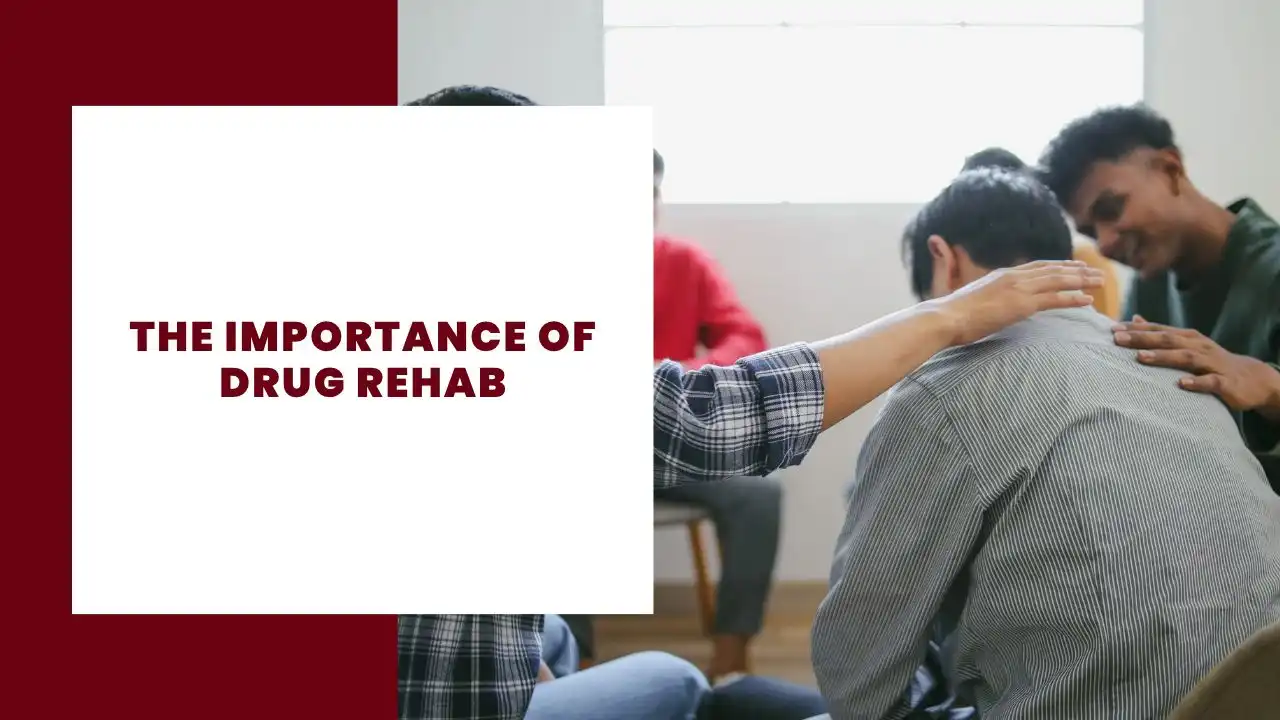
Drug rehab provides a structured environment where a person can begin addressing substance use while also working on the physical, psychological, social, and behavioral factors connected to it. Depending on the individual, treatment may involve medical care, counseling, behavioral therapies, medications, peer support, family involvement, and ongoing recovery services.
There is no single treatment program that works for everyone. Treatment should take into account the person’s substance use, physical health, mental health, circumstances, support system, and personal needs.
What Is Drug Rehab?
Drug rehabilitation, commonly called drug rehab, refers to professional treatment designed to help people reduce or stop harmful substance use and build the skills and support necessary for recovery.
Rehabilitation can take different forms. Some people benefit from residential treatment, where they live at a treatment facility for a period of time. Others may participate in outpatient treatment while continuing to live at home and maintain work or family responsibilities.
There is no single treatment approach that is appropriate for everyone. Two people may use the same substance but have completely different reasons for using it, different medical needs, different family situations, and different obstacles to recovery.
This individualized approach is important because addiction does not look exactly the same in every person.
Why Is Drug Rehab Important?
One of the most important reasons rehabilitation matters is that addiction can become increasingly difficult to manage without professional support.
Repeated drug use can produce changes in the brain that affect reward, motivation, decision-making, and responses to cravings. These changes can contribute to compulsive drug-seeking behavior even when someone understands that continued use is damaging their life.
Professional treatment creates an opportunity to interrupt this cycle.
Instead of dealing with addiction alone, a person can receive guidance from professionals who understand substance use disorders and can help develop an appropriate treatment plan.
1. Rehab Provides a Structured Environment
Structure can be extremely valuable during recovery.
Addiction often creates chaotic routines. Sleep may become irregular. Work and school responsibilities can suffer. Relationships can deteriorate. Money may disappear into substance use. Healthy habits can gradually disappear.
A rehabilitation program can introduce structure into daily life.
Depending on the program, that structure may include:
- Individual counseling
- Group therapy
- Medical appointments
- Recovery education
- Healthy meals
- Exercise and recreational activities
- Peer support
- Life-skills development
- Family counseling
- Relapse-prevention planning
The purpose isn’t simply to keep someone busy. Structure can help a person begin replacing destructive patterns with healthier routines.
2. Rehab Can Help Address Withdrawal Safely
Stopping certain substances suddenly can produce significant withdrawal symptoms. The severity depends on the substance, how frequently it was used, the amount consumed, and the person’s health.
For some substances, withdrawal can require medical supervision.
This is one reason attempting to quit without professional guidance isn’t always appropriate.
A qualified treatment provider can evaluate a person’s situation and determine whether medical detoxification or another level of care is necessary.
Medical detox is not the same thing as complete rehabilitation. Detox can help someone safely manage the physical process of stopping substance use, but long-term recovery usually requires addressing the psychological, behavioral, and social dimensions of addiction as well.
3. Treatment Addresses More Than the Drug Itself
One of the biggest misunderstandings about addiction is the idea that removing the substance automatically solves the problem.
Often, it doesn’t.
A person may have started using drugs because of stress, trauma, loneliness, depression, social pressure, unresolved emotional problems, or another difficult circumstance.
If those underlying issues remain unaddressed, returning to the same environment without new coping strategies can create significant challenges.
Effective treatment therefore considers the whole person rather than focusing exclusively on substance use.
This is why counseling and behavioral therapies can be important components of rehabilitation.
4. Rehab Can Teach Healthy Coping Skills
People use substances for many different reasons.
Someone might use drugs to escape painful emotions. Another person might use them to feel confident socially. Someone else might use substances to cope with stress, boredom, trauma, or difficult memories.
Eventually, substance use itself can become the primary coping mechanism.
Recovery requires developing alternatives.
Treatment can help people learn how to:
- Recognize emotional triggers
- Manage stress
- Handle cravings
- Communicate more effectively
- Establish boundaries
- Process difficult emotions
- Develop healthier routines
- Identify situations associated with relapse
- Build supportive relationships
- Respond differently to setbacks
These skills can remain useful long after formal treatment ends.
5. Rehab Can Help People Understand Their Triggers
A trigger is something that increases the desire to use a substance.
Triggers can be external or internal.
An external trigger might be a particular neighborhood, person, bar, party, or group of friends.
An internal trigger might be anger, loneliness, anxiety, boredom, shame, or a painful memory.
Learning to recognize these patterns can give someone an opportunity to respond before a craving becomes overwhelming.
Rather than thinking, “I suddenly wanted to use,” a person may eventually be able to recognize:
“I tend to experience strong cravings when I’m isolated and stressed.”
That awareness can become the foundation for a practical recovery strategy.
6. Treatment Can Include Evidence-Based Medications
Another important point is that medication can be part of addiction treatment for certain substance use disorders.
For example, medications such as buprenorphine, methadone, and naltrexone can be used in the treatment of opioid use disorder. Other medications may be used for alcohol use disorder.
When appropriately prescribed and monitored, medications can reduce cravings, manage withdrawal symptoms, reduce illicit opioid use, and improve treatment retention. Some medications can also reduce the risk of opioid overdose.
Medication is not appropriate for everyone, and treatment decisions should be made with qualified healthcare professionals.
7. Rehab Can Address Mental Health and Substance Use Together
Substance use and mental health problems can occur together.
Someone may experience anxiety, depression, trauma-related symptoms, or another mental health condition alongside substance use.
When these problems overlap, treating only one may leave important issues unresolved.
A comprehensive treatment program can evaluate both substance use and other health concerns and coordinate appropriate care.
This is sometimes referred to as treatment for co-occurring disorders.
The goal is not to label a person. It is to understand the different factors affecting their health so treatment can address them more effectively.
8. Rehab Can Rebuild Relationships
Addiction rarely affects only the person using drugs.
Parents may lose trust in their adult children.
Partners may experience emotional and financial stress.
Children may feel confused or unsafe.
Friends may distance themselves.
Family members can also experience anger, fear, guilt, or exhaustion.
Recovery provides an opportunity to begin repairing some of these relationships.
That does not mean every relationship will immediately return to how it was before addiction.
Trust is usually rebuilt through consistent behavior over time.
Treatment can help individuals learn communication skills, accountability, emotional regulation, and healthier relationship patterns.
Family involvement can also be an important component of recovery.
9. Rehab Can Restore a Sense of Purpose
Addiction can gradually shrink a person’s world.
The focus can become increasingly centered around obtaining, using, and recovering from substances.
Work, education, hobbies, relationships, health, and long-term goals can become secondary.
Recovery creates the possibility of rebuilding a broader life.
Recovery is about more than simply stopping a behavior. It can involve rebuilding health, creating a stable home, developing a sense of purpose, and reconnecting with a community.
A meaningful career.
A stable home.
Healthy relationships.
Physical health.
Creative interests.
Education.
Family connection.
Spirituality.
Community.
Purpose.
These things can become part of a person’s recovery journey.
10. Rehab Can Reduce the Risk of Serious Consequences
Untreated substance use disorders can have serious consequences for physical and mental health.
Depending on the substance, risks can include overdose, infectious diseases, cardiovascular problems, liver damage, injuries, impaired judgment, and other medical complications.
Treatment can reduce some of these risks by helping people reduce or stop harmful substance use and by connecting them with appropriate medical care.
For opioid use disorder in particular, evidence-based medications can reduce the risk of overdose and support continued engagement in treatment.
This makes access to treatment more than a lifestyle issue.
For some people, treatment can be lifesaving.
The Importance of Starting Treatment Early
Treatment can be particularly valuable when someone is ready to receive help.
Delays can become a barrier because motivation to seek treatment can fluctuate.
This is why conversations about addiction should not always end with:
“They need to want it first.”
Motivation is important, but people can also develop motivation through treatment and support.
Someone may initially be uncertain.
They may be frightened.
They may feel ashamed.
They may believe they can handle the problem alone.
They may have tried to quit before and failed.
Those experiences don’t necessarily mean recovery is impossible.
They may mean the person needs a different type or level of support.
Relapse Does Not Mean Recovery Is Impossible
Another important reason for professional treatment is that addiction can involve relapse.
A person may stop using drugs and later return to use.
This can be devastating emotionally, but relapse should not automatically be interpreted as proof that treatment was useless.
A setback can instead become an opportunity to reassess the recovery plan.
What triggered the return to use?
Was treatment long enough?
Was the person receiving appropriate medical care?
Did they return to an environment associated with substance use?
Was there untreated mental health distress?
Did they have enough social support?
Were cravings being adequately managed?
These questions can help professionals and individuals adjust the treatment plan.
Recovery Is a Long-Term Process
One of the biggest mistakes people can make is viewing rehab as a single event.
Someone completes treatment, returns home, and expects everything to immediately become normal.
Real life is more complicated.
Recovery often requires continued support after residential or intensive treatment ends.
This may include:
- Outpatient counseling
- Support groups
- Peer recovery programs
- Recovery housing
- Medical follow-up
- Medication management
- Family support
- Employment assistance
- Healthy lifestyle changes
- Relapse-prevention planning
Recovery can involve multiple pathways, including clinical treatment, medications, peer support, family support, mutual-support meetings, faith-based approaches, and other forms of support.
There isn’t necessarily one road to recovery.
The Importance of Quality Drug Rehab
Not every treatment program is the same.
When choosing rehabilitation, people should look beyond advertising claims and consider the quality and type of care being offered.
Quality programs may offer combinations of medication management, behavioral therapy, counseling, education, peer support, and attention to mental and physical health.
Questions worth asking include:
- Is the program licensed or certified?
- What types of substances does it treat?
- Does it provide medical care?
- Is there access to mental health professionals?
- Does it offer evidence-based therapies?
- Can medications be provided when clinically appropriate?
- What happens after residential treatment ends?
- Does the program involve families when appropriate?
- How does it handle relapse?
- What happens in an emergency?
- Does it provide individualized treatment plans?
These questions can help families distinguish between a professional treatment environment and a program that may not provide adequate care.
Why Stigma Is a Barrier to Treatment
One of the greatest obstacles to recovery can be stigma.
People with addiction are sometimes described as weak, irresponsible, selfish, or lacking willpower.
These assumptions can prevent people from seeking help.
Addiction is a complex health condition involving changes in brain function and behavior, and effective treatments are available.
Changing the way society talks about addiction does not mean ignoring personal responsibility.
It means recognizing that accountability and compassion can exist together.
A person can be responsible for seeking recovery while also deserving access to appropriate healthcare.
The Role of Family and Friends
Families often don’t know what to do when someone they love is struggling with addiction.
They may try to control the person’s behavior.
They may repeatedly give money.
They may make threats.
They may hide the problem from everyone.
They may become angry.
They may become exhausted.
There is no universal solution, but learning about substance use disorders can help families respond more constructively.
Supporting someone does not necessarily mean protecting them from every consequence of their behavior.
Healthy support can include encouraging professional treatment, setting reasonable boundaries, avoiding enabling behaviors, participating in family counseling when appropriate, and taking care of one’s own wellbeing.
Family members may need support too.
The Treatment Gap
The importance of drug rehab becomes even clearer when looking at the gap between people who need treatment and those who receive it.
Many people who could benefit from substance use treatment do not receive it.
The reasons people don’t seek treatment can vary.
Some believe they should be able to handle their substance use themselves. Others may not feel ready to stop, lack time or resources, or worry about what other people will think.
This highlights why education and accessible treatment matter.
Sometimes the first step toward recovery isn’t entering rehab.
It is simply having an honest conversation about what is happening.
Recovery Is Possible
Perhaps the most important message about rehabilitation is that addiction does not have to define someone’s entire life.
Recovery is not about becoming a perfect person.
It is about creating a healthier way of living.
People in recovery can return to work.
They can rebuild relationships.
They can become parents who are present for their children.
They can pursue education.
They can start businesses.
They can rediscover hobbies.
They can develop healthier relationships.
They can repair parts of their lives that once seemed permanently damaged.
That is an important reminder that addiction is not necessarily the end of a person’s story.
Conclusion: Rehab Can Be the Beginning, Not the End
Drug rehabilitation is important because addiction can affect far more than substance use.
It can affect the brain, body, emotions, relationships, finances, work, family, and future.
Professional treatment provides an opportunity to address these different areas with appropriate support.
The most effective approach is rarely simply telling someone to “have more willpower.” Evidence-based treatment can combine medical care, medications when appropriate, behavioral therapies, counseling, social support, and long-term recovery services.
Most importantly, rehabilitation can help a person begin building a life in which drugs no longer occupy the center.
Recovery is not always linear.
There may be setbacks.
There may be difficult days.
There may be moments when a person questions whether change is possible.
But a setback does not erase progress, and asking for help is not a sign of weakness.
For someone struggling with substance use, seeking professional guidance can be one of the most meaningful steps toward protecting their health and creating a different future.
Treatment can be the beginning of recovery. Recovery can be the beginning of a different life.