The most frustrating part of making music for content is rarely inspiration. It is the “in-between”: you know what the piece should feel like, but getting from that feeling to a track that actually fits your edit takes time, taste, and usually a lot of trial and error. What helped me was changing my expectation. I stopped using generation to “make a final song,” and started using it to run fast studio takes—then I kept only what earned its place.
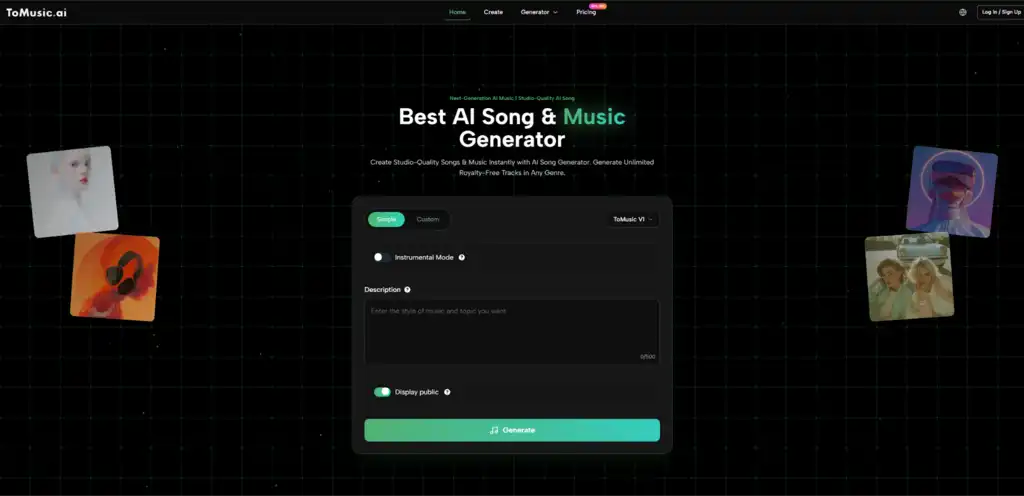
That mindset is exactly where a workflow like AI Music Generator becomes practical. It is not about replacing musical judgment. It is about compressing the time it takes to audition ideas so your judgment has something real to evaluate.
The Core Shift: Stop Asking for “A Song,” Ask for “A Take”
In a studio, you rarely record one take and walk away. You record several, compare them, and then decide what to keep. The same approach makes AI outputs feel less random.
A “take” has a purpose
- Does it support voiceover?
- Does it land an emotional lift?
- Does it loop cleanly?
- Does it stay consistent with brand tone?
When you judge by purpose, you stop reacting emotionally to every detail and start making cleaner decisions.
A New Structure: The Three Moments That Decide Whether a Track Works
Instead of thinking in genres, I focused on three moments that show up in almost every usable piece of content music.
1. The first 10 seconds
This is where attention is won or lost. For short-form, the opener must arrive quickly. For long-form, it must be stable and not distracting.
2. The “lift”
Even subtle lifts matter: a chorus-like peak, a harmonic change, a rhythm shift. Without a lift, tracks often feel flat under visuals.
3. The exit
A clean ending (or a clean loop) is what makes a track usable in real editing. A great middle with an awkward outro is still a problem.
This framework made evaluation easier, because I was listening for moments, not chasing an abstract “good song.”
Where Lyrics Change Everything
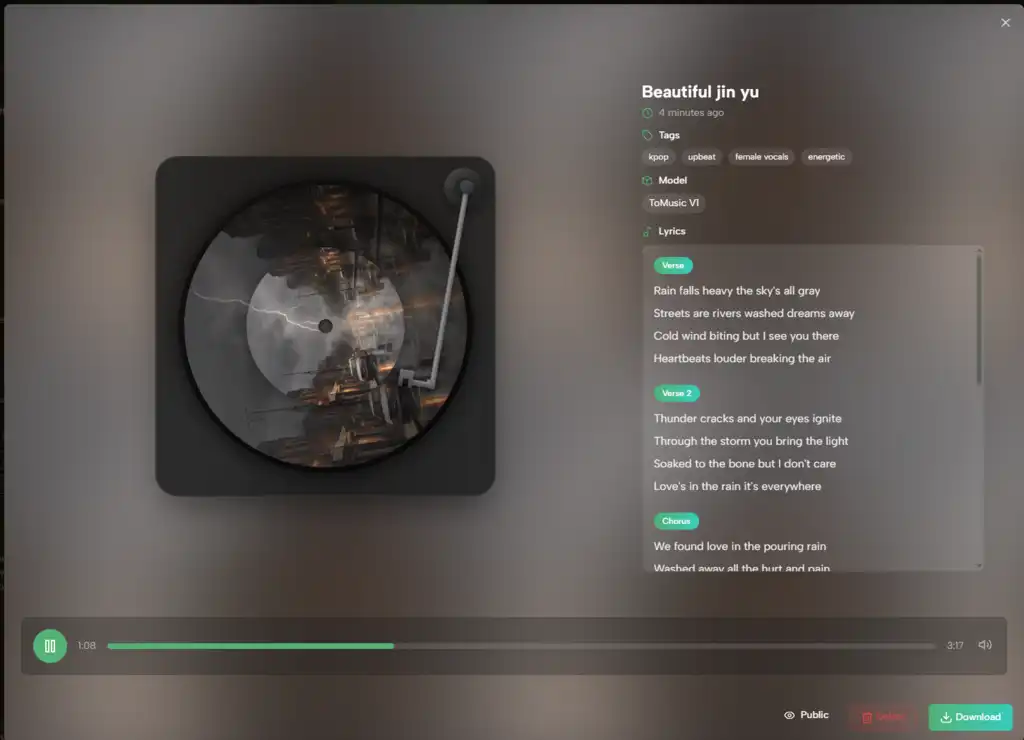
If you already have words, you gain something that pure prompting often lacks: built-in structure. Lyrics contain cadence and emphasis. They imply repetition and contrast. That is why I treat lyric-led generation as its own lane, especially when a hook matters.
When I used Lyrics to Song AI, the biggest improvement came from designing the chorus like a product feature: short, repeatable, and unmistakable.
Chorus choices that made outputs feel more intentional
- One hook phrase repeated exactly (no paraphrases)
- Chorus lines shorter than verse lines
- Simple, direct vocabulary in the chorus
The less ambiguous the chorus, the less ambiguous the music.
Prompting as Direction, Not Decoration
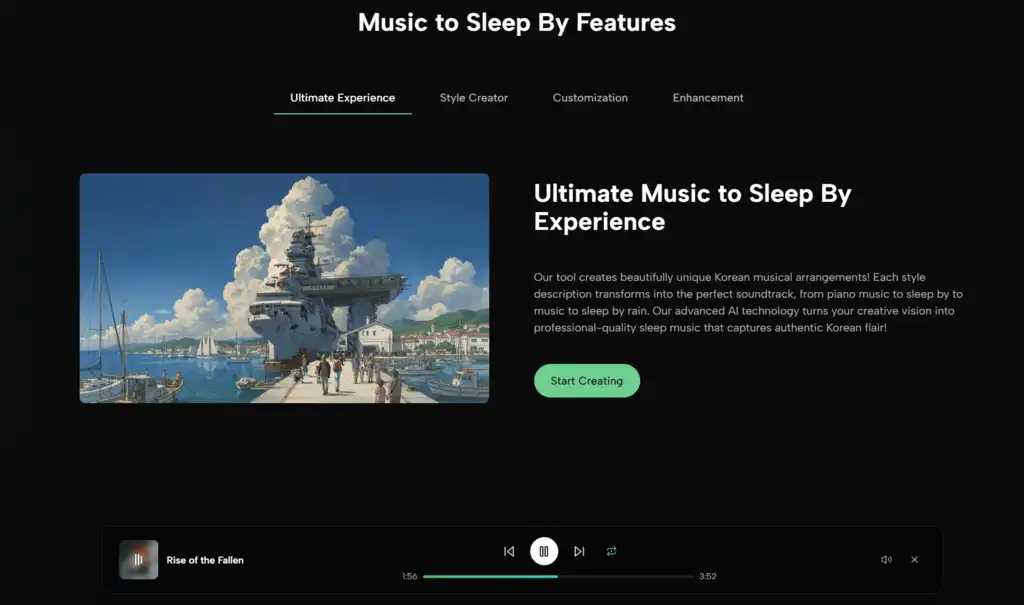
The most reliable prompts I used were not poetic. They were closer to a mini-brief:
- one genre anchor
- two moods
- energy/tempo guidance
- one or two texture cues
- one “avoid” item
When I only knew the vibe and needed exploration, I treated that as a separate workflow: generate, compare, and then narrow. That is where Text to Music fits best in my process—early direction-finding before I commit to more structure.
A Comparison Table Built for Real Decisions
| What you need right now | Best starting point | Why it works |
| A hook-driven song | Lyrics-led lane | Words create structure and repetition |
| A usable bed for content | Instrumental/brief lane | Fast candidates, quick fit checks |
| Exploration when you only know the vibe | Vibe lane | Rapid direction testing without overcommitting |
| A track that must not fight voiceover | Minimal, steady briefs | Keeps arrangement from crowding speech |
| A clean loop or exit | “Loop/ending” as a requirement | Makes editing painless |
This is the same reason I do not rely on one mode for everything: the starting input changes what “control” means.
The Audition Method: Score, Do Not Argue
To stop endless regenerations, I used a simple scorecard.
Four scores (0–5)
- Fit: mood and brand tone
- Clarity: does it feel crowded?
- Movement: does it lift at the right time?
- Usability: can I place it under my edit today?
Then I only changed one thing at a time. If clarity was weak, I reduced density. If movement was weak, I asked for a clearer build. This turned iteration into a method, not a mood.
Limitations That Make the Workflow More Trustworthy
A studio mindset only works if you accept a few realities.
Variability is normal
Different takes can diverge. That is useful for exploration, but it also means you should expect multiple drafts.
Vocals can be inconsistent
Dense lyric lines or complex phrasing can reduce intelligibility. Shortening chorus lines often helped.
Overloaded direction can cause drift
Too many genres, too many instruments, too many emotions can produce an “in-between” track that never commits.
Acknowledging these limitations is not pessimism. It is what makes the workflow efficient.
The One Rule That Prevents Chaos
Whether you are doing lyrics-led work or vibe exploration, this rule saved the most time:
Change one variable only per iteration.
- tempo: slower/faster
- mood: warmer/darker
- texture: acoustic/synthy
- density: minimal/full
- vocal presence: lighter/more present
If you change everything, you cannot learn what caused the improvement.
A 12–15 Minute Session Template
- Decide what moment matters most: opener, lift, or exit.
- Generate three takes.
- Score them: fit, clarity, movement, usability.
- Keep the best take and adjust one variable only.
- Test under your real edit, then refine again if needed.
Used this way, AI Music Generator becomes a studio-like process for fast auditions, lyrics to song ai becomes your hook-building lane when words lead the music, and Text to Music becomes your exploration lane when you only know the vibe. The point is not to believe in magic. The point is to ship better audio decisions with less friction.