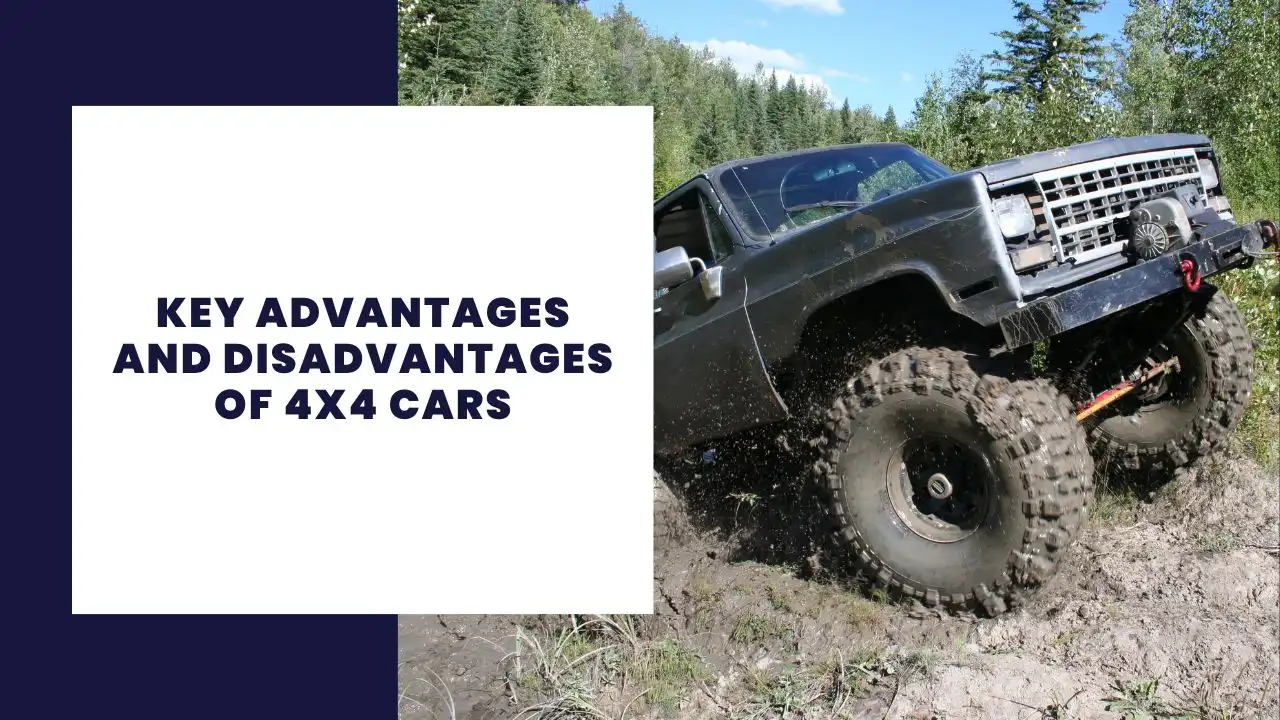
4×4 cars have long been associated with adventure, strength, and the ability to handle demanding driving conditions. From rugged off-road trails to snowy highways, these vehicles are designed to deliver power and traction where standard cars may struggle. At the same time, owning a four-wheel-drive vehicle comes with trade-offs that are not always obvious at first glance. Understanding the advantages and disadvantages of 4×4 cars helps drivers decide whether this type of drivetrain truly fits their lifestyle, driving environment, and budget.
What Is 4×4 Cars
4×4 cars, also known as four-wheel-drive vehicles or 4WD cars, are vehicles where power from the engine is delivered to all four wheels. Unlike a 2WD or two-wheel-drive car, where only the front wheels or rear wheels receive torque, a 4×4 system distributes power through the drivetrain to improve traction. This is achieved using components such as a transfer case, differentials, axles, and drive shafts.
In many 4×4 vehicles, the driver can normally activate 4WD only when needed, such as during off-roading or when wheels are slipping on low traction surfaces. Some systems are part time 4WD, while others are full time 4WD. These systems differ from AWD or all-wheel drive, which often operates automatically and is more common in SUVs and crossovers designed primarily for pavement rather than extreme off-road use.
Advantages Of 4×4 Cars
1. Improved Traction In Low Traction Conditions
One of the biggest advantages of four-wheel drive is improved traction. By sending power to all 4 wheels, 4×4 vehicles can maintain control when driving on mud, snow, sand, or rocky surfaces. When one wheel loses grip, the drivetrain can help redistribute torque so the wheels are not all spinning uselessly.
This makes 4WD vehicles especially valuable in regions with harsh winters or unpaved roads, where a 2WD car may struggle to move forward.
2. Better Off-Road Capability
4×4 cars are built for off-roading. Whether climbing steep inclines, crossing uneven terrain, or navigating trails where one wheel may be lifted off the ground, four-wheel-drive vehicles offer extra power and traction. The transfer case and differential setup allows torque to reach both the front and rear axles, giving better control over difficult obstacles.
For drivers who regularly leave pavement behind, this is a major benefit compared to front-wheel drive or rear-wheel drive vehicles.
3. Increased Power Distribution
A 4×4 system allows power from the engine to be distributed across a full set of wheels. Instead of relying on just two wheels, the vehicle can use all four to move forward. This increased power distribution helps in situations where a single axle might otherwise be overwhelmed.
This is particularly noticeable when towing, hauling, or driving on surfaces where grip changes rapidly.
4. Greater Stability On Slippery Roads
On wet pavement, ice, or loose gravel, four-wheel-drive vehicles can feel more stable. With power and traction spread across front and rear wheels, the risk of wheels slipping is reduced. This can provide added confidence during challenging driving conditions, especially at lower speeds.
While braking still depends on tires and brake systems, the ability to accelerate smoothly without losing control is a clear advantage.
5. Versatility Across Driving Conditions
4×4 cars are versatile. They can operate in 2WD mode for normal driving and switch to 4WD mode when conditions demand it. This flexibility allows drivers to adapt to changing environments without needing multiple vehicles.
For people who encounter mixed driving conditions throughout the year, this adaptability is highly valuable.
6. Higher Ground Clearance And Rugged Design
Many 4×4 vehicles, including SUVs and trucks, are built with higher ground clearance and reinforced components. This design helps protect the underbody during off-roading and allows the vehicle to handle obstacles that would damage a standard 2WD car.
The added weight to the vehicle often comes with stronger axles and drivetrains designed for durability.
7. Enhanced Resale Value In Certain Markets
In regions where snow, mountains, or rural roads are common, 4×4 vehicles often retain higher resale value. Buyers in these markets actively seek four-wheel-drive vehicles because of their practical benefits.
This can offset some of the higher initial cost compared to 2WD counterparts.
Disadvantages Of 4×4 Cars
8. Lower Fuel Economy
One major disadvantage of four-wheel drive is reduced fuel efficiency. The extra components in the drivetrain, combined with added weight to the vehicle, make 4×4 cars less efficient than comparable 2WD cars. Fuel economy often suffers, especially in city driving or at high speeds.
Drivers who primarily use their vehicles on pavement may notice higher fuel costs over time.
9. Higher Purchase And Maintenance Costs
4×4 cars usually cost more upfront. The complex drivetrain, transfer case, and additional axles increase the price of the vehicle. Maintenance and repairs can also be more expensive due to the added mechanical parts.
When something goes wrong in a 4WD system, repairs are typically more costly than those for a simple 2WD car.
10. Added Weight And Reduced Handling
The extra weight required for a four-wheel-drive system can negatively affect handling. On pavement, 4×4 vehicles may feel less agile than front-wheel-drive cars or sports cars designed for performance.
This added mass can also increase stopping distances, even with strong brake systems.
11. Overconfidence In Drivers
Another often-overlooked disadvantage is overconfidence in drivers. Improved traction can lead some drivers to underestimate road hazards, especially in snow or rain. While 4WD helps with acceleration, it does not improve braking or cornering grip in the same way.
This false sense of security can contribute to accidents when drivers push beyond safe limits.
12. More Complex Drivetrain Systems
A 4×4 system includes many moving parts, such as differentials, a transfer case, and additional drive shafts. This complexity increases the chances of mechanical issues over time.
Compared to a simple two-wheel-drive setup, troubleshooting and repairs can be more involved.
13. Less Efficient For Everyday Driving
For drivers who mostly commute on dry pavement, a 4×4 system may offer little real benefit. In normal driving conditions, a 2WD car or an AWD system designed for road use may be more efficient and practical.
In such cases, the disadvantages of four-wheel drive can outweigh the benefits.
14. Not Always Necessary Compared To AWD Or 2WD
Modern AWD systems and advanced traction control in front-wheel-drive cars have narrowed the gap. For many people, AWD or even a well-equipped 2WD vehicle provides enough traction without the drawbacks of a full 4×4 system.
Choosing 4WD when the real need is minimal can result in unnecessary costs and inefficiencies.
Comparison Table Of The Pros And Cons Of 4×4 Cars
| Aspect | Pros | Cons |
|---|---|---|
| Traction | Improved traction on low traction surfaces | Not needed in normal conditions |
| Off-road use | Excellent for off-roading and rocky surfaces | Heavier and less efficient |
| Power delivery | Power to all 4 wheels | More complex drivetrain |
| Fuel economy | Better control in snow and mud | Lower fuel efficiency |
| Versatility | Works in varied driving conditions | Higher purchase and maintenance costs |
| Safety perception | Better stability at low speeds | Overconfidence in drivers |
The Future Of 4×4 Cars
The future of 4×4 cars is closely tied to advances in technology and changing consumer needs. Manufacturers are developing more efficient 4WD and AWD systems that reduce weight and improve fuel economy. Hybrid and electric drive systems are also introducing new ways to deliver power and traction without traditional transfer cases.
As driving conditions, environmental regulations, and vehicle design continue to evolve, 4×4 systems are likely to become smarter, lighter, and more adaptable. This may reduce some of the current disadvantages while preserving the core benefits that make four-wheel drive appealing.
FAQs About 4×4 Cars
Are 4×4 cars the same as AWD vehicles?
No, 4×4 and AWD are different drive systems. 4×4 usually allows the driver to manually engage four-wheel drive, while AWD systems operate automatically and are often optimized for pavement rather than off-road use.
Do 4×4 cars improve braking performance?
4×4 improves traction when accelerating but does not significantly improve braking. Braking depends on tires, brakes, and road conditions, regardless of how many wheels receive power.
Is a 4×4 car better than a 2WD car in snow?
In many cases, yes. Four-wheel-drive vehicles provide better traction in snow, especially when starting from a stop or climbing hills. However, proper tires are just as important.
Do 4×4 vehicles require special maintenance?
Yes, they often require additional maintenance due to more complex drivetrain components. Transfer cases, differentials, and extra axles all need periodic servicing.
Is 4×4 necessary for city driving?
For most city driving, 4×4 is not necessary. A 2WD or AWD vehicle is often sufficient unless you regularly encounter poor road conditions.
Conclusion Of Advantages And Disadvantages Of 4×4 Cars
The advantages and disadvantages of 4×4 cars depend heavily on how and where the vehicle is used. Four-wheel-drive vehicles offer improved traction, off-road capability, and versatility across challenging driving conditions. At the same time, they come with higher costs, lower fuel economy, and added complexity compared to 2WD and some AWD systems.
For drivers who frequently face low traction environments or enjoy off-roading, the benefits of a 4×4 system can outweigh the downsides. For others who spend most of their time on pavement, the cons of owning a four-wheel-drive vehicle may make alternative drive systems a more practical choice.