
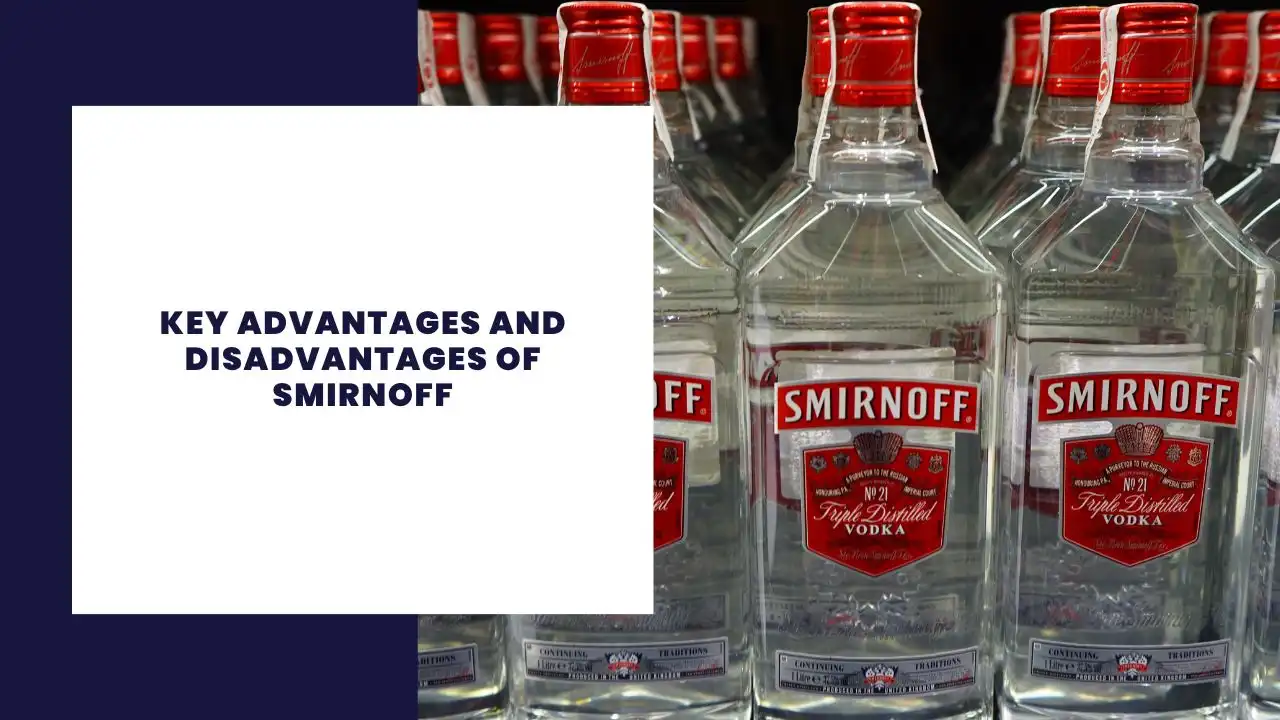
14 Key Advantages And Disadvantages Of Smirnoff
Smirnoff is one of the world’s most popular vodka brands, recognized for its accessibility, smooth taste, and wide variety of products. Whether it’s enjoyed neat, in cocktails, or as part of flavored beverages like Smirnoff Ice, it has become a staple in bars, restaurants, and households across the globe. Like vodka in general, Smirnoff offers certain benefits when consumed in moderation, but it also carries significant risks if drinking alcohol is excessive.
Understanding both the advantages and disadvantages of Smirnoff provides better perspective for consumers who want to enjoy this alcoholic beverage responsibly while being aware of potential health effects.
Written by
- Redaction Team
- Business Planning, Entrepreneurship
Table of Contents
What Is Smirnoff?
Smirnoff is a vodka brand originally founded in Moscow in the 19th century and is now owned by Diageo, a leading global alcoholic drinks company. Vodka is made through distillation, typically from grains or potatoes, resulting in a clear liquor that doesn’t contain fats, cholesterol, or sugars.
Smirnoff is one of the most widely consumed vodka brands worldwide. It produces classic pure vodka, flavored vodka varieties, and malt-based beverages like Smirnoff Ice. A standard bottle of Smirnoff vodka has an alcohol content of 40% (80 proof), aligning with most vodka brands. Smirnoff is one of the leading names associated with vodka cocktails, vodka shots, and mixed drinks due to its versatility and smooth profile.
Advantages of Smirnoff
1. Wide Availability Globally
Smirnoff is one of the most widely consumed vodka brands, available in nearly every bar, restaurant, and liquor store. Its global recognition makes it easy to buy Smirnoff almost anywhere.
2. Affordable Compared To Other Vodka Brands
While there are premium vodka brands on the market, Smirnoff maintains affordability, making it a popular choice for people looking for quality vodka at a reasonable price.
3. Versatility In Cocktails
Vodka is known for being one of the most versatile spirits, and Smirnoff is no exception. From vodka cocktails like martinis and Moscow mules to simple mixers, adding vodka like Smirnoff creates a wide range of drinks.
4. Gluten-Free Options
Some Smirnoff varieties are made with gluten-free ingredients, allowing consumers with sensitivities to enjoy vodka without worry.
5. Low-Calorie Compared To Other Alcoholic Drinks
Vodka doesn’t contain fats, cholesterol, or added sugars. A standard 1.5 ounces of pure vodka contains about 97 calories, which is lower than many other alcoholic drinks such as beer or red wine.
6. Potential Health Benefits Of Moderate Consumption
While drinking alcohol carries risks, moderate alcohol consumption may provide certain health benefits. Some studies suggest that moderate drinking of beverages like vodka may reduce your risk of heart disease, improve circulation, and even act as a sedative effect to promote relaxation.
7. Long Shelf Life And Easy Storage
A bottle of Smirnoff, like vodka in general, has a long shelf life due to its alcohol content. This makes it a practical beverage to keep at home for special occasions or cocktails.
Disadvantages of Smirnoff
1. Health Risks Of Excessive Alcohol Consumption
The effects of drinking vodka excessively include liver disease, cardiovascular problems, and alcohol use disorder. Overconsumption of Smirnoff, like vodka or any alcoholic beverage, has long-term health consequences.
2. No Essential Nutrients
Vodka doesn’t contain minerals or nutrients. While it is low in calories, it also provides no nutritional value, meaning frequent alcohol intake contributes empty calories without health benefits.
3. Risks During Pregnancy
Alcohol use may increase the risk of miscarriage, stillbirth, and fetal alcohol syndrome. For this reason, women are advised to avoid alcoholic drinks, including Smirnoff, during pregnancy.
4. Potential For Addiction
Regular drinking of alcoholic beverages like vodka can lead to dependence. Alcohol use disorder is a serious condition associated with excessive alcohol intake, and vodka shots or mixed drinks consumed too frequently can heighten this risk.
5. Short-Term Side Effects
Even moderate drinking can cause drowsiness, bad breath, and a sedative effect that impairs judgment. Excessive alcohol also leads to dehydration and hangovers.
6. High Caloric Intake From Mixed Drinks
While pure vodka may be low-calorie, cocktails and flavored beverages like Smirnoff Ice or malt liquor often contain sugars, adding empty calories that contribute to weight gain.
7. Social And Legal Risks
Alcohol-related accidents, impaired driving, and public intoxication are risks tied to excessive consumption. Drinking alcohol in moderation is key to reducing these dangers.
Comparison Table of the Pros and Cons of Smirnoff
| Advantages | Disadvantages |
|---|---|
| Widely available worldwide | Excessive alcohol consumption leads to health risks |
| Affordable compared to premium vodka brands | Provides no minerals or nutrients |
| Versatile in cocktails and mixed drinks | Risks during pregnancy (miscarriage, stillbirth) |
| Some gluten-free options available | Potential for addiction and alcohol use disorder |
| Low-calorie compared to beer and wine | Short-term effects like drowsiness and bad breath |
| Possible health benefits of moderate drinking | High-calorie intake from cocktails and mixers |
| Long shelf life and easy storage | Social and legal risks of alcohol use |
SWOT Analysis of Smirnoff
Strengths
Smirnoff is one of the best-known vodka brands globally, offering affordability, wide availability, and a diverse product portfolio, including vodka made for cocktails and flavored malt beverages.
Weaknesses
Weaknesses include providing no nutrients, relying heavily on alcohol consumption trends, and being associated with potential health risks of drinking alcohol. Its image may suffer due to rising awareness about alcohol-related health problems.
Opportunities
Smirnoff has opportunities to expand its range of gluten-free ingredients, create low-alcohol or alcohol-free alternatives, and capitalize on trends toward moderation and healthier drinking. Introducing innovative vodka cocktails with reduced alcohol content could also strengthen its market.
Threats
Threats in the SWOT analysis include stricter regulations on alcohol use, changing consumer preferences toward avoiding alcoholic drinks, and competition from other vodka brands. Growing health concerns about the risks of drinking vodka may also reduce demand.
FAQs About Smirnoff
Some varieties of Smirnoff vodka are made with gluten-free ingredients, making them suitable for people with gluten sensitivity.
A standard bottle of Smirnoff vodka is 40% alcohol (80 proof), aligning with most types of vodka.
Moderate consumption of vodka may offer possible benefits such as improved circulation and relaxation, but the risks often outweigh these benefits if alcohol intake is excessive.
Smirnoff Ice is a flavored malt beverage, not pure vodka. It is sweet, refreshing, and widely consumed, but it contains more sugars and calories compared to pure vodka.
Vodka may be consumed in moderation, but daily alcohol consumption increases the risks of long-term health problems, including alcohol use disorder.
Conclusion of Advantages and Disadvantages of Smirnoff
Smirnoff remains one of the most iconic vodka brands, known for its accessibility, affordability, and versatility in cocktails and mixed drinks. The benefits of drinking Smirnoff include its global availability, low-calorie profile compared to other alcoholic drinks, and potential health benefits of vodka when consumed in moderation.
However, the disadvantages of Smirnoff cannot be ignored. Excessive alcohol intake leads to serious health risks, empty calories, and possible addiction. While vodka doesn’t contain fats or sugars, it also doesn’t provide any nutrients, making it important to consume alcohol in moderation.
Smirnoff is one of the leading vodka brands worldwide, but like all alcoholic beverages, its enjoyment should be balanced with awareness of the risks of drinking vodka. For those who choose to consume alcohol, moderation remains the safest approach.
More about Business Planning