
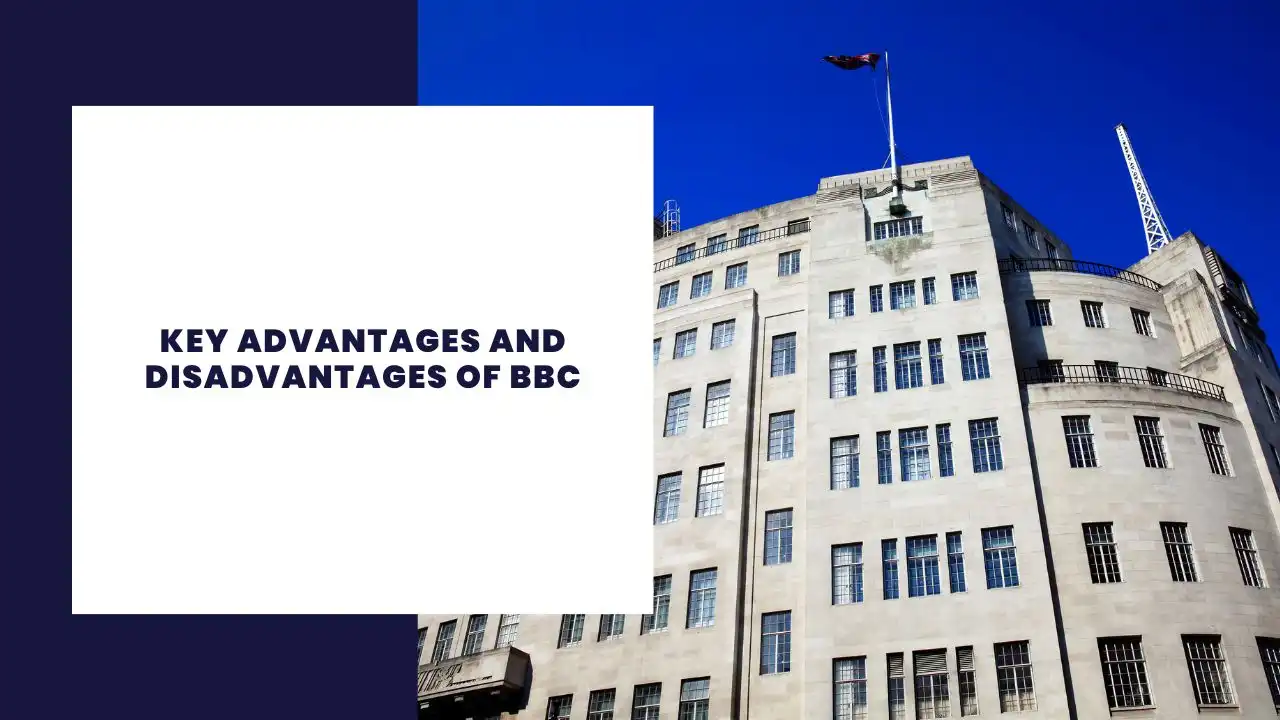
14 Key Advantages And Disadvantages Of BBC
The British Broadcasting Corporation, widely known as the BBC, is one of the most prominent public service broadcasters in the world. Established in 1922, it has grown into a multifaceted media organization offering television, radio, and online services both domestically and internationally. With its mission to inform, educate, and entertain, the BBC has become a global player in the media industry. However, like any large organization, it comes with both advantages and disadvantages that impact viewers, listeners, and stakeholders.
Written by
- Redaction Team
- Business Planning, Entrepreneurship
Table of Contents
What is BBC
The BBC is a public service broadcaster funded primarily through the licence fee paid by UK households. Its remit includes providing impartial news, educational programming, and entertainment across multiple platforms, including television, radio, and digital services like iPlayer and BBC Sounds.
BBC World Service extends the corporation’s reach internationally, delivering news, cultural content, and information to millions of global viewers and listeners. Over the years, the BBC has developed an influential presence in the media industry, competing with other television channels such as ITV, Sky News, and commercial radio, while maintaining its traditional public service broadcasting ethos.
The organization operates under a Royal Charter, which ensures editorial independence while holding it accountable to both the public and politicians. BBC studios produce programmes in-house and also commission others to create content, balancing the roles of a maker of programmes and a commissioner of programmers.
Advantages of BBC
1. Impartial and Trustworthy News
The BBC is recognized globally for its commitment to impartial reporting. Its news services, including BBC News and the BBC World Service, provide reliable information, making it a trusted source for viewers and listeners seeking objective coverage.
2. Public Service Broadcasting
As a public service broadcaster, the BBC focuses on education, information, and entertainment without prioritizing commercial interests. This allows for content that serves the public good rather than purely seeking high ratings.
3. Wide Range of Programming
BBC offers a diverse selection of programmes across multiple channels and platforms. From Radio 4’s talk shows to BBC One’s entertainment series and digital services like iPlayer, there is content for a wide range of tastes and interests.
4. Global Reach and Influence
BBC World Service extends its impact worldwide, delivering news and cultural programming that contributes to global understanding and awareness. It positions the BBC as a significant player in international broadcasting.
5. High-Quality Production
BBC studios are known for producing high-quality programmes in television broadcasting and radio services. Shows like documentaries, dramas, and educational content showcase excellent production standards.
6. Editorial Independence
The Royal Charter and governance structure protect BBC’s editorial independence, allowing journalists and producers to make decisions free from direct political or commercial influence.
7. Innovation in Digital Media
With services like iPlayer and BBC Sounds, the BBC has embraced digital transformation, enabling on-demand streaming, podcasts, and interactive content for modern audiences.
Disadvantages of BBC
1. Licence Fee Requirement
Funding through the licence fee can be controversial. Some argue that mandatory payments, regardless of usage, are unfair and place a financial burden on households.
2. Competition With Commercial Channels
BBC’s programming must compete with commercial broadcasters like ITV and Sky News. While it has strengths, the need to balance public service broadcasting with audience ratings can be challenging.
3. Perceived Bureaucracy
Being a large public organization, the BBC is sometimes criticized for bureaucratic procedures and slow decision-making processes, which can affect efficiency and responsiveness.
4. Political and Public Scrutiny
As a publicly funded entity, BBC’s operations are frequently subject to scrutiny from politicians and the public. Decisions on programming, staffing, and funding often attract debate and criticism.
5. Limited Flexibility
The BBC cannot easily pivot its services or funding models due to regulatory constraints and its public service remit. This can make adaptation to market trends slower compared to commercial competitors.
6. Ideological Perceptions
Some critics argue that BBC programming reflects ideological or political biases, leading to debates about neutrality and audience trust.
7. High Production Costs
Producing high-quality television and radio programmes requires significant investment. These costs are ultimately borne by the public through the licence fee, leading to questions about efficiency and resource allocation.
Comparison Table of the Pros and Cons of BBC
| Advantages | Disadvantages |
|---|---|
| Impartial and trustworthy news | Licence fee requirement |
| Strong public service broadcasting | Competition with commercial channels |
| Wide range of programming | Perceived bureaucracy |
| Global reach and influence | Political and public scrutiny |
| High-quality production | Limited flexibility |
| Editorial independence | Ideological perceptions |
| Innovation in digital media | High production costs |
SWOT Analysis of BBC
Strengths
Established global reputation and trust.
Extensive range of content across television, radio, and digital platforms.
Strong editorial independence under the Royal Charter.
Innovative services like iPlayer and BBC Sounds.
Weaknesses
Reliance on the licence fee as the primary funding source.
Bureaucratic structure affecting efficiency.
Vulnerable to political and public scrutiny.
Perceptions of ideological bias in certain programming.
Opportunities
Expansion of digital and streaming services to reach younger audiences.
Collaboration with international media organizations.
Development of interactive and immersive content for global audiences.
Enhanced use of data analytics to improve programming decisions.
Threats
Competition from commercial broadcasters and online streaming platforms.
Changing public attitudes toward mandatory funding models.
Economic downturns affecting public funding and operational budgets.
Rapid technological change requiring constant adaptation.
FAQs About BBC
The BBC licence fee is a mandatory payment by UK households to fund the BBC’s public service broadcasting. It supports television, radio, and digital services.
Yes, BBC World Service delivers news and cultural programming to a global audience, maintaining the corporation’s international influence.
BBC focuses on public service broadcasting without commercial advertising, while ITV and other commercial channels prioritize ratings and revenue from advertising.
Yes, through services like iPlayer and BBC Sounds, users can stream television shows, radio programmes, and podcasts on-demand.
While the BBC aims for impartiality, it is sometimes subject to criticism regarding perceived ideological or political biases. Editorial independence under the Royal Charter is designed to mitigate these concerns.
Conclusion of Advantages and Disadvantages of BBC
The BBC remains a cornerstone of global media, balancing its role as a public service broadcaster with the challenges of a competitive and evolving industry. Its strong reputation, high-quality programming, and global reach are significant advantages that reinforce its status as a trusted information source.
However, the mandatory licence fee, political scrutiny, and operational constraints present disadvantages that cannot be ignored. For viewers and listeners, the BBC offers a unique combination of impartial news, diverse content, and innovative digital services. The decision to engage with the BBC involves weighing the benefits of public service broadcasting against the practical and financial considerations of its funding model and organizational structure.
More about Business Planning