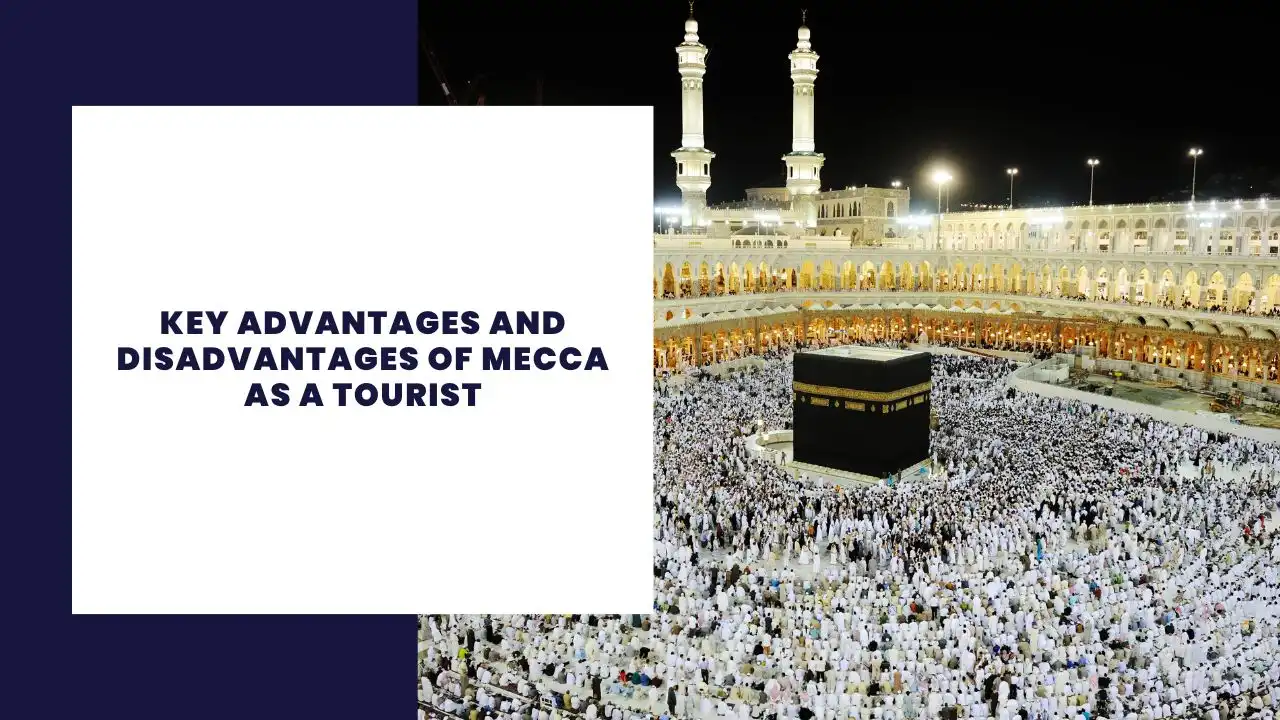
14 Key Advantages And Disadvantages Of Mecca As A Tourist
Mecca, also known as Makkah, is one of the most sacred cities in the religion of Islam. Located in the Kingdom of Saudi Arabia, it attracts millions of Muslim visitors every year who travel with the intention to perform Hajj or Umrah. As the birthplace of the Prophet Muhammad and the site of the Kaaba, Mecca holds immense spiritual significance for Muslims worldwide.
While the city is primarily known as the ultimate destination for pilgrims, it also represents an important form of religious tourism. Religious travellers, both domestic and foreign, make the pilgrimage to Mecca not just as part of their faith but also as a unique travel experience. Like any tourist destination, however, there are both advantages and disadvantages of visiting the holy city of Mecca. Understanding these pros and cons allows pilgrims and travellers to plan their visit better and reflect on their own motivation to visit.
Written by
- Redaction Team
- Entrepreneurship, Remote Work
Table of Contents
What Is Mecca As A Tourist Destination?
Mecca in Saudi Arabia is considered the holiest city in Islam and is home to Masjid al-Haram, the Grand Mosque that surrounds the Kaaba. This is the site Muslims face in daily prayer and the place where they gather to perform Hajj and Umrah. The Hajj pilgrimage is one of the Five Pillars of Islam, required once in a lifetime for those who are physically and financially able.
Millions of Hajj pilgrims and Umrah pilgrims arrive each year, creating one of the largest gatherings of religious tourists in the world. The Saudi government manages religious tourism in the holy city of Mecca, ensuring facilities, transport, and accommodations meet the needs of visitors. Along with Medina, Mecca forms the heart of Islamic tourism, and the two holy cities are often visited together.
For Muslim tourists, visiting the holy city of Mecca is not only about faith but also about spiritual renewal, family connection, and the unique experience of being among Muslims worldwide.
Advantages Of Mecca As A Tourist
1. Spiritual Fulfillment
The greatest motivation to visit Mecca is the opportunity to perform Hajj or Umrah, fulfilling a sacred duty in the religion of Islam. Religious visitors experience deep spiritual connection when they perform Umrah rituals, circle the Kaaba, and pray in Masjid al-Haram.
2. Unity Of Muslims Worldwide
Visiting the holy city means joining millions of Muslims from different countries, including Indonesia, Africa, and Europe. This creates a unique sense of unity, where pilgrims share in the same rituals regardless of nationality, language, or background.
3. Rich Islamic Heritage
Mecca is the site of the first revelation to Prophet Muhammad and holds important landmarks such as Safa and Marwa, where pilgrims retrace Hagar’s search for water. The chance to visit religious sites makes Mecca one of the most important religious destinations in the world.
4. Family And Community Bonding
For many Muslim families, performing Umrah together strengthens ties and creates lasting memories. Spending time with family in the holy city is a cherished experience for religious travellers.
5. Development Of Religious Tourism Infrastructure
The Saudi government has invested heavily in the Grand Mosque and surrounding areas, offering modern facilities, hotels, and services that make the experience more comfortable for millions of visitors to religious sites each year.
6. Easy Access To Medina
Pilgrims visiting Mecca often extend their journey to Medina, where the Prophet’s Mosque is located. Together, Mecca and Medina provide a full experience of the holy cities of Islam.
7. Opportunities For Cultural Exchange
Muslim tourists meet people from across the globe, learning about different cultures, traditions, and expressions of the same religion. This enriches the journey beyond its purely religious purpose.
Disadvantages Of Mecca As A Tourist
1. Restricted Access For Non-Muslims
Unlike many tourist destinations, Mecca is only open to Muslims. Non-Muslim travellers cannot visit the holy city, which limits its accessibility for global tourism.
2. Overcrowding During Pilgrimage Seasons
During Hajj and peak Umrah seasons, millions of pilgrims gather at once. Overcrowding in the Grand Mosque, at Safa and Marwa, or while trying to kiss the Black Stone, can be overwhelming and physically exhausting.
3. High Costs Of Travel
Performing Hajj or Umrah can be costly, especially for families or those coming from distant countries. Travel expenses, accommodation, and visa costs make it challenging for some Muslims worldwide.
4. Strict Rules And Regulations
Saudi Arabia enforces strict religious and social rules. While this preserves the sanctity of the holy sites, some travellers may find the restrictions on dress, behavior, and movement difficult compared to other tourist destinations.
5. Intense Climate
Mecca’s desert climate means high temperatures, particularly in summer months. For pilgrims, the heat during rituals and walking long distances can be a major disadvantage.
6. Limited Tourist Activities Outside Religious Sites
Unlike other cities in Saudi Arabia or parts of the world, Mecca is not designed as a typical tourist destination. Apart from religious sites, options for cultural, leisure, or sightseeing activities are limited.
7. Physical Strain Of Rituals
Performing the Hajj rituals can be physically demanding, especially for elderly pilgrims or those with health issues. Walking between sites, enduring large crowds, and dealing with long hours require significant stamina.
Comparison Table Of The Pros And Cons Of Mecca As A Tourist
| Advantages | Disadvantages |
|---|---|
| Spiritual fulfillment | Restricted to Muslims only |
| Unity of Muslims worldwide | Overcrowding during peak seasons |
| Rich Islamic heritage | High travel and visa costs |
| Family and community bonding | Strict rules and regulations |
| Modern infrastructure | Intense desert climate |
| Easy access to Medina | Limited non-religious tourism |
| Cultural exchange | Physical strain of rituals |
Recommended Places To Visit In Mecca
Masjid al-Haram (Grand Mosque) – The heart of Mecca, home to the Kaaba and central to both Hajj and Umrah.
Kaaba – The sacred cube-shaped structure Muslims face in prayer.
Safa and Marwa – Hills inside the Grand Mosque that are part of the Umrah and Hajj rituals.
Zamzam Well – A historic well within Masjid al-Haram, associated with Hagar and Ishmael.
Historical Sites In Mecca – Locations tied to the Prophet Muhammad and the early history of Islam.
Medina (nearby) – Home to the Prophet’s Mosque, another major holy site often visited with Mecca.
FAQs About Mecca As A Tourist
No, Mecca is restricted to Muslims only. Non-Muslim travellers are not permitted to enter the holy city.
Hajj is the major pilgrimage, performed once a year, and required for Muslims who are able. Umrah can be performed at any time and is considered a lesser pilgrimage.
A Saudi visa is required for both Hajj and Umrah. The Saudi government regulates visas depending on the type of pilgrimage.
Umrah can be performed at any time of the year, but many pilgrims avoid the hottest months due to the intense desert climate.
The Kaaba is the holiest site in Islam, believed to have been built by Prophet Abraham and his son Ishmael. It symbolizes the unity of Muslims in worship of Allah.
Conclusion Of Advantages And Disadvantages Of Mecca As A Tourist
The holy city of Mecca in Saudi Arabia is unlike any other destination in the world. For Muslims, it is not only a tourist destination but a profound spiritual journey tied directly to the religion of Islam. The advantages include spiritual fulfillment, unity with Muslims worldwide, and the chance to perform Hajj and Umrah in the heart of Islamic heritage.
On the other hand, disadvantages such as overcrowding, high travel costs, and the physical demands of rituals cannot be ignored. Mecca is also unique in that it is closed to non-Muslims, limiting general tourism but preserving its sacred character.
For those with the intention to visit and perform Hajj or Umrah, the experience is life-changing and deeply rooted in faith. For Muslim travellers, visiting the holy city of Mecca remains one of the most important religious motivations and an act of devotion that connects them to Allah, the Prophet Muhammad, and the global Muslim community.
More about Remote Work