7 Characteristics of AI Rendering
Artificial intelligence has transformed how digital visuals are conceived, produced, and experienced. In recent years, AI rendering has taken center stage in fields like architectural visualization, 3D modeling, generative art, and more. What was once a time-intensive process requiring advanced technical skills is now streamlined by AI tools capable of generating highly realistic images in real-time. These breakthroughs in AI rendering solutions are not only optimizing performance but also redefining creative workflows.
Below are seven defining characteristics of AI rendering that demonstrate its impact across industries and highlight its capabilities in transforming visual content generation.
Written by
- Redaction Team
- Business Technology, Entrepreneurship
Table of Contents
1. Real-Time Rendering Capabilities
The integration of AI and machine learning in rendering processes has significantly improved real-time rendering. Traditional methods often required hours of computational time to render complex scenes with accurate lighting and texture details. With deep learning models and generative adversarial networks (GANs), AI can now interpret visual elements and deliver real-time outputs that are nearly indistinguishable from real-world visuals.
This advancement plays a crucial role in industries such as gaming, architectural visualization, and automated design, where the need for realistic rendering techniques in tight production timelines is paramount. These AI rendering solutions reduce the latency between design iterations and final outputs, creating more streamlined workflows for artists and developers alike.
2. Use of Generative AI and Neural Networks
One of the most defining aspects of AI rendering is the use of generative AI to create new visual content. By leveraging neural networks—especially GANs—AI models learn from training data to generate highly realistic images, architectural designs, or conceptual visuals based on user inputs or datasets.
These generative design techniques allow AI to simulate environments, apply dynamic textures, and even adjust lighting conditions for specific use cases. For example, AI-generated art using platforms like Midjourney or DALL·E shows how generative tools can craft original visuals that feel human-made.
The process relies on machine learning algorithms trained on vast amounts of data, making each rendering result an outcome of learned associations and predictive modeling.
3. Ability to Automate Complex Rendering Tasks
Rendering complex scenes involving layers of materials, reflections, and physics-based lighting can take significant time and expertise. AI rendering solutions automate many of these previously repetitive tasks, allowing designers and architects to focus more on creativity and conceptualization.
AI tools can now automatically detect edges, apply textures, simulate shadows, and even correct perspective errors—capabilities that were manual and error-prone with traditional methods. This automation leads to increased efficiency in rendering workflows, whether the goal is photo-realistic product visualization or large-scale architectural designs.
4. Advanced Texture and Detail Generation
One of the key features of AI rendering is its ability to handle micro-details with precision. AI can fill in texture data where information is missing or unclear using predictive modeling based on known datasets. This is particularly useful in 3D rendering, where surface irregularities and reflections are difficult to reproduce manually.
Through deep learning, AI can learn to generate new design elements that add life and realism to the scene. From wood grains in furniture design to weathering in architectural visualization, AI-generated textures elevate the final output quality to cinematic levels.
5. Customization Based on Input Data
AI rendering thrives on dataset-based learning, meaning it can adapt and evolve based on user input and feedback. The characteristics of the training data play a significant role in shaping the final rendered result. For example, inputting different architectural styles into a rendering generator can yield vastly different results, tailored to the specific needs of the designer or client.
This level of customization is made possible through adaptive AI algorithms that understand and process patterns. AI can also adjust visual elements based on mood, time of day, or even material cost, making the technology extremely practical in commercial design settings.
6. Integration Into Existing Design Workflows
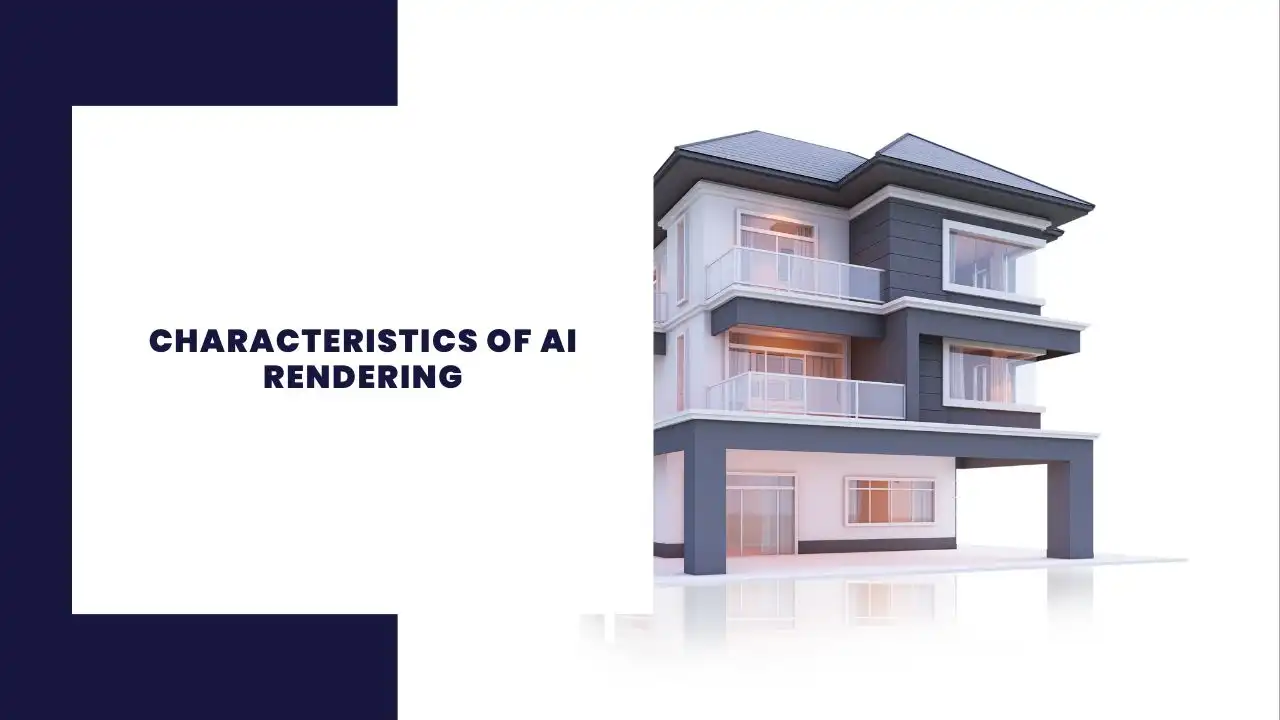
The impact of AI rendering is most evident when observing how seamlessly it integrates into modern design workflows. AI rendering is no longer a separate step—it’s embedded throughout the workflow, from concept development and 3D modeling to final presentation and revision.
Architects and designers can use AI in tandem with existing software tools, benefiting from AI’s ability to optimize suggestions and automate outputs. This integration fosters collaboration, accelerates the rendering process, and reduces bottlenecks that often slow down traditional projects.
7. Broad Range of Applications and Use Cases
From AI-generated imagery used in marketing campaigns to generative design tools applied in construction, AI rendering supports a wide range of use cases. Some of the most notable applications include:
Architectural visualization for real estate and urban planning.
AI art and design for creative industries.
Consumer product rendering for eCommerce.
Simulation rendering in automotive and aerospace industries.
These uses of AI showcase the flexibility and power of AI technologies across sectors, each requiring complex rendering tailored to unique objectives. Whether applied to generate highly realistic models or speed up approval cycles, the benefits of AI rendering are far-reaching.
Conclusion
AI rendering is not just a passing trend—it represents a transformative shift in how visual content is conceived, created, and delivered. With the ability to automate, streamline, and optimize complex processes, AI enables teams to achieve more with less effort while maintaining exceptional quality.
From real-time rendering to generative design, the key features of AI in visualization are becoming essential for industries that demand speed, precision, and adaptability. As AI tools continue to evolve, their impact on design, art, and architecture will only deepen, making AI rendering solutions a cornerstone of the future creative process.
Let your next visual project benefit from the unmatched power of AI—a revolution that’s already reshaping the way we render the world around us.
More about Business Technology