
14 Benefits and Drawbacks of Augmented Reality in Retail
Augmented reality (AR) is transforming the retail industry by bridging the gap between the digital and physical realms. AR technology enhances the shopping experience for both online and in-store shoppers, enabling customers to make more informed purchasing decisions. However, as with any innovation, augmented reality in retail comes with its advantages and disadvantages of augmented reality. Below, we break down the top benefits and drawbacks of integrating AR in retail.
Written by
- Redaction Team
- Business Technology, Entrepreneurship
Table of Contents
Benefits of Augmented Reality in Retail
1. Enhancing the Shopping Experience
AR technology makes the shopping experience more immersive and engaging. Retailers can use AR to create interactive experiences, such as allowing customers to virtually try on clothes or visualize how a piece of furniture would look in their living space.
Examples of AR in action:
- Virtually try on makeup or glasses using AR mirrors.
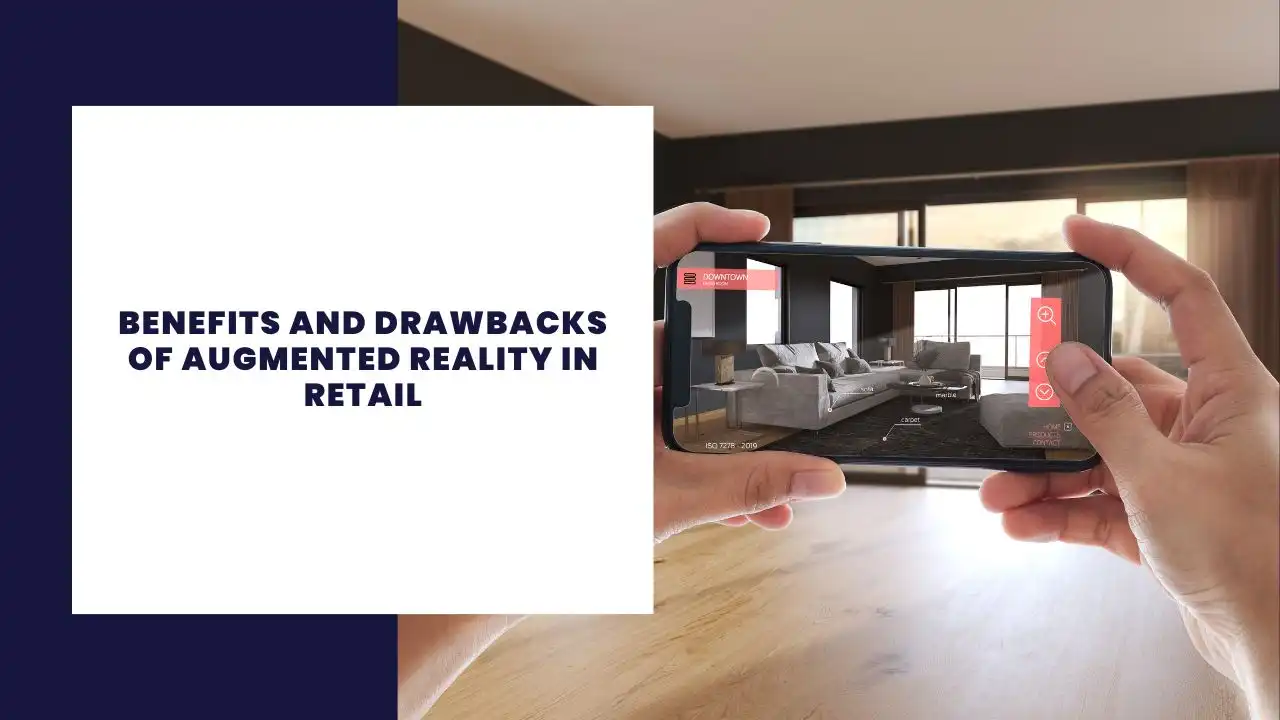
- Use an AR app to place furniture in your home to see how it fits and looks.
2. Improving Product Visualization
Augmented reality helps customers gain a better understanding of product features and benefits. This is especially useful for products that are difficult to evaluate online, such as home decor, electronics, or clothing.
- Example: IKEA’s AR app enables customers to see how furniture would fit and look in their homes.
- Benefit for retailers: Improved visualization drives sales by boosting customer confidence.
3. Bridging the Gap Between Online and Physical Shopping
AR bridges the gap between online shopping and the in-store retail experience. Customers can enjoy the convenience of online shopping while interacting with products in a virtual but realistic way.
- Real-world examples:
- Apps that overlay virtual products onto the physical world.
- Online retailers offering AR experiences for furniture and home design.
4. Boosting Customer Engagement and Satisfaction
By integrating AR, retailers can create a more engaging shopping experience. Interactive AR applications keep customers intrigued and increase customer satisfaction. The personalized and immersive nature of AR also builds brand loyalty.
Features that enhance engagement:
- Immersive try-before-you-buy experiences.
- Gamified AR shopping features.
5. Facilitating Informed Purchasing Decisions
Augmented reality enables customers to make more informed purchasing decisions by allowing them to visualize products in real-world settings. This minimizes the likelihood of returns and increases customer satisfaction.
- AR allows customers to:
- See how products would look in their homes.
- Virtually try on clothes to ensure proper fit and style.
6. Increasing Sales and Revenue
Implementing AR in retail strategies can significantly boost sales. By leveraging cutting-edge AR applications, retailers can attract more customers and increase conversion rates.
- Statistics show: Retailers that implement AR technology see higher sales compared to those relying solely on traditional methods.
7. Staying Ahead in the Retail Industry
AR is revolutionizing the retail landscape. Industry leaders adopting AR technology position their brands as innovative and forward-thinking, attracting tech-savvy customers.
- Notable examples include: Sephora’s AR app for makeup application and Nike’s AR shoe-sizing tool.
Drawbacks of Augmented Reality in Retail
1. High Implementation Costs
One of the major drawbacks of incorporating AR is the cost. Implementing AR applications requires significant investment in hardware, software, and training.
- Expenses include:
- Developing AR apps.
- Purchasing AR hardware.
- Training employees to use AR tools.
2. Privacy and Security Concerns
AR applications often require access to customer data, raising concerns about privacy and security. Retailers must ensure robust data protection to maintain customer trust.
- Potential risks include:
- Misuse of customer data.
- Security breaches in AR systems.
3. Limited Access to AR Hardware
Not all customers have access to AR-compatible devices. This limits the reach of AR applications, especially in regions where AR hardware is less accessible.
- Challenges:
- Dependence on AR-capable smartphones and devices.
- Exclusion of customers with outdated technology.
4. Technical Challenges and Maintenance
AR technology is complex, and technical glitches can disrupt the user experience. Retailers need to invest in ongoing maintenance and updates to ensure seamless functionality.
- Issues can include:
- Bugs in AR applications.
- Compatibility issues with various devices.
5. Learning Curve for Customers
While AR offers many benefits, not all customers are familiar with using AR tools. Retailers must provide clear instructions and user-friendly interfaces to encourage adoption.
- Solutions:
- Offering in-store demonstrations of AR tools.
- Simplifying AR interfaces for ease of use.
6. Overreliance on Technology
Implementing AR in retail can lead to overreliance on technology. This may overshadow the traditional customer service experience, which is still vital in physical retail settings.
7. Limited Adoption by Retailers
Despite its benefits, many retailers are hesitant to adopt AR due to the associated costs and technical challenges. This can slow down the overall adoption of AR in the retail industry.
Conclusion
Augmented reality in retail has the potential to transform the retail landscape by enhancing the shopping experience, improving product visualization, and boosting customer engagement. However, implementing AR technology also comes with challenges, such as high costs and privacy concerns. For retailers looking to integrate AR into their strategies, balancing the benefits and drawbacks is key to leveraging its potential effectively.
By addressing these challenges, the retail industry can create cutting-edge experiences that seamlessly blend the digital and physical worlds, driving sales and customer satisfaction in the process.
More about Business Technology